The Roar of the Track: 10 Production Cars Powered by Race-Ready Engines
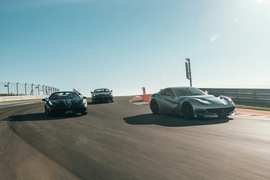
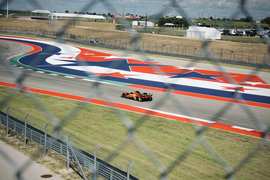
For automotive enthusiasts, there’s an undeniable allure to the visceral connection between a road car and its motorsport heritage. It’s not merely about aggressive styling or a few performance enhancements; it’s about the heart of the machine – an engine originally conceived and honed on the unforgiving proving grounds of competitive racing. These powerhouses, forged in the crucible of intense competition, translate high-revving, adrenaline-fueled performance directly onto public thoroughfares, offering a tangible link to the machines that conquer circuits worldwide.
As an industry professional with a decade immersed in the automotive landscape, I’ve witnessed firsthand the symbiotic relationship between racing and road-going vehicles. Manufacturers invest heavily in motorsports for a multitude of strategic reasons, from pushing the boundaries of engineering innovation to bolstering brand prestige. This investment invariably trickles down, often in the form of groundbreaking technology and potent powertrains, into the cars accessible to the average driver. This article delves into ten production vehicles that masterfully bridge the divide between the racetrack and your daily drive, featuring engines that carry the unmistakable DNA of motorsport.
The “Win on Sunday, Sell on Monday” Philosophy: Motorsport’s Impact on Production Vehicles
The intricate dance between motorsport and road car development is a narrative as old as the automobile itself. The competitive arena serves as an extreme laboratory, where engineers relentlessly push the envelope of automotive technology, testing components under conditions where failure is simply not an option. The invaluable lessons learned on the track – be it in advanced aerodynamic principles, the strategic use of lightweight materials, or cutting-edge engine management systems – invariably find their way into the vehicles we encounter every day. This relentless pursuit of performance and durability forged through racing has been the bedrock of automotive advancement for decades.
Consider the ubiquity of disc brakes and paddle shifters, technologies that were once exclusive to the racing world but are now commonplace features in modern production cars. Furthermore, a manufacturer’s success on the track often acts as a powerful marketing engine. When a race car bearing a particular marque dominates its class, the associated road-going vehicles are perceived as inherently more desirable, imbued with a share of that winning spirit. While few of us will ever have the opportunity to pilot a Formula 1 challenger or a Le Mans prototype, we can still experience a profound sense of connection to the world of motorsport, especially when a race-bred engine thrums beneath the hood of our own vehicle. This era is seeing a remarkable resurgence of original equipment manufacturer (OEM) involvement in racing, a trend that promises to inject fresh innovation and excitement into the automotive industry.
Ten Production Cars with Unmistakable Motorsport Heartbeats
Let’s explore ten remarkable production vehicles that embody the spirit and performance of their racing counterparts, offering a thrilling taste of the track on the open road.
Alfa Romeo Montreal: The V8’s Enduring Charm
The Alfa Romeo Montreal, a masterpiece of Italian design, harbored a potent secret under its sculpted hood: the 2.6-liter Tipo 33 naturally aspirated V8 engine. This powerplant was not an arbitrary choice; it was directly derived from Alfa Romeo’s formidable Tipo 33 sports prototype, a car that carved its name into the annals of endurance racing, competing in legendary events such as the Targa Florio and the grueling 24 Hours of Daytona. While the road-going version was thoughtfully detuned to meet civilian standards, it retained a significant portion of its motorsport pedigree. The engine was capable of a spirited 7,000 RPM redline, producing a respectable 200 horsepower. The distinctive growl of its V8, combined with its sharp, timeless aesthetics, cemented the Montreal’s status as one of the most captivating and often overlooked automobiles to ever wear the Alfa Romeo badge.
BMW M1, M3 (E30), M5 (E28), M6 (E24): The M Division’s Racing Legacy
BMW’s M division is synonymous with high-performance driving, and its iconic models proudly showcase this racing heritage. The BMW M1, a singular mid-engine supercar, was propelled by the formidable 3.5-liter M88 inline-six engine. This engine’s lineage traces back directly to BMW’s dedicated racing programs, most notably finding application in the highly competitive BMW M1 ProCar series. Later, this very same potent engine found its way into the esteemed E24 M6 grand tourer and the E28 M5 sports sedan, providing them with extraordinary capabilities. Meanwhile, the legendary E30 M3’s compact yet powerful four-cylinder S14 engine was also heavily influenced by the M88 and the turbocharged M12 Formula 1 engines. Its engineering drew inspiration from BMW’s dominant touring car racing efforts, sharing crucial components and design principles with the cars that consistently conquered the Deutsche Tourenwagen Masters (DTM) championship.
Chevrolet Camaro ZL1 (1969): A Street-Legal Rocket from Can-Am
The 1969 Chevrolet Camaro ZL1 stands as a testament to American muscle car engineering pushed to its extreme. Its heart was the colossal 427 cubic-inch (7.0-liter) V8 engine, a powerplant originally conceived for the brutal world of Can-Am racing. Constructed entirely from aluminum, this engine offered a remarkable power-to-weight ratio for its era. While its racing counterpart produced an astounding 500 horsepower, the road-going version was detuned to a still formidable 430 horsepower to comply with street regulations. The ZL1 package transformed the already potent Camaro into a veritable drag strip monster, capable of astonishing acceleration. Its race-proven engine continued to serve in various racing applications, including the SCCA Trans-Am series. With a production run of only 69 units, the 1969 Camaro ZL1 remains an exceptionally rare and highly coveted collector’s item today, a true pinnacle of American performance engineering.
Ferrari Dino 206 GT: A V6 with Grand Prix Aspirations
The Ferrari Dino 206 GT, while often recognized for its sleek, Pininfarina-designed body, housed an engine that whispered of its Grand Prix origins. The 2.0-liter V6 engine powering this beauty was originally developed for Ferrari’s Formula 2 racing endeavors in the 1960s. Despite being recalibrated for civilian use, the engine retained its exhilarating high-revving character, imbuing the Dino with a palpable racing spirit that made it an absolute joy to navigate on winding roads. Producing 180 horsepower, this output was more than adequate for a car weighing just over 2,000 pounds. Interestingly, the Dino was one of the rare Ferraris that did not bear the iconic Prancing Horse emblem on its exterior. It marked a pivotal moment for the Italian marque, representing their first foray into mid-engine V6 sports cars, a configuration that would pave the way for numerous successful models in the future.
Ferrari F50: Formula 1 Unleashed on the Road
To commemorate its 50th anniversary, Ferrari unleashed a machine that redefined the concept of a track-derived road car: the F50. This supercar featured a 4.7-liter Tipo F130B naturally aspirated V12 engine, a powerplant plucked directly from Ferrari’s 1990 Formula 1 car, the iconic Tipo 641 (later known as the F1-90), piloted by the legendary Alain Prost. This naturally aspirated behemoth was engineered to rev to an astonishing 8,500 RPM, delivering a potent 513 horsepower. The F50 offered an unfiltered, raw driving experience, bringing the sensation of piloting a Formula 1 car directly to the street. With only minimal modifications necessary to meet road-legal emissions and noise regulations, the F50 represented the closest a street-legal Ferrari could get to the pinnacle of motorsport at the time. The rarity and performance of the Ferrari F50 position it as a highly sought-after collector’s item, representing a peak in automotive engineering.
Ford GT (2005 & 2017): A Modern Homage to Le Mans Dominance
The Ford GT stands as a modern tribute to one of the most iconic race cars in history: the Le Mans-winning Ford GT40. The 2005 iteration of the GT was powered by a 5.4-liter supercharged V8 engine. Its development was intrinsically linked to Ford’s endurance racing programs, with roots extending to the powerplants used in Ford’s Daytona Prototype race cars. Similarly, the more contemporary 2017 Ford GT continues this legacy of motorsport-inspired performance. It boasts a twin-turbocharged 3.5-liter V6 engine, a unit derived from Ford’s highly successful EcoBoost program, which has seen extensive application in endurance racing series. The Ford GT represents a triumphant return to Ford’s racing roots, offering unparalleled performance and a direct lineage to its legendary predecessors.
Jaguar XJ220: The Twin-Turbo V6 with Supercar Speed
The Jaguar XJ220, an automotive icon from the British marque, initially envisioned with a V12 engine, ultimately found its soul in a 3.5-liter twin-turbocharged V6. This potent engine was not an arbitrary selection; it was sourced directly from the Jaguar XJR-11 Group C race car, a formidable contender on the international racing circuit. This race-honed powerplant endowed the XJ220 with the capability to achieve a breathtaking top speed of 217 mph, briefly earning it the title of the world’s fastest production car. The engine powering the XJ220 was a marvel of engineering, representing some of the most advanced track-proven technology to ever find its way into a road-legal automobile. The engineering sophistication behind the Jaguar XJ220’s performance continues to impress enthusiasts and collectors alike, especially in areas like performance car rentals in major cities like Los Angeles or Miami.
Plymouth Belvedere (1964): The Race Hemi’s Street Debut
On the surface, the 1964 Plymouth Belvedere might not immediately evoke images of a dedicated race car. However, concealed beneath its unassuming exterior lay the legendary 426 Hemi V8 engine, an powerplant meticulously engineered specifically for the demanding world of NASCAR. Dubbed the “Race Hemi,” this engine proved to be an unstoppable force on the track, and its prowess soon translated to Plymouth’s production vehicle lineup. The road-going Belvedere, churning out an immense 425 horsepower, rapidly established itself as one of the most powerful muscle cars of the 1960s. This reputation for raw power and performance solidified the brand’s identity, a legacy that carried forward into the 1970s with the iconic ‘Cuda. The enduring legacy of the Hemi engine continues to drive demand for classic American muscle cars.
Porsche 918 Spyder: Hybrid Powerhouse with LMP Roots
The Porsche 918 Spyder represents a paradigm shift in hypercar performance, seamlessly blending hybrid technology with a race-bred internal combustion engine. Its 4.6-liter V8 engine draws its lineage from the Porsche RS Spyder, a prototype race car that competed valiantly in the LMP2 class at the prestigious 24 Hours of Le Mans. In the 918 Spyder, this competition-derived engine was augmented by advanced electric motors, collectively producing a staggering 887 horsepower. This formidable output enabled the hypercar to achieve a blistering 0 to 60 mph acceleration time of just 2.2 seconds (according to independent testing), positioning it among the quickest production vehicles ever manufactured. While the electric motors contribute significantly to its exhilarating performance, it is the race-derived V8 that provides the car’s captivating emotional resonance and soul-stirring auditory experience. The engineering behind the Porsche 918 Spyder has influenced the development of electric vehicle performance and hybrid powertrains.
Porsche Carrera GT: The Analog Supercar’s V10 Symphony
The Porsche Carrera GT is frequently lauded as one of the greatest analog supercars ever constructed, and a significant portion of its legendary status can be attributed to its extraordinary ten-cylinder engine. This 5.7-liter V10 powerplant initially originated from Porsche’s ambitious plans for Formula 1 during the V10 engine era. However, when those plans didn’t materialize, the engine was shelved, only to be later repurposed for a Le Mans prototype car that, ironically, never reached the track. Porsche then made the inspired decision to integrate this race-honed engine into its flagship supercar. The result was a machine capable of producing 612 horsepower and revving to an exhilarating 8,000 RPM. With its ultralight construction and uncompromising motorsport DNA, the Carrera GT remains a challenging yet immensely rewarding supercar to drive, a true testament to driver engagement and mechanical purity. The pursuit of such high-performance vehicles often leads enthusiasts to explore options in luxury car dealerships across major metropolitan areas.
These ten vehicles serve as powerful testaments to the enduring impact of motorsport on the automotive industry. They offer everyday drivers a tangible connection to the excitement and engineering brilliance of the racetrack, proving that the thrill of competition can indeed be enjoyed on the open road.
If you’ve been captivated by the stories of these race-bred machines and are seeking to experience the pinnacle of automotive performance firsthand, consider exploring options for performance vehicle acquisition or even advanced driving experiences. The legacy of motorsport is alive and well in the vehicles available today, waiting to deliver an unforgettable driving adventure.