The Apex Predators: Navigating the Pinnacle of Automotive Velocity in 2026
For a decade now, I’ve been immersed in the hypercar industry, witnessing firsthand the relentless pursuit of speed and the engineering marvels that emerge from it. While the allure of a car’s top speed has always been a potent marketing tool, its practical application for the everyday driver remains largely theoretical. Most modern passenger vehicles comfortably exceed highway speed limits, rendering extreme top-end figures irrelevant for daily commutes. Yet, for a select cadre of automotive enthusiasts and manufacturers, the quest for ultimate velocity is an all-consuming passion, a benchmark for technical prowess, and the ultimate expression of performance. It’s about bragging rights, about pushing the boundaries of what’s physically possible, and about etching one’s name into the annals of automotive history.
The evolution of the world’s fastest road cars has been nothing short of spectacular. What began with the rudimentary, yet powerful, machines of early motorsport, eventually adapted for road use, has transformed into a sophisticated arms race. In the early days, companies like Bentley and Bugatti blurred the lines between track-bred performance and road legality. Today, the landscape is vastly different. Manufacturers must now meticulously engineer vehicles specifically for the demands of public roads, a far more complex undertaking than building a dedicated race car. The journey to create a vehicle capable of stratospheric speeds demands immense financial investment, relentless R&D, and a singular focus on aerodynamic efficiency, powertrain innovation, and structural integrity.
The 1990s ignited a fervent competition to break the 200 mph barrier. Iconic machines like the Ferrari F40, Porsche 959, Jaguar XJ220, and the legendary McLaren F1 captivated the world. These were not just cars; they were technological statements, demonstrating what was achievable with powerful engines and revolutionary aerodynamic designs on vehicles that could, in principle, be registered and driven on public roads. They pushed the envelope, achieving speeds that were once confined to the realm of aviation.
Fast forward to 2026, and the goalposts have shifted dramatically. We are now witnessing a battle that centers on the elusive 300 mph mark and beyond. Reaching such velocities in a road-legal production car is an exponentially more formidable challenge. It requires an intricate understanding of physics, advanced materials science, and a level of computational fluid dynamics that was unimaginable just a few decades ago. The fact that we are even discussing cars capable of such feats, let alone seeing them materialize, is a testament to human ingenuity. Furthermore, the rapid advancements in electric vehicle technology have thrown a significant curveball into this arena. Companies that may not have the historical pedigree of traditional supercar manufacturers are now emerging as serious contenders, leveraging the instantaneous torque and scalable power delivery of electric powertrains to challenge established giants. This democratization of extreme performance is perhaps the most exciting trend shaping the future of fastest road cars 2026.
This elite compilation, featuring the top 20 fastest road cars of 2026, is a dynamic snapshot of this ongoing technological evolution. It represents the absolute cutting edge of automotive performance, where raw power meets meticulous engineering. We’ve focused on distinct models, excluding minor variations or heavily modified versions, to provide a clear hierarchy of automotive velocity. For those seeking the ultimate thrill, the world’s fastest production cars are not just modes of transport; they are masterpieces of engineering, designed to deliver an unparalleled driving experience and solidify their place in automotive lore.
The discussion around high-performance vehicles 2026 is incomplete without acknowledging the significant role of acceleration. While top speed garners the headlines, the ability of a car to rapidly gain velocity, often measured by 0-60 mph or 0-100 km/h times, is equally crucial in defining its performance credentials. The fastest accelerating cars 2026 often overlap with the fastest overall, showcasing the intricate relationship between power, weight, and aerodynamic design.
Let’s delve into the contenders, a testament to the relentless pursuit of the ultimate driving machine:
McLaren F1
Top Speed: 240.1 mph
Estimated Price: $15 million+ (as a collector’s item)
A true legend, the McLaren F1 remains an icon for a reason. Even by 2026 standards, its 1998 top speed record of 240.1 mph, achieved with a naturally aspirated V8 and a manual gearbox, is astonishing. It represents a purity of engineering and an enthusiast’s dream, a benchmark few cars have managed to surpass in terms of raw, driver-focused appeal. Its spiritual successor, the Gordon Murray Automotive T.50, carries the torch, though its exact top-speed capabilities remain undisclosed, a nod to the enigmatic nature of its creator and his pursuit of automotive perfection. The F1 isn’t just a car; it’s a pivotal moment in automotive history, a testament to a time when innovation wasn’t solely dictated by electronic aids.
W Motors Fenyr Supersport
Top Speed: 245 mph
Estimated Price: $1.4 million
Emerging from the Middle East, W Motors has made a name for itself with its audacious hypercars. Following the Lykan HyperSport, the Fenyr Supersport continues this tradition, boasting a claimed top speed of 245 mph. Its heart beats with a Ruf-tuned twin-turbo flat-six engine, a powerhouse nestled behind the cockpit. Beyond its performance, the Fenyr is adorned with bespoke materials, pushing the boundaries of luxury and exclusivity. Its appearance in popular culture, particularly in the “Fast & Furious” franchise, has cemented its status as a modern automotive icon, a blend of extreme performance and cinematic flair.
Saleen S7 Twin Turbo
Top Speed: 248 mph
Estimated Price: $500,000 (pre-owned)
The Saleen S7 Twin Turbo, launched in 2005, was a formidable American contender that boldly claimed a top speed of 248 mph, surpassing the McLaren F1 by a significant margin. This all-American muscle car, powered by a V8 engine with twin turbos, represented a powerful statement of intent from Saleen. While its claimed top speed has been the subject of much debate and remains unverified in official record books, its aggressive styling and potent performance capabilities ensure its place among the legends of the supercar era. It embodies the raw, untamed spirit of American automotive engineering.
Koenigsegg Gemera & CCXR
Top Speed: 248 mph
Estimated Price: $2 million (Gemera), $500,000+ (CCXR pre-owned)
Koenigsegg, a Swedish manufacturer renowned for its obsessive pursuit of speed, earns a dual entry with the Gemera and CCXR. Both models achieve a formidable 248 mph (400 km/h). The Gemera stands as a beacon of modern hybrid technology, featuring three electric motors that, when combined with its combustion engine, deliver an astonishing output. The CCXR, a much older marque, achieves the same top speed through a supercharged V8, demonstrating the brand’s enduring engineering prowess across different eras. These vehicles represent Koenigsegg’s unwavering commitment to innovation and performance, consistently pushing the boundaries of what’s achievable.
Aspark Owl
Top Speed: 249 mph
Estimated Price: $2.5 million
The niche world of hypercars is increasingly populated by ambitious newcomers, and Japan’s Aspark Owl is a prime example. This battery-electric marvel, first showcased in prototype form in 2017, boasts an impressive on-paper performance profile. With a claimed 0-60 mph time of 1.72 seconds, it would lay claim to the title of the fastest-accelerating production car. Its quoted top speed of 249 mph, combined with a relatively light 64 kWh battery pack, hints at a remarkable balance of power, efficiency, and range. The Owl signifies the burgeoning potential of electric powertrains in the hypercar segment, challenging established brands with cutting-edge technology.
Ultima RS
Top Speed: 250 mph
Estimated Price: $130,000
The Ultima RS presents a unique proposition on this list. It is, by a considerable margin, the most affordable option and is technically a kit car. The prospect of achieving 250 mph in a vehicle assembled at home might seem audacious, but the Ultima RS makes it a tangible reality for those with the requisite skills and budget. Its performance is derived from a potent Corvette engine, tuned to deliver an incredible 1,200 bhp, emphasizing a classic power-to-weight ratio over complex technological integration. It’s a pure, unadulterated performance machine for the dedicated enthusiast.
McLaren Speedtail
Top Speed: 250 mph
Estimated Price: $2.1 million
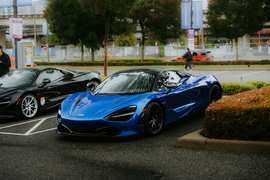
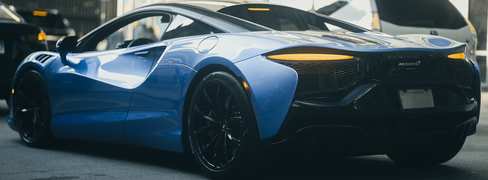
McLaren revisits its legacy with the Speedtail, a spiritual successor to the F1. During extensive testing at Florida’s Kennedy Space Center, the Speedtail achieved a remarkable 250 mph on multiple occasions, solidifying its position as a worthy heir. Limited to just 106 units, mirroring its predecessor’s exclusivity, the Speedtail features a unique three-seat configuration with the driver positioned centrally. Its advanced hybrid powertrain and seamless twin-clutch transmission offer a refined yet exhilarating driving experience, embodying McLaren’s commitment to automotive excellence and innovation.
Czinger 21C V Max
Top Speed: 253 mph+
Estimated Price: $1.5 million
The Czinger 21C V Max, despite its unconventional name, is a formidable contender in the realm of ultra-high-performance cars. This hypercar masterfully combines a potent internal combustion engine with electric motors, generating a colossal 1,233 bhp. Its ability to sprint from 0-62 mph in a mere 1.9 seconds is attributed to its advanced all-wheel-drive system. The V Max variant, optimized for maximum velocity by shedding its drag-inducing aerodynamic elements, pushes the top speed beyond 250 mph, showcasing Czinger’s dedication to pushing performance boundaries.
Koenigsegg Regera
Top Speed: 255 mph
Estimated Price: $2.6 million
Koenigsegg’s obsession with top-speed records is evident in the Regera, a hybrid marvel that offers a glimpse into the future of automotive propulsion. While not their absolute fastest, it boasts an impressive 255 mph, powered by a hybrid system delivering nearly 1,500 bhp. The Regera distinguishes itself with an innovative single-speed direct-drive transmission, a feat made possible by its advanced plug-in hybrid setup. This Swedish engineering masterpiece seamlessly integrates a twin-turbo V8 with electric motors, offering a unique blend of raw power and sophisticated efficiency.
SSC Ultimate Aero
Top Speed: 256.18 mph
Estimated Price: $500,000 (pre-owned)
The SSC Ultimate Aero, a product of American ingenuity, held the title of the world’s fastest production car for a period. Powered by a 1,183 bhp twin-turbo V8, it achieved a verified top speed of 256.18 mph on a temporarily closed highway in Washington, USA. This was a raw, unfiltered performance machine, deliberately eschewing driver aids like traction control to provide an intensely visceral driving experience. The Ultimate Aero stands as a testament to the raw power and engineering ambition that defined an era of American supercar development.
Rimac Nevera / Nevera R
Top Speed: 258 mph / 268 mph
Estimated Price: $2.4 million (Nevera), $3 million+ (Nevera R)
The Rimac Nevera is rapidly redefining the hypercar landscape, not just as a contender among the fastest electric cars, but as a leading force in overall automotive velocity. With an astonishing 1,888 bhp and a mind-boggling 2,360 Nm of torque, it achieves 0-60 mph in a mere 1.9 seconds, and an astounding 0-186 mph in just 9.3 seconds. Its charging capabilities are equally impressive, reaching 80% in 19 minutes and offering a 340-mile range. The even more potent Nevera R, with 2,078 bhp and a top speed of 268 mph, solidifies its position as a benchmark for electric hypercar performance, boasting a 0-62 mph time of 1.8 seconds and a 0-186 mph time of 7.9 seconds. Rimac is undeniably a pioneer in the EV hypercar 2026 segment.
Bugatti Veyron
Top Speed: 268 mph (Super Sport)
Estimated Price: $1 million+ (pre-owned)
The Bugatti Veyron, even years after its initial release, commands immense respect within the automotive world. Its original iteration, with nearly 1,000 bhp from a formidable 6.0-litre quad-turbo W12 engine, was revolutionary. The subsequent Veyron Super Sport, however, elevated performance to an entirely new level, boasting 1,183 bhp and achieving a breathtaking 268 mph. This behemoth’s sub-2.5-second 0-62 mph acceleration remains a benchmark that even many contemporary electric vehicles struggle to match. The Veyron remains an undisputed icon, a symbol of automotive excess and engineering brilliance.
Hennessey Venom F5
Top Speed: 271.6 mph (tested)
Estimated Price: $1.7 million
From the tuning prowess of Texas, Hennessey Performance Engineering has evolved into a hypercar manufacturer with the Venom F5. This machine has already surpassed the 270 mph mark in testing, with a recorded speed of 271.6 mph. Powered by a monstrous 1,817 bhp twin-turbo V8, the F5 is engineered with a clear target: to breach the 311 mph barrier. Despite its rear-wheel drive and limited traction, its straight-line acceleration is phenomenal, evidenced by its 0-249 mph time of 15.5 seconds. Hennessey is undeniably a key player in the American hypercar 2026 scene.
Bugatti Tourbillon (Estimated)
Top Speed: 277 mph (estimated)
Estimated Price: $3.5 million+ (estimated)
The upcoming Bugatti Tourbillon represents the brand’s next chapter in its pursuit of ultimate velocity. This hybrid marvel is slated to integrate a potent V16 engine, producing over 1,770 bhp. Given Bugatti’s storied history and unparalleled engineering expertise, the Tourbillon is confidently expected to secure a prominent position among the fastest cars in the world upon its 2026 arrival. Its advanced powertrain and aerodynamic refinement promise to uphold Bugatti’s legendary status in the hypercar domain.
Koenigsegg Agera RS
Top Speed: 277.87 mph
Estimated Price: $3.5 million (pre-owned)
In 2017, Koenigsegg shattered existing speed records with the Agera RS, achieving an astonishing 277.87 mph on a closed public highway in Nevada, USA. This marked the highest speed ever officially recorded on a public road by a production car. The Agera RS demonstrated Koenigsegg’s relentless dedication to performance, pushing the boundaries of engineering and aerodynamics to their absolute limits. It remains a benchmark for speed and precision engineering in the hypercar world.
Bugatti Mistral
Top Speed: 282.05 mph
Estimated Price: $5.2 million
Bugatti continues to redefine automotive excellence with the Mistral, a convertible hypercar that pushes the boundaries of speed and luxury. Limited to just 99 units, the Mistral is an exclusive masterpiece. Esteemed test driver Andy Wallace piloted the Mistral to a record-breaking 282.05 mph at a test facility in Germany in 2024. This remarkable feat is powered by Bugatti’s iconic quad-turbocharged 8.0-liter W16 engine, soon to be replaced by the V16 in the upcoming Tourbillon. The Mistral stands as a testament to Bugatti’s enduring legacy and its ability to innovate even within its established framework.
SSC Tuatara
Top Speed: 282.9 mph (two-way average)
Estimated Price: $1.5 million
Record-breaking attempts in the hypercar realm often attract scrutiny, and the SSC Tuatara’s journey has been no exception. After initial claims of exceeding 316 mph were questioned, SSC conducted a meticulously documented two-way average run, achieving a verified 282.9 mph. This exceptional figure was achieved with a 5.9-liter twin-turbocharged V8 engine producing 1,750 bhp, all channeled to the rear wheels. Its lightweight carbon fiber chassis further contributes to its impressive performance, showcasing SSC’s dedication to achieving top-tier speed and engineering in the hypercar market 2026.
Bugatti Chiron Super Sport 300+
Top Speed: 304.8 mph
Estimated Price: $3 million
Bugatti’s relentless pursuit of speed reached a monumental milestone with the Chiron Super Sport 300+. This exceptional machine shattered the seemingly impenetrable 300 mph barrier, achieving a verified 304.774 mph at Germany’s Ehra-Lessien test track. This remarkable feat was accomplished by significantly upgrading Bugatti’s 8.0-liter W16 engine to produce 1,578 bhp, coupled with extensive aerodynamic enhancements, including a distinctive “Longtail” rear end. Only 30 of these extraordinary vehicles were produced for discerning customers, solidifying its status as a pinnacle of automotive achievement. The 300 mph club cars are a rare and exclusive fraternity, and the Chiron Super Sport 300+ is a founding member.
Koenigsegg Jesko Absolut
Top Speed: Targeted 310 mph+
Estimated Price: $2.3 million (approx.)
Christian von Koenigsegg’s declaration of the Jesko Absolut as “the absolute fastest Koenigsegg we will ever make” was a statement not to be taken lightly. This low-drag variant of the 1,578 bhp Jesko has undergone meticulous aerodynamic and power optimization, featuring an extended body, a removed rear wing, and significant weight-reduction measures. The tweaked 5.0-liter twin-turbocharged V8 now produces 1,600 bhp. While official figures are yet to be released, Koenigsegg’s target of over 310 mph is a credible aspiration, given their history of setting new benchmarks. The Jesko Absolut represents the bleeding edge of hypercar development, a true challenger for the title of the fastest production car in the world 2026.
Yangwang U9 Xtreme
Top Speed: 308 mph
Estimated Price: $250,000+
In a stunning testament to the rapid advancements in electric vehicle technology, the Yangwang U9 Xtreme has achieved the pinnacle of automotive speed. This sub-million-dollar marvel has set a new benchmark, reaching an astonishing 308 mph. Its performance is attributed to significant aerodynamic enhancements, four ultra-powerful electric motors delivering a combined 2,978 bhp, and a sophisticated 1,200V architecture for rapid power transfer. Developed by BYD’s premium brand, Yangwang, the U9 Xtreme’s advanced battery system is specifically designed for high-speed power delivery without overheating. This electric powerhouse not only claims the title of the world’s fastest car 2026 but also signifies a paradigm shift in the hypercar landscape, proving that electric propulsion can indeed conquer the realm of extreme velocity. The fastest EV hypercar 2026 has truly arrived.
The landscape of high-speed automotive engineering is in a constant state of flux. As we look towards the future, the lines between electric and internal combustion powertrains continue to blur, with hybrid technologies becoming increasingly sophisticated. The pursuit of the ultimate road car speed is not merely about achieving a number; it’s about the relentless innovation, the engineering brilliance, and the sheer passion that drives these manufacturers to create machines that defy expectations.
For those captivated by the thrill of extreme velocity and the pinnacle of automotive achievement, staying informed about the new hypercar releases 2026 and the ongoing evolution of performance vehicle technology is crucial. Whether you’re a collector, an enthusiast, or simply an admirer of engineering marvels, the world of supercar speed records continues to deliver breathtaking advancements.
If the pursuit of automotive excellence and unparalleled performance has ignited your interest, we invite you to explore further. Whether you’re seeking information on the latest performance car models, considering an investment in a luxury sports car, or simply wish to delve deeper into the cutting-edge of automotive engineering, our expertise is at your disposal to guide you through the dynamic world of automotive speed.