The Apex Predator Refined: Unpacking the Enduring Legacy and Future of the Porsche 911 GT3 RS
For over two decades, the Porsche 911 GT3 RS has stood as a beacon for those who seek the absolute pinnacle of track-focused driving dynamics. It’s a machine born from a singular vision: to distill the essence of motorsport into a road-legal package that utterly enthralls its pilot. As an industry observer with a decade immersed in the high-performance automotive landscape, I’ve witnessed firsthand the evolution of this iconic model, and the anticipation surrounding its next iteration is palpable. The Porsche 911 GT3 RS isn’t just a car; it’s a philosophy, a testament to unwavering engineering purity, and a benchmark against which all other track-focused sports cars are measured.
From Humble Homologation to Uncompromising Icon
The story of the GT3 RS begins not with an overt desire to build the most extreme 911, but rather as a consequence of motorsport regulations. In 1999, Porsche introduced the GT3 variant of the 996 generation of its legendary 911. This was a car meticulously engineered for homologation purposes, designed to meet the criteria for racing. Its race-tuned, naturally aspirated flat-six engine, stripped-down interior, and a chassis honed for the rigors of the track were, to many, the ultimate expression of the 911’s performance potential. It was a car that eschewed creature comforts for outright speed and driver engagement, a bold statement in an era increasingly embracing turbocharged power and electronic aids.
However, the engineers at Porsche, renowned for their relentless pursuit of perfection, evidently saw room for improvement, even in what was already considered the zenith. The concept of the “RS” – Rennsport, or racing sport – designation, deeply ingrained in Porsche lore, was destined to be applied to the 911 with a ferocity that would redefine expectations.
The first true glimpse of this intensified focus arrived with the facelifted 996.2 generation. Porsche took the already formidable GT3 and pushed it further, transforming it into the GT3 RS. This wasn’t a mere power bump or a cosmetic tweak; it was a fundamental re-engineering for an even higher echelon of track performance. Weight was aggressively shed through the adoption of lighter wheels and body panels, a recurring theme that defines the RS ethos. The engine received a subtle yet impactful power increase, and aerodynamic elements were refined to enhance downforce and stability at extreme speeds. The result was a car that made the standard GT3 appear almost pedestrian by comparison. It was a track weapon in its purest form, a car that demanded respect and rewarded its driver with an unparalleled sensory experience. For the subsequent two decades, the GT3 RS has been an indelible fixture at track days and spirited drives worldwide, its silhouette a familiar and inspiring sight on any circuit.
The 992.1 GT3 RS: A Masterclass in Aerodynamic Prowess and Mechanical Purity
The current iteration, the 992.1 generation Porsche 911 GT3 RS, represents a staggering leap forward, pushing the boundaries of track-focused design and engineering to extraordinary new heights. This is not just an evolution; it’s a revolution in how a road-legal car can interact with the air and the tarmac. The visual cues alone speak volumes about its purpose. The carbon fiber bonnet, a significant weight-saving measure, now features a distinctive central radiator, a design inspired by the iconic 911 GT1 race car. Air is ingeniously channeled through “nostril” outlets on the bonnet, directing hot air away from the cabin and over the roof, contributing to both cooling efficiency and aerodynamic balance.
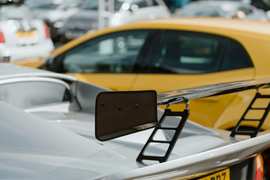
The aerodynamic ingenuity extends to the front of the car, with a hydraulically adjustable front splitter and underbody flaps, technologies previously seen on the exceptionally capable Turbo S. These elements allow for on-the-fly aerodynamic tuning, enabling drivers to optimize downforce for different track conditions. At the rear, the colossal swan-neck rear wing is a visual statement of intent. Its design, featuring a distinctive central support, is not merely for aesthetics; it allows for cleaner airflow over the wing’s surface, maximizing its effectiveness. Crucially, this wing incorporates a Drag Reduction System (DRS), mirroring the technology found in Formula 1 cars and hypercars like the McLaren P1. DRS allows for a reduction in drag on straights, boosting top speed, and can be deactivated for maximum downforce under braking and cornering. This level of active aerodynamic control in a production car is simply unprecedented.
Underpinning this advanced aero package is a chassis that continues the GT3 RS tradition of mechanical brilliance. The suspension is fully adjustable and race-derived, allowing for granular tuning to suit individual driving styles and track preferences. Dynamic engine mounts, which stiffen under load, provide a more direct connection between the engine and the chassis, sharpening throttle response and improving handling precision. The large air intakes, functional side skirts, and the overall purposeful stance of the 992.1 Porsche 911 GT3 RS price are all designed to manage airflow, cool vital components, and generate immense downforce.
Propelling this masterpiece is a 4.0-liter naturally aspirated flat-six engine, a motor renowned for its intoxicating sound, razor-sharp throttle response, and phenomenal power output of 525 horsepower. This isn’t just about peak numbers; it’s about the character and delivery of that power, the linear surge that builds with an electrifying crescendo. The result of this meticulously engineered symphony is breathtaking performance: a 0-60 mph sprint in a mere 3.2 seconds and an astonishing 1,928 pounds of downforce generated at 177 mph. This extreme downforce presses the car into the tarmac, offering unparalleled grip and stability through high-speed corners. The Nürburgring Nordschleife, often considered the ultimate test for any performance car, has been conquered by the 992.1 GT3 RS with a blistering lap time of 6:44.85. This figure places it firmly in the upper echelons of automotive performance, a testament to its track-honed capabilities. To put it mildly, the current GT3 RS is as far removed from a standard 911 as an eagle is from a swallow – a creature of a different, far more extreme, element.
The Whispers of the 992.2: Evolution or Revolution?
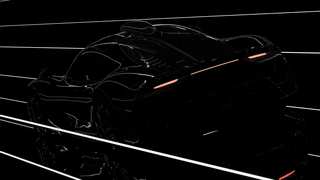
As is the natural order of automotive development, the automotive world is abuzz with anticipation for the facelifted 992.2 generation of the Porsche 911 GT3 RS. Recent spy shots, captured during rigorous testing at the very proving ground it excels upon – the Nürburgring – reveal a machine that, at first glance, appears evolutionarily similar to its predecessor. This is a hallmark of the 911 lineage; subtle refinements rather than radical departures, maintaining a consistent and recognizable identity. The camouflaged prototypes hint at the continuation of the central radiator layout with its distinctive “nostril” outlets, the imposing swan-neck rear wing with DRS, the substantial air intakes, and the functional side skirts. Even the door handles remain consistent with the outgoing model, emphasizing the focus on aerodynamic continuity and the avoidance of any unnecessary drag-inducing elements.
One notable detail observed is the relocation of the turn signals to a lower position, a design choice that has been implemented across much of the 992.2 911 range, with earlier iterations integrating them into the headlights. The rear diffuser also appears to have undergone a subtle redesign, featuring new, small, and discreet intake vents flanking the exhaust system. Whether the 992.2 GT3 RS will adopt the digital instrument cluster that has become standard across the 992.2 range remains to be seen. However, based on these visual cues, the fundamental character of this aggressive, yet undeniably effective, track machine appears to be preserved. The essence of the GT3 RS, its track-devouring DNA, is clearly being carried forward.
The Hybrid Question: A Detour from Purity?
The automotive landscape is currently dominated by discussions around electrification and hybrid powertrains. Naturally, speculation has arisen regarding the possibility of the new 992.2 GT3 RS incorporating the 3.6-liter twin-turbo hybrid flat-six that is reportedly set to debut in other 992.2 911 models. Such a powertrain would undoubtedly deliver a significant increase in horsepower over the current 4.0-liter naturally aspirated unit. However, from my perspective, rooted in years of analyzing and experiencing these machines, I am inclined to bet against this being the case.
My reasoning is multifaceted. Firstly, if Porsche intended to standardize a hybrid powertrain across its higher-performance 911 variants, it is highly probable that the standard GT3 would have been the first to receive it. The fact that the GT3 remains resolutely naturally aspirated speaks volumes about the brand’s commitment to a specific driving philosophy for that particular model.
Secondly, while the engineers in Stuttgart have undoubtedly achieved remarkable feats in integrating hybrid technology, these systems inherently add weight. For a car like the GT3 RS, where every gram is scrutinized and shed in the relentless pursuit of optimal performance, any significant weight penalty is antithetical to its core purpose. The GT3 RS is a monument to lightweight engineering and driver feedback.
Most importantly, however, fitting a hybrid system solely for the sake of increased power would, in my opinion, fundamentally compromise the spirit of the GT3 RS. At its heart, the GT3 and GT3 RS are track-focused sports cars designed to thrill and engage the driver. They are not hypercars built solely to chase headline-grabbing lap times at the expense of visceral experience. Their appeal lies in their mechanical purity, the directness of their feedback, and the exhilarating connection between man and machine.
The Unyielding Reign of the Naturally Aspirated Flat-Six
This leads me to believe that the ultimate track-focused 911 will likely be the GT2 RS, a model that traditionally occupies an even more extreme position in the 911 hierarchy. It is more probable that the GT2 RS will be the recipient of the advanced hybrid powertrain, allowing it to leverage its increased power for outright performance records. For the GT3 RS customer base, the allure lies in a different, yet equally compelling, set of attributes. Porsche understands that appealing to these discerning enthusiasts requires delivering the most pure, mechanical, and race-tuned driving experience on the market. Introducing anything other than the celebrated 4.0-liter naturally aspirated flat-six would feel, to many, like a departure from this sacred covenant.
Furthermore, there is a very real possibility that the 992.2 GT3 RS, particularly with its current engine configuration, could represent the swansong for this iconic naturally aspirated flat-six in a road-going 911. This would imbue this iteration with an even greater sense of historical significance, a final, glorious chapter for an engine that has defined a generation of performance automobiles.
The Competitive Arena and the Enduring Appeal
The competitive landscape for such track-focused machines is constantly evolving. Recent spy shots of the new track-hardened Mercedes-AMG GT, widely expected to rival either the forthcoming GT2 RS or potentially even the GT3 RS, suggest a formidable challenger emerging. While the AMG GT undoubtedly looks impressive and promises significant performance, it will have its work cut out to match the sheer depth of engineering and the honed track pedigree that the Porsche 911 GT3 RS models have cultivated over two decades.
There is a profound and enduring reason why the GT3 RS has maintained its status for so long. It is a testament to a consistent vision, an unwavering commitment to driving engagement, and a relentless pursuit of engineering perfection. As we stand on the cusp of what may be the final iteration of this naturally aspirated masterpiece, one thing is certain: if this is indeed the swansong for the engine that has powered this legend, it will undoubtedly go out with a thunderous, naturally aspirated flat-six roar. The best Porsche 911 GT3 RS is not just about the fastest lap time; it’s about the complete, unadulterated driving experience that leaves an indelible mark on the soul.
For those who understand the profound allure of automotive purity and the uncompromised pursuit of driving exhilaration, the 911 GT3 RS represents the zenith. As the automotive world pivots towards new technologies, the enduring legacy of this naturally aspirated icon serves as a powerful reminder of what makes driving truly special.
Ready to experience the pinnacle of track-focused performance? Explore our range of Porsche 911 GT3 RS options and discover the ultimate driving machine.