The Pinnacle of Velocity: Charting the Fastest Road Cars of 2026
For decades, the quest for ultimate speed has been a defining characteristic of automotive engineering. While the average driver might find themselves content with the effortless cruising capabilities of modern sedans, a select group of enthusiasts and manufacturers are locked in a perpetual arms race, pushing the boundaries of what’s possible for road-legal vehicles. This isn’t merely about reaching a higher number on the speedometer; it’s about demonstrating unparalleled engineering prowess, aerodynamic mastery, and the sheer audacity to challenge the conventional limits of mechanical locomotion. As we delve into the evolving landscape of fastest road cars 2026, it’s clear that the pursuit of hyper-performance remains as captivating as ever, with innovation and fierce competition shaping the very definition of velocity.
The allure of top speed, while often abstract in daily commutes, serves as a potent symbol of automotive achievement. It’s the ultimate bragging right, a testament to a manufacturer’s ability to translate cutting-edge research and development into a tangible, exhilarating machine. For the engineers and designers behind these automotive titans, achieving astronomical speeds requires a symphony of synchronized advancements – from meticulously sculpted aerodynamics and ultra-lightweight construction to the development of potent powertrains that can consistently deliver immense power. The challenge is magnified exponentially when these performance metrics must coexist with the stringent requirements of road legality, a complex dance between exhilaration and everyday usability.
Looking back, the 1990s witnessed a legendary duel to break the 200 mph barrier. Cars like the McLaren F1, Porsche 959, Jaguar XJ220, and Ferrari F40 became icons, their names synonymous with groundbreaking speed and innovative design. These machines, often born from racing pedigrees, offered a glimpse into a future where road cars could deliver an almost supercar-level experience. Fast forward to today, and the goalposts have shifted dramatically. The benchmark is now firmly set around the 300 mph mark, a milestone that was once the realm of pure science fiction. Reaching this speed in a production car is an extraordinary feat, demanding a level of technological sophistication that was unimaginable even a decade ago.
What’s particularly exciting in the fastest road cars 2026 arena is the rapid ascension of electric and hybrid powertrains. As battery technology continues its exponential growth and electric motor efficiency soars, previously established automotive giants are now facing formidable competition from agile, forward-thinking newcomers. These emerging brands, unburdened by legacy, are leveraging the inherent advantages of electric propulsion – instant torque, remarkable power density, and the potential for seamless integration – to challenge the status quo and redefine what constitutes a hypercar. This technological convergence is not only accelerating development but also making previously unattainable performance figures accessible to a broader spectrum of automotive innovators.
This dynamic evolution necessitates a constant re-evaluation of the world’s fastest production vehicles. Our meticulously compiled list, updated for 2026, aims to capture this cutting-edge landscape, focusing on distinct models and avoiding mere variations of the same platform where possible. We’ve navigated the claims, verified the figures where achievable, and present the apex predators of the automotive world – the supercar speed kings that define the pinnacle of road-legal velocity.
The Vanguard of Velocity: A Deep Dive into the Fastest Road Cars of 2026
The competition to be crowned the fastest road car is an enduring spectacle. As technology continues its relentless march, new contenders emerge, pushing boundaries and forcing established players to innovate or be left behind. Here’s our in-depth look at the elite contenders for fastest production cars 2026, a testament to automotive ingenuity and the unyielding pursuit of speed.
McLaren F1
Even decades after its groundbreaking achievements, the McLaren F1 remains an automotive legend. Its 240.1 mph top speed, achieved in 1998 with a naturally aspirated V8 and a manual gearbox, is a testament to pure engineering brilliance. It redefined what a road car could be, offering an unparalleled driving experience that still resonates with enthusiasts. While its successor, the Gordon Murray Automotive (GMA) T.50, is rumored to be incredibly fast, its official performance figures remain a closely guarded secret, leaving its exact placement on this list to speculation. The F1’s legacy, however, is undeniable in the annals of fastest performance cars.
W Motors Fenyr Supersport
Emerging from the Middle East, W Motors has carved a niche for itself with its dramatic and powerful creations. The Fenyr Supersport, a successor to the Lykan HyperSport, boasts a claimed top speed of 245 mph. This formidable machine is powered by a twin-turbocharged flat-six engine sourced from German tuning specialists Ruf, a name synonymous with performance. Beyond its blistering pace, the Fenyr is distinguished by its bespoke luxury, incorporating precious materials to create a truly unique and opulent hypercar experience. The Fenyr Supersport exemplifies the growing influence of manufacturers from regions previously not known for high-performance automotive production, showcasing a global shift in automotive innovation.
Saleen S7 Twin Turbo
The Saleen S7 Twin Turbo, unleashed in 2005, made a bold statement by claiming a top speed of 248 mph, surpassing even the mighty McLaren F1 by a significant margin. This all-American beast, powered by a potent V8 engine with twin turbochargers, was a no-compromise pursuit of raw power and speed. While its claimed top speed has not been definitively proven in independent tests, the S7’s aggressive styling and formidable performance credentials cemented its place as a significant player in the world of top speed cars. Its success underscored the continued relevance of traditional V8 powerhouses in the hypercar domain.
Koenigsegg Gemera & CCXR
Swedish manufacturer Koenigsegg consistently features on lists of the world’s fastest vehicles, and for 2026, we acknowledge two of their remarkable creations: the Gemera and the CCXR, both achieving a remarkable 248 mph. The Gemera stands as a marvel of modern engineering, a hybrid hypercar that ingeniously integrates three electric motors alongside a combustion engine, delivering an astonishing combined output. The CCXR, an older but no less potent machine, relies solely on its supercharged V8, proving that brute force and exceptional aerodynamics can still compete with hybrid complexity. This dual entry highlights Koenigsegg’s versatility in powertrain development, a key factor in their record-breaking cars.
Aspark Owl
The niche world of hand-built hypercars is increasingly becoming the domain of emerging manufacturers, and the Japanese Aspark Owl is a prime example. First unveiled in prototype form in 2017, this all-electric marvel boasts an eye-watering claimed top speed of 249 mph. What truly sets the Owl apart is its blistering acceleration; it’s claimed to achieve 0-60 mph in a scarcely believable 1.72 seconds, potentially making it the fastest accelerating production car ever. Its impressive performance is partly attributed to a relatively compact 64 kWh battery, which, while smaller than some rivals, contributes to its lighter weight and an estimated range of around 280 miles. The Aspark Owl is a potent symbol of the electric revolution in the fastest electric cars segment.
Ultima RS
The Ultima RS presents a compelling case for the democratization of extreme speed, standing out as the most affordable car on this list at approximately £130,000. This remarkable vehicle is a testament to the power of a high power-to-weight ratio, eschewing exotic technology for a potent Corvette engine tuned to deliver 1,200 bhp. While the idea of achieving 250 mph in a kit car might sound audacious, the Ultima RS proves it’s entirely achievable for those with the requisite skills and passion. It embodies a spirit of accessible performance, a refreshing counterpoint to the stratospheric price tags of some hypercar competitors, and a strong contender in the performance car market.
McLaren Speedtail
McLaren continues its legacy of speed with the Speedtail, a model that has officially hit 250 mph on multiple occasions during testing at the Kennedy Space Center in Florida. This advanced machine surpasses the legendary F1 in top speed, albeit in a more refined and technologically sophisticated package. Like its predecessor, the Speedtail is an extremely rare vehicle, with production limited to just 106 units. A part of McLaren’s prestigious ‘Ultimate Series’, it shares the F1’s innovative three-seat configuration, with the driver positioned centrally. The Speedtail represents a significant step forward in McLaren’s pursuit of ultimate driving machines, blending cutting-edge hybrid technology with an exquisite design.
Czinger 21C V Max
The Czinger 21C V Max, despite its somewhat unconventional name, is an undisputed contender in the world of hypercars. Its hybrid powertrain, combining a powerful internal combustion engine with electric motors, delivers a staggering 1,233 bhp. This immense power, coupled with its highly aerodynamic bodywork, allows for breathtaking acceleration, reaching 0-62 mph in a mere 1.9 seconds, aided by its all-wheel-drive system. The V Max variant is specifically engineered to maximize top speed, shedding any drag-inducing aero kits to achieve a claimed velocity exceeding 253 mph, solidifying its status among the fastest hypercars.
Koenigsegg Regera
Koenigsegg’s relentless pursuit of automotive perfection is evident in the Regera. This hybrid powerhouse, boasting nearly 1,500 bhp, achieves a remarkable top speed of 255 mph. The Regera distinguishes itself with an innovative single-speed transmission, made possible by its plug-in hybrid setup, eliminating the need for a traditional gearbox. While it features a potent twin-turbo V8, its hybrid system allows for incredible efficiency and seamless power delivery. The Regera also holds the distinction of setting a 0–249–0 mph world record for acceleration and braking, showcasing its prowess not just in straight-line speed but also in dynamic performance, a hallmark of high-speed automotive engineering.
SSC Ultimate Aero
The SSC Ultimate Aero stands as a significant marker in automotive history, having briefly claimed the title of the world’s fastest production car. Powered by a colossal 1,183 bhp twin-turbo V8 engine, it achieved a verified top speed of 256.18 mph on a temporarily closed highway in Washington, USA. During its seven-year production run, the Ultimate Aero was known for its raw, unadulterated driving experience, famously doing away with driver aids like traction control. This made for an incredibly visceral connection between driver and machine, a characteristic highly sought after by purists in the performance car market.
Rimac Nevera / Nevera R
The Rimac Nevera has firmly established itself as the benchmark for fastest electric cars, and its performance continues to evolve. With an astonishing 1,888 bhp and a monumental 2,360 Nm of torque, the Nevera achieves 0-60 mph in a mere 1.9 seconds and reaches 186 mph in an almost unbelievable 9.3 seconds. Beyond its straight-line acceleration, the Nevera boasts impressive charging capabilities, reaching 80% capacity in just 19 minutes and offering a range of approximately 340 miles. Rimac’s relentless innovation is further exemplified by the Nevera R, an even more potent iteration with 2,078 bhp and a claimed top speed of 268 mph, making it the fastest accelerating road car ever produced. Its advancements in battery technology and powertrain efficiency are pushing the boundaries of what’s possible in the EV hypercar segment.
Bugatti Veyron
The Bugatti Veyron, even years after its introduction, remains an icon of automotive excellence. Its initial iteration, boasting nearly 1,000 bhp and 1,500 Nm of torque from its formidable 6.0-litre quad-turbo W12 engine, sent shockwaves through the industry. The subsequent Veyron Super Sport, with its power output increased to 1,183 bhp, cemented its status by achieving a remarkable top speed of 268 mph. This behemoth’s ability to achieve 0-62 mph in under 2.5 seconds continues to challenge even modern electric vehicles, underscoring its enduring legacy as one of the all-time greatest supercars. The Veyron set a precedent for extreme luxury and performance that few have managed to replicate.
Hennessey Venom F5
American tuner turned hypercar manufacturer Hennessey has long been synonymous with extreme performance, and the Venom F5 is their most ambitious creation yet. Building on the success of its predecessor, the Venom F5 has surpassed 270 mph in testing, with its sights firmly set on breaking the 300 mph barrier. This beastly machine is powered by a massive 1,817 bhp twin-turbo V8 engine. While its rear-wheel drive configuration presents traction challenges for its 0-62 mph time, its 0-249 mph acceleration figure of 15.5 seconds speaks volumes about its sheer straight-line capability once it finds its stride. The Venom F5 is a prime example of American automotive prowess in the hypercar segment.
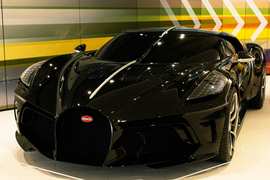
Bugatti Tourbillon
The forthcoming Bugatti Tourbillon is poised to redefine automotive excellence and is eagerly anticipated to claim a prominent spot among the fastest road cars 2026. This groundbreaking model will feature a sophisticated hybrid system, integrating a potent 986 bhp V16 engine. With an estimated combined output exceeding 1,770 bhp, the Tourbillon promises to uphold Bugatti’s formidable reputation for crafting the world’s fastest and most luxurious vehicles. Drawing upon Bugatti’s unparalleled engineering expertise, the Tourbillon is expected to be a true masterpiece of automotive design and performance, setting new benchmarks for luxury hypercars.
Koenigsegg Agera RS
In 2017, Koenigsegg shattered existing speed records with the Agera RS, achieving an astounding 277.87 mph on a closed public highway in Nevada, USA. This accomplishment marked the highest speed ever recorded on a public road by a production car, further solidifying Koenigsegg’s reputation as a pioneer in automotive performance. The Agera RS, powered by a potent twin-turbo V8, represents a remarkable blend of raw power, advanced aerodynamics, and meticulous engineering. Its record-breaking run stands as a testament to the Swedish manufacturer’s dedication to pushing the boundaries of automotive speed records.
Bugatti Mistral
Bugatti, a marque steeped in over 115 years of automotive history, continues to make headlines with its latest creation, the Mistral. This open-top hypercar, a testament to Bugatti’s enduring legacy, is as exclusive as it is powerful, with production limited to just 99 units. The Mistral achieved a remarkable speed of 282.05 mph during testing at the Papenburg test facility in Germany in 2024, driven by esteemed test driver Andy Wallace. Powering this exceptional machine is Bugatti’s iconic quad-turbocharged 8.0-liter W16 engine, a powerplant soon to be succeeded by the naturally aspirated V16 in the upcoming Tourbillon. The Mistral is a fitting celebration of Bugatti’s engineering prowess and their commitment to producing fastest convertible cars.
SSC Tuatara
The SSC Tuatara has been at the center of high-speed record discussions, a journey marked by both controversy and resolute determination. Following initial claims of a 316 mph run that faced scrutiny, SSC meticulously conducted further record attempts with enhanced timing equipment and independent witnesses. These efforts culminated in a verified two-way average speed of 282.9 mph, a truly impressive figure that, while not breaking the mythical 300 mph barrier, showcases the Tuatara’s extraordinary capabilities. Powered by a 5.9-liter flat-plane-crank V8 with twin turbochargers producing 1,750 bhp, and featuring a carbon fiber chassis and rear-wheel drive for minimized weight, the Tuatara is a formidable contender in the top speed battle.
Bugatti Chiron Super Sport 300+
Bugatti’s enduring association with unparalleled speed and power reached a zenith with the Chiron Super Sport 300+. This exceptional vehicle achieved the seemingly impossible: breaking the 300 mph barrier, reaching a verified 304.8 mph at the Ehra-Lessien test track in Germany. This extraordinary feat was made possible by an enhanced 8.0-liter W16 engine producing 1,578 bhp, along with critical aerodynamic upgrades, including an extended rear end to optimize airflow. Only 30 of these magnificent machines were produced for privileged customers, each representing the pinnacle of Bugatti’s engineering prowess and a significant milestone in the pursuit of extreme speed.
Koenigsegg Jesko Absolut
Christian von Koenigsegg’s pronouncement that the Jesko Absolut would be “the absolute fastest Koenigsegg we will ever make” was a statement that demanded attention, and this hypercar is poised to deliver. Designed with an obsessive focus on minimizing drag, the Jesko Absolut is a low-drag variant of the already potent Jesko. Engineers have meticulously refined its aerodynamic profile, extended its body, removed the rear wing, and implemented extensive weight-reduction measures, including what is claimed to be the world’s lightest crankshaft. Tweaks to its ferocious 5.0-liter twin-turbocharged V8 have boosted power to 1,600 bhp. While official figures are pending, Koenigsegg’s target of 310 mph, combined with their proven track record in setting speed records, makes the Jesko Absolut a serious contender for the ultimate world’s fastest car.
Yangwang U9 Xtreme
In a stunning display of technological advancement, the Yangwang U9 Xtreme has ascended to the top of our list, achieving a breathtaking 308 mph. This accomplishment is particularly remarkable given its relatively accessible price point compared to many of its rivals, underscoring the rapid progress in battery and motor technology. The U9 Xtreme’s exceptional performance is driven by significant aerodynamic enhancements over the standard model, four ultra-powerful electric motors delivering a combined 2,978 bhp, and a cutting-edge 1,200V architecture for faster power transfer. Developed by BYD’s premium brand Yangwang, its specialized battery setup is engineered to handle the demands of high-speed operation without overheating, solidifying its position as a groundbreaking achievement in the electric hypercar landscape. The Yangwang U9 Xtreme represents a paradigm shift in the world of fastest cars 2026, showcasing the formidable potential of electric powertrains.
The automotive world continues its relentless pursuit of the ultimate speed, with the fastest road cars 2026 representing the absolute apex of human ingenuity and engineering ambition. As these machines push beyond the 300 mph mark, they not only redefine performance but also inspire future generations of automotive innovation.
Are you captivated by the world of hypercars and the relentless pursuit of speed? Exploring the latest advancements in automotive technology and performance is an ongoing journey. If you’re looking to understand the intricate details of these marvels or discuss your own automotive aspirations, connect with industry specialists and enthusiasts who share your passion. Your next step into the exciting realm of high-performance vehicles awaits.