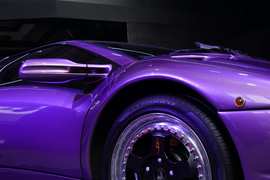
Pagani Utopia 2025: The Apex of Hypercar Artistry and Engineering
For over two decades, the very name Pagani has resonated as a beacon of automotive artistry, a craftsman’s dedication to pushing the boundaries of what a hypercar can be. Now, with the arrival of the Pagani Utopia 2025, Horacio Pagani and his team have not only continued this legacy but have ascended to a new, sublime level. This isn’t merely a successor to the legendary Huayra; it’s a philosophical statement, a meticulously sculpted machine that redefines the hypercar formula for the modern era. Priced from a formidable £2.2 million, the Utopia is a testament to unparalleled engineering, exquisite craftsmanship, and a driving experience that transcends the ordinary.
As an industry professional with a decade immersed in the world of performance automotive, I’ve witnessed the evolution of the hypercar firsthand. We’ve seen the raw, unadulterated power of naturally aspirated V12s give way to the thunderous torque of twin-turbocharged behemoths, and more recently, the silent, instantaneous surge of electric powertrains. Yet, amidst this technological tidal wave, the Pagani Utopia 2025 stands as a defiant, yet utterly elegant, champion of analogue soul. It’s a car that understands the visceral thrill of internal combustion, the tactile joy of a perfectly weighted gear shift, and the profound connection between driver, machine, and the open road.
The Essence of Utopia: Torque, Tactility, and Timeless Design
The true magic of the Pagani Utopia 2025 is best experienced not in a static appreciation of its breathtaking form, but in the symphony of sensation it orchestrates from the moment you engage its heart. Imagine this: you’re cruising at a modest 30 mph, nestled within one of the lower gears – third, perhaps, for a pronounced effect. Your fingers, lightly gripping the finely crafted steering wheel, anticipate the moment. You press the throttle. There’s a brief, almost imperceptible whisper of anticipation, a pregnant pause as the 6.0-liter, AMG-developed twin-turbo V12 takes a deep, resonant breath. Then, with a ferocity that borders on the elemental, the engine unleashes its pent-up fury, transforming mere air into an explosive force that presses you back into your seat with an intensity that is both exhilarating and profoundly addictive.
This isn’t the jarring, brutalistic shove of some extreme electric vehicles, but rather a relentless, ever-intensifying longitudinal g-force. The first time it happens, your body instinctively reacts, akin to that moment in childhood when you leaned back too far on a chair. A primal, “Whoa!” escapes your lips. You ease off the throttle, a bead of sweat tracing a path down your temple, and take a deep, shaky breath. Then comes the rush of adrenaline, followed by an irrepressible wave of childlike giggles. And inevitably, you do it again. And again. The sheer, unadulterated joy of the Utopia’s ability to hurl you towards the horizon with such relentless gusto never diminishes. While this simple act of in-gear acceleration might seem to trivialize the Utopia’s vast capabilities, it perfectly encapsulates its elemental, profound appeal. It’s a machine that reconnects you with the raw, unadulterated essence of driving.
This remarkable feat of engineering is the third distinct model line to emerge from Pagani’s hallowed San Cesario sul Panaro factory in over a quarter of a century. It’s a rare occurrence, akin to witnessing a masterpiece from a Renaissance artist. The Utopia is a £2,200,000, 1280kg marvel, powered by a 852bhp twin-turbo V12, a glorious confection of advanced composites and exotic alloys that embodies Horacio Pagani’s vision of automotive perfection. While Sir Thomas More’s original Utopia envisioned an unattainable societal ideal, Pagani’s is a tangible, breathtaking reality – at least for the discerning few who have secured one of the limited coupe build slots. For those of us observing from the sidelines, it remains a fleeting, almost dreamlike experience, best savored on the winding roads surrounding the factory, a day to inhale the rarefied air of true automotive aficionados.
A Decade of Evolution: From Zonda to Utopia
My own journey in the automotive industry began just as Pagani was solidifying its reputation. I recall the early days, the intimate atmosphere of their original facility, a testament to Horacio Pagani’s unwavering dedication. Today, the “Atelier,” their state-of-the-art headquarters and museum opened in 2017, is a sprawling monument to their growth. Here, alongside car production, departments dedicated to restoration, personalization, and bespoke projects – known as Rinascimento, Unico, and Grandi Complicazioni – thrive. The Utopia represents the culmination of this evolution, building upon the foundations of the iconic Zonda and the groundbreaking Huayra, while forging its own distinct identity.
The experience of encountering the Utopia begins long before you take the wheel. It’s an immersive journey, starting as a passenger, riding shotgun with Pagani’s R&D test driver, Alberto Scilla. While I typically prefer the control of the driver’s seat, this handover process is built on trust and mutual respect, offering a unique perspective on the car’s behavior. Our destination: the Futa Pass, a legendary stretch of asphalt steeped in Mille Miglia history, just a short drive from the Pagani HQ. It’s the perfect stage to experience the Utopia without attracting undue attention, though with a car of this caliber, anonymity is a fleeting concept.
Even from the passenger seat, the Utopia is an utterly captivating experience. It possesses a surprising suppleness, and while the V12 is an ever-present entity, it remains commendably restrained at lower speeds and smaller throttle inputs. Yet, when roused, its sheer power is undeniable. Paganis have always been conceived as road cars first and foremost, and the Utopia elevates this philosophy with a new level of refinement that complements its mouth-drying performance. Scilla articulates the immense effort invested in perfecting the manual transmission. It’s not just about the crispness of the shifts but the nuanced feel of the clutch. Managing over 811lb ft of torque through a manual gearbox requires an extraordinary level of engineering finesse, and judging by Scilla’s effortless gear changes, the Utopia has achieved this with remarkable grace.
Aesthetic Purity Meets Technological Sophistication
As we glide along the autostrada, the Utopia moves with an almost predatory grace, effortlessly slicing through traffic with an undeniable presence. It’s a procession of automotive art, every curve and contour a testament to meticulous design. Occasionally, Scilla drops a gear, a playful flex of the V12’s muscle. The engine responds with a guttural roar, a lion-like growl building from the depths of the 6.0-liter block. The delivery is sweeter and sharper than the original Huayra’s, imbued with a richer, more outgoing personality, yet underscored by a steely edge. It’s an engine that speaks a language of pure, unadulterated passion.
Upon stopping for fuel, the inevitable occurs: a gathering of admirers, drawn by the sheer magnetism of this automotive sculpture. It’s a testament to Pagani’s enduring appeal. Stepping back, even after spending an hour within its confines, I find myself mesmerized. The Utopia eschews the overt aerodynamic appendages and aggressive diffusers that often adorn modern hypercars. Instead, it embraces a more artistic endeavor, celebrating purity of form, adorned with lavish embellishments and captivating flourishes. It’s a unique fusion, the very essence of Pagani’s distinctive aesthetic.
The weight of the Utopia-shaped key in my hand feels substantial, a tangible link to this automotive icon. My gaze, however, remains captivated by its flowing lines, the compound curves that speak of hours of sculpting. Every piece of brightwork, both exterior and interior, is meticulously machined from billet aluminum, lending a jewelry-like quality and creating the impression that the entire car has been carved from a single, monolithic block. Seeing it in the flesh, in its natural habitat, is a truly remarkable experience.
The Cockpit: A Sanctuary of Craftsmanship
The iconic upswept dihedral doors, a departure from the Huayra’s gullwings and the Zonda’s conventional hinges, swing open to reveal an extraordinary cockpit. It’s a dazzling exercise in maximalism, a riot of exquisite materials, shapes, and finishes. All the signature Pagani cues are present: the periscope air vents, the floating crescent-shaped instrument binnacle, the flawless exposed carbon fiber structure, and the intelligent use of glazing that extends into the roof panel, flooding the cabin with light and creating a sense of expansive space.
True to its ethos, the Utopia celebrates mechanical ingenuity. The analogue instruments feature small portholes, allowing a glimpse into their intricate workings, much like the back of a fine Swiss watch. And there, emerging from the transmission tunnel like a piece of functional sculpture, is the machined-from-solid gear shifter for the optional seven-speed manual gearbox, its complex linkage proudly displayed.
Pagani’s profound admiration for Leonardo da Vinci, who first articulated the inseparable link between art and science, is evident throughout. The steering wheel is a prime example. Crafted from over 750 individual components, it begins as a 43kg billet of high-grade alloy. After 28 hours of five-axis machining to tolerances of just 0.5 microns, followed by meticulous hand-polishing, the finished wheel weighs a mere 1.6kg. The 41.3kg of alloy shavings are then diligently recycled, a testament to Pagani’s commitment to sustainability.
The Analogue Heartbeat: A Manual Transmission Masterpiece
In an era where manual transmissions in supercars often feel like a relic of the past, the Utopia’s clutch pedal is a revelation. It’s light, smooth, and requires just the right amount of effort to feel mechanical. The precision with which you can find the bite point and execute a seamless pull-away is a delight. The gear shifts themselves are clean and crisp, with a satisfyingly deliberate action. While slightly longer than some may expect and lacking the definitive notch of a gated Ferrari shifter, the overall experience is profoundly pleasing.
The inclusion of a dog-leg first gear adds a touch of delightful nostalgia. In truth, the V12’s immense torque from idle means you could easily pull away in second gear. However, the positive spring bias, which naturally guides the lever towards the center line of the open gate, makes the upshift to second and subsequent gears exceptionally slick and precise. It’s no wonder that a staggering 70 percent of Utopia customers opt for the manual gearbox.
Beneath the Surface: Sophisticated Dynamics
While the Utopia proudly embraces an analogue feel, it benefits from advanced, fully integrated electronics. A selection of dynamic modes – Comfort, Sport, Race, and Wet – allows you to tailor the car’s demeanor. A “Supersoft” mode, akin to Ferrari’s bumpy road button, provides instant access to the most pliant suspension setting.
However, such adjustments are often unnecessary. The semi-active TracTive dampers are masterfully calibrated, achieving an impressive equilibrium between bump absorption and body control. Sport mode becomes my default setting, injecting a shot of adrenaline into the Utopia’s system without making it overly frenetic. The Electronic Stability Control (ESC) provides reassuring oversight, gently intervening if you become too enthusiastic with the throttle on corner exits, yet allowing for blistering progress. This is further amplified by the incredible grip of the Pirelli P Zero Corsa tires – 265/35 R21 up front and a substantial 325/30 R22 at the rear – as they warm to their task.
The thought of engaging Race mode elicits a moment of introspection. The potential consequences of a misjudgment, especially with a £2.2 million machine, weigh heavily. The internal debate between caution and the persuasive whisper of temptation is a familiar one for any driver in this situation. Ultimately, a compromise is reached: Race mode is selected, but the ESC remains firmly engaged. This proves to be the correct decision. The added ferocity of Race mode unlocks the Utopia’s full performance potential, and the more relaxed ESC allows for a delightful degree of enjoyable oversteer at the rear wheels, while still providing a dependable safety net.
The Thrill of the V12: A Timeless Symphony
Accelerating the Utopia through the gears is akin to riding a rocket. The AMG-designed, hand-built Pagani V12, though redlining at a relatively modest 6700rpm, delivers its power in a way that makes each gear change an event to be savored. You find yourself naturally gravitating towards third and fourth gears, with occasional forays into fifth and judicious drops into second. In Race mode, the V12’s bellow becomes harder, more guttural under load. The induction systems and turbos exhale with a symphony of chuffs and gurgles as you modulate the throttle. The experience is equally captivating on the overrun, with a bass-heavy artillery fire erupting from the Gatling-gun exhaust.
This raw, explosive power contrasts beautifully with the Utopia’s seductive lines and refined character. Its precision, poise, and illusion of compactness are remarkably modern. While supercars of this stature once wore their unwieldiness as a badge of honor, the latest generation, exemplified by the hybrid torque-vectoring Lamborghini Revuelto, has redefined expectations. Paganis have always possessed a genetic advantage – a chassis constructed from titanium-infused carbon fiber and a mechanical purity that eschews complex solutions to mitigate weight. Despite its timeless objectives, the Utopia has moved with the times.
Power-to-Weight: A Different Kind of Performance
Power-to-weight ratios can be deceptive. Numerically, a 500bhp car weighing a ton might seem equivalent to a 1000bhp car weighing two tons. However, the driving experience of each is vastly different. The Pagani Utopia, at a featherweight 1280kg dry (1340kg wet) and 852bhp, is outperformed in raw figures by EV hypercars like the Pininfarina Battista or the Bugatti Chiron. Yet, it feels more energized and alert at all times, thanks to its significantly lower mass that needs to be propelled, contained, and maneuvered.
On the exhilarating stretches of the Futa Pass, this translates into a car with colossal potency between corners, a machine that revels in braking zones and the turns themselves. It feels natural, predictable, and even exploitable, its colossal performance reserves inviting you to push deeper. The steering is light and precise, offering quick responses with enough composure to guide the Utopia to the apex with uncanny accuracy and confidence. The ability to place the inside front wheel exactly where you want it is astonishing. Initially, you might crave a fraction more tactile feedback, but with time, you realize this lack of distraction is an intrinsic part of the Utopia’s design philosophy. Coupled with the light clutch, the slick gearbox, and the titanic powerplant, you don’t fight the Utopia; you find harmony.
The same effortless control extends to the Utopia’s immense Brembo CCM-R brakes – 410mm at the front and 390mm at the rear, with colossal six-piston front and four-piston rear calipers. They apply progressive clamping force to the vast carbon rotors with unwavering consistency. Easy to modulate at low speeds, they offer endless bite at higher velocities, with a persistently firm pedal that instills absolute confidence.
The Utopia’s Philosophy: Harmony Over Extremes
The magic of the Pagani Utopia lies in its transcendence of conventional hypercar doctrine. Yes, it is immensely powerful and blindingly fast. But, as its name suggests, the Utopia’s focus is on delivering perfect harmony in all aspects, rather than prioritizing extremes at the expense of the overall experience. The marriage of the monumental twin-turbo V12 to a sweet-shifting manual gearbox is transformative. The decision not to chase four-digit horsepower figures or an extreme redline results in a powertrain packed with eye-widening, and crucially, nuanced performance that shines brilliantly on the road at all speeds. The fact that it meets global emissions and homologation standards underscores Pagani’s meticulous approach and the invaluable partnership with AMG as its engine supplier.
While sophisticated electronics are often perceived as antithetical to organic, analogue-feeling cars, the Utopia’s adept application of adaptive damping, ESC, and its electronic differential expertly refines – and, when necessary, tames – the driving experience, enhancing the feel and dynamism that discerning drivers crave.
The result is a savagely quick and sublimely sorted machine. It combines the purity and engagement of the Zonda with the epic reach and modern refinements of the Huayra, all imbued with its own authentic character and distinct capabilities. The Utopia advances the game while adhering to its own set of rules; contemporary where it matters, and timeless where it counts. Pagani has, once again, achieved the extraordinary.
The Pagani Utopia Roadster: Open-Air Perfection
Pagani has a distinguished history of producing open-top variants of its iconic models. However, unlike previous iterations, the design process for the Utopia coupe and Roadster was conducted concurrently. This simultaneous development has resulted in a car with even fewer compromises. The dry weight remains an identical 1280kg, and Pagani’s unparalleled mastery of carbon fiber ensures the bespoke tub retains exceptional rigidity without the need for additional reinforcement. Like its coupe sibling, the Utopia Roadster benefits from worldwide homologation for safety and emissions.
While the engineering remains a triumph, production numbers and pricing have seen an increase. Each of the 130 Utopia Roadsters will command a price of £3.1 million. Production will be carefully managed, with an output of approximately 50 to 60 cars per year.
For those who appreciate the ultimate expression of automotive artistry and engineering, who seek a driving experience that engages every sense and transcends the ordinary, the Pagani Utopia represents an unparalleled opportunity. Discover the next chapter in hypercar evolution – explore the world of Pagani and the breathtaking Utopia today.