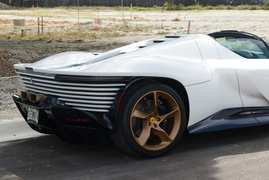
Pagani Utopia: A Masterclass in Hypercar Alchemy in the United States
For over a decade, navigating the rarefied atmosphere of the hypercar market has been my professional landscape. I’ve witnessed trends shift, technological boundaries pushed, and the very definition of automotive excellence redefined. Yet, amidst this constant evolution, few creations command the sheer awe and profound respect that the Pagani Utopia elicits. This isn’t merely a successor to legendary machines like the Zonda and Huayra; it’s a meticulously crafted testament to the enduring power of mechanical artistry, a rare gem in the United States automotive scene, and frankly, a triumph of engineering and design.
Priced from approximately $2.2 million USD, the Pagani Utopia is an invitation to experience performance at its most elemental, wrapped in a shell of breathtaking beauty and intricate detail. It embodies a philosophy where the raw, unadulterated thrill of driving takes center stage, a stark contrast to the often-sterilized experience offered by some of today’s electrified titans.
The Symphony of Torque: Experiencing the Pagani Utopia
Let’s talk about torque. Not just the brute force numbers, but the visceral, soul-stirring sensation that defines the Utopia’s character. Imagine cruising at a modest 30 miles per hour, nestled in third or perhaps fourth gear. Your hands rest on the steering wheel, a subtle tension in your grip. You inhale, and then, you apply throttle. What follows is not an immediate, overwhelming surge, but a beautifully orchestrated crescendo. The 6.0-liter, twin-turbocharged AMG-derived V12, the beating heart of this masterpiece, awakens. It draws breath, and then unleashes an explosive force that transforms air into pure motion. The world outside your immediate view might blur slightly at the periphery.
As the twin-scroll turbos spool and boost pressure builds, you’re enveloped by relentless longitudinal acceleration. This isn’t the jarring, unsettling slam of an extreme electric vehicle, but a potent, ever-intensifying embrace. The first encounter can evoke a primal, almost childlike reaction – the same involuntary flinch you might have experienced leaning too far back in your school chair. A momentary release of the throttle, a quick wipe of your palms, and then… a deep, cleansing breath.
The ensuing adrenaline rush is immediate, followed by an almost uncontrollable wave of laughter. And then, you do it again. And again. The sheer novelty of the Utopia’s ability to launch you towards the horizon with such unbridled enthusiasm never seems to diminish. While these simple in-gear acceleration bursts might seem to undersell the car’s vast capabilities, they beautifully encapsulate the fundamental allure of this extraordinary machine.
A Modern Interpretation of an Ideal: The Utopia’s Genesis
Over five centuries ago, Sir Thomas More penned his seminal work, “Utopia,” envisioning a perfect society. Today, Horacio Pagani, a visionary akin to the Renaissance masters, has brought forth his own iteration of perfection: the Pagani Utopia. This $2.2 million USD, approximately 2,822-pound, 852-horsepower twin-turbo V12-powered marvel is a symphony of advanced composites and exotic alloys, a tangible embodiment of automotive artistry. While More’s vision remained an intellectual ideal, Pagani’s Utopia is a very real, albeit exclusive, pursuit of automotive nirvana.
For the fortunate 99 individuals who secured a coupe build slot, and the select few who opted for the Roadster variant, this Utopia is a tangible reality. For those of us in the automotive press, it’s a fleeting, deeply cherished experience, a day of indulgence on the most exquisite roads within reach of Pagani’s Modena headquarters. It’s a rare opportunity to breathe the rarefied air of the discerning ultra-high-net-worth automotive connoisseur.
The Art of Patience: Pagani’s Evolutionary Approach
Like any true artist, Horacio Pagani does not rush his creations. New Pagani model lines are rare events, and the Utopia marks only the third distinct lineage to emerge from the company’s San Cesario sul Panaro factory in over 26 years. The anticipation, therefore, is palpable. Has the wait been worth it? The evidence suggests an emphatic yes.
Much has transpired at Pagani since my initial visit in 1999. Back then, the entire operation, including Horacio Pagani’s personal residence, was housed within a modernist glass and steel structure that now serves as the company’s Art & Science Research Centre, still bustling with activity for development prototypes. Today, production, along with the bespoke customization, restoration, and special projects divisions – known within Pagani as Rinascimento, Unico, and Grandi Complicazioni – reside at the main ‘Atelier.’ This impressive headquarters and museum, inaugurated in 2017, is a testament to the brand’s growth and unwavering commitment to its core principles.
An Initial Immersion: The Passenger’s Perspective
Our encounter with the Utopia begins not behind the wheel, but in the passenger seat, alongside Pagani’s seasoned R&D test driver, Alberto Scilla. While I typically prefer to be in control, this process is one of mutual trust and respect, offering a unique vantage point to observe the car’s demeanor before taking the reins.
Our destination: the Futa Pass, a cherished route in the Emilia-Romagna region, a mere 90 minutes from Pagani’s home. This legendary stretch, part of the historic Mille Miglia route, is the perfect crucible to experience the Utopia’s capabilities without attracting undue attention. With our photography team following close behind, Scilla and I embark on our journey, the autostrada serving as our initial pathway out of Modena. Even from this vantage point, a sense of exhilaration washes over me, as if this is my very first encounter with such automotive artistry.
Even as a passenger, the Utopia is a captivating experience. It possesses a suppleness that belies its hypercar credentials. The V12, though ever-present, remains understated at lower speeds and gentle throttle inputs, only to unleash its formidable power when provoked. Paganis have always been conceived as road cars first and foremost, and the Utopia elevates this ethos with an unprecedented level of refinement, seamlessly blended with performance that will undoubtedly leave a lasting impression.
Scilla elaborates on the painstaking effort invested in calibrating the manual transmission. It’s not just about the crispness of the shift, but the nuanced feel of the clutch. Managing 811 lb-ft of torque through a traditional stick shift presents a formidable challenge, demanding a delicacy that truly celebrates the essence of a manual gearbox. Judging by the fluid, effortless way Scilla manipulates the gear lever, Pagani has achieved precisely that.
We glide along the A1 autostrada, a predator in the urban jungle, effortlessly parting traffic with an imposing presence. Our lane seems to magically clear ahead, reminiscent of the fervent crowds lining the stages of Group B rallying’s golden era. Periodically, Scilla downshifts a gear or two, seemingly for the sheer pleasure of it, and gently probes the throttle. The V12 responds with a resonant hiss and a deep, guttural growl as the turbos spool, a lion-like murmur emanating from the heart of the 6.0-liter block. It’s a more immediate, sharper delivery than the original Huayra’s, imbued with a richer, more outgoing personality, yet underscored by a steely resolve. What an engine!
A Gathering Magnet: The Utopia’s Captivating Presence
Our stop for refueling offers an immediate insight into the Utopia’s magnetic appeal. As if summoned by its very presence, onlookers materialize from all directions, drawn by its irresistible allure. While some might find this attention intrusive, there’s something profoundly satisfying about witnessing the enduring fascination inspired by a wide, low-slung, exquisitely designed automobile.
As bystanders capture images with their smartphones, I take a moment to absorb the scene. Even after spending an hour immersed in its presence, I find myself captivated. Eschewing the ostentatious wings and aggressive venturi tunnels that dominate modern hypercar design, the Utopia pursues a more artistic endeavor. It celebrates purity of form, adorned with lavish embellishments and striking flourishes. This unique fusion lies at the very essence of Pagani’s distinctive aesthetic.
Holding the satisfyingly weighted, Utopia-shaped key fob, one might expect a sense of composed detachment. Yet, my gaze remains transfixed by its compound curves, as if scanning it in three dimensions. Every piece of exterior and interior brightwork is meticulously machined from a solid billet of metal, lending it a jewelry-like quality and creating the impression that the entire car has been sculpted from a single, monolithic piece. Witnessing this out in the real world is, quite simply, remarkable.
An Interior Sanctuary: The Art of Maximalism
With the fuel tank replenished and Scilla now expertly piloting our camera vehicle, it’s time for the shift. The upward-opening dihedral doors, a signature of modern supercars, mark a departure from the Huayra’s expansive gullwings and the Zonda’s conventional hinges. They swing open to reveal an extraordinary cockpit. Packed with exquisite materials and a vibrant array of shapes and finishes, it’s a dazzling exercise in controlled maximalism. All the familiar Pagani signatures are present: the periscope-like air vents, the elegant crescent-shaped instrument binnacle, the flawless exposed carbon-fiber structure, and the ingenious use of glazing, extending into the roof panel to flood the cabin with light and a sense of spaciousness.
True to its core mission, the Utopia champions the pinnacle of mechanical craftsmanship. The analog instruments feature small portholes, allowing a glimpse into their intricate inner workings, akin to the exhibition caseback of a fine Swiss watch. And there, emerging from the transmission tunnel like a piece of kinetic sculpture, sits the exquisitely machined gear shifter for the optional seven-speed manual gearbox, its complex linkage proudly on display.
Pagani’s profound passion for meticulously crafted engineering stems from a lifelong admiration for Leonardo da Vinci, who first articulated the inseparable link between art and science. The Utopia is replete with examples of this philosophy, but the steering wheel stands out as a prime illustration. Crafted in Modena Design’s state-of-the-art CNC facility, the wheel begins life as a 43kg billet of high-grade alloy. After 28 hours of five-axis machining to tolerances of just 0.5 microns, followed by a meticulous hand-polishing process, the finished wheel tips the scales at a mere 1.6kg. And before you lament the material wastage, rest assured that the remaining 41.3kg of swarf is diligently recycled.
The Manual Transfusion: A Connection Reclaimed
There was a time when manual supercars were equipped with clutches that demanded the strength of a gymnasium leg press. The Utopia’s clutch, however, is remarkably light and smooth. It offers just enough resistance to convey its mechanical nature, yet the ease with which you can find the bite point and pull away smoothly is nothing short of delightful. The gearshift itself is clean and precise – perhaps a fraction longer than one might anticipate and lacking the pronounced resistance of a gated Ferrari shift, but undeniably pleasing.
A dog-leg first gear adds a touch of nostalgic charm. To be frank, such is the surge of torque available from idle that you could easily pull away in second gear. However, thanks to a positive spring bias that guides the lever towards the center line of the open gate, the upshift to second and subsequent gears is remarkably slick and accurate. It’s no wonder that a staggering 70 percent of Utopia customers opt for the manual transmission.
Navigating the Digital Age: Analog Heart, Digital Brain
While presenting itself as a proudly analog machine, the Utopia benefits from advanced and seamlessly integrated electronic systems. Drivers can select from a range of dynamic modes: Comfort, Sport, Race, and Wet. These settings allow for the fine-tuning of the Utopia’s demeanor, softening or sharpening its response. A “Supersoft” mode, akin to Ferrari’s bumpy road button, provides the ability to swiftly select the most compliant suspension setting.
However, the need to engage this supersoft mode is infrequent. The semi-active TracTive dampers are exceptionally well-calibrated, striking an impressive balance between bump absorption and body control. Sport mode becomes my default, injecting a shot of espresso into the Utopia’s system without making it overly agitated. The Electronic Stability Control (ESC) offers reassuring oversight, subtly intervening if one becomes too ambitious with the throttle on corner exits, yet the progress remains exhilaratingly swift. This is particularly true once the Pirelli P Zero Corsa tires – 265/35 R21 at the front and 325/30 R22 at the rear – reach their optimal operating temperature.
The thought of switching to Race mode prompts a moment of introspection, primarily fueled by the hypothetical scenario of explaining a scraped carbon-fiber panel to Horacio Pagani. My internal dialogue becomes a lively debate between caution and the persuasive allure of exploring the car’s full potential. The devil on my shoulder insists that Race mode will be perfectly manageable, even suggesting that a “proper driver” would deactivate the ESC entirely.
Ultimately, a compromise is reached: Race mode is engaged, but the ESC button remains untouched. This proves to be the correct decision. The heightened intensity accessible in Race mode unleashes the Utopia’s full performance spectrum, and the more relaxed ESC setting permits a gratifying and enjoyable degree of rear-wheel oversteer, while still retaining a dependable safety net.
The Rocket’s Ride: Harnessing the V12’s Fury
Accelerating the Utopia through the gears is akin to riding a rocket. The AMG-designed and hand-built Pagani V12 is not a screamer; its redline is a relatively modest 6,700 rpm. Yet, each gear shift is an event to be savored. You find yourself predominantly working in third and fourth gears, with occasional excursions into fifth and downshifts into second. In Race mode, the V12’s roar becomes more visceral and guttural under acceleration, accompanied by a symphony of induction snorts and turbo whistles as you modulate the throttle. It’s equally captivating on deceleration, with a deep, bass-heavy artillery fire emanating from the Gatling-gun exhaust system on the overrun.
This raw, explosive power seems at odds with the Utopia’s seductive silhouette and refined character. However, the precision, poise, and illusion of compactness are thoroughly contemporary. Supercars of this size once wore their unwieldiness like a badge of honor. Yet, the latest breed, particularly hybrid marvels like the Lamborghini Revuelto with its torque-vectoring prowess, have fundamentally altered the game. Paganis have always possessed a genetic advantage: a chassis structure forged from titanium-infused carbon fiber and a mechanical purity that obviates the need for complex solutions to mitigate mass. Despite its timeless design objectives, the Utopia has admirably kept pace with technological advancements.
The Power-to-Weight Paradox: Agility and Adaptability
Power-to-weight ratios can sometimes be deceptive. Numerically, a 500-horsepower car weighing a ton might seem equivalent to a 1,000-horsepower car weighing two tons. However, their driving dynamics will feel vastly different. This is precisely the case with the Utopia. Weighing in at approximately 2,822 pounds dry (1,340 kg wet) and producing 852 horsepower and 811 lb-ft of torque, it might be outgunned in sheer numbers by electric hypercars like the Pininfarina Battista or the Bugatti Chiron. However, it feels demonstrably more energized and alert at all times because it has a significantly lesser mass to propel, contain, and maneuver.
Up here on the most engaging sections of the Futa Pass, this translates into a car with colossal potency between corners, but also one that revels in braking zones and the turns themselves. It feels natural, predictable, and even exploitable, in a manner that belies the immense forces at play. This confidence inspires you to delve deeper into its prodigious performance reserves. The steering is light and precise, possessing quick reflexes yet maintaining enough composure to guide the Utopia to the apex with accuracy, consistency, and assurance. The ability to place the inside front wheel with such exactitude is uncanny. Initially, one might crave a fraction more tactile connection, but with time, it becomes clear that this refined detachment is an integral part of the Utopia’s driving philosophy. Coupled with the light clutch, the smooth-shifting gearbox, and the titanic powerplant, you find yourself in harmony with the Utopia, rather than fighting it.
Braking Brilliance: Confidence Under Pressure
The same harmony extends to the Utopia’s formidable braking system. Massive 410mm front and 390mm rear Brembo CCM-R carbon-ceramic discs, gripped by enormous six-piston front and four-piston rear calipers, apply progressive clamping force. These brakes are remarkably easy to modulate at lower speeds, yet offer seemingly endless bite at higher velocities, all while maintaining a consistently firm pedal, instilling unwavering confidence.
The Utopia’s Enduring Magic: Harmony Above Extremes
Exquisite, eccentric, and utterly captivating – the magic of the Utopia lies in its transcendence of conventional hypercar doctrine. Yes, it is immensely powerful and blindingly fast. However, as its name suggests, the Utopia’s primary emphasis is on delivering perfect harmony across all facets of its being, rather than prioritizing extreme performance at the expense of the overall experience.
The marriage of the monumental twin-turbo V12 to a delightfully slick manual gearbox is transformative. Likewise, the decision not to chase stratospheric horsepower figures or five-digit redlines has resulted in a powertrain brimming with awe-inspiring, and crucially, nuanced performance that shines brilliantly on public roads at all speeds. The fact that it successfully navigates global emissions regulations and homologation standards further underscores Pagani’s meticulous approach to its craft and the invaluable partnership with AMG as its engine supplier.
Sophisticated electronics are often perceived as anathema to organic, analog-feeling cars. Yet, the judicious application of adaptive damping, ESC, and the electronic differential in the Utopia finesses (and, when necessary, tames!) the vehicle to enhance the feel and dynamism that discerning drivers truly crave.
The result is a savagely quick and sublimely sorted machine. It seamlessly blends the purity and engagement of the Zonda with the epic reach and modern refinements of the Huayra, all while imbuing its own authentic character and distinct capabilities. The Utopia moves the game forward by adhering to its own uncompromising principles; contemporary where it matters, and timeless where it counts. Pagani has once again achieved automotive perfection.
The Pagani Utopia Roadster: An Open-Air Revelation
While Pagani has previously offered open-top variants of the Zonda and Huayra, the Utopia represents the first instance where the coupe and Roadster design processes were undertaken concurrently. The result is a car with even fewer compromises. The dry weight remains an identical 1,280kg (2,822 lbs) to that of the coupe. Pagani’s unparalleled mastery of carbon fiber ensures that the bespoke tub retains exceptional rigidity without the necessity for additional reinforcement. Much like its coupe sibling, the Utopia Roadster boasts worldwide homologation for safety and emissions.
However, production numbers and price have seen an upward adjustment compared to the coupe. Pagani is asking approximately $3.1 million USD for each of the 130 Roadsters planned. Production is slated to occur at a rate of between 50 and 60 cars per year.
Ready to Explore the Pinnacle of Automotive Artistry?
The Pagani Utopia is more than just a car; it’s an experience, a legacy, and a testament to human ingenuity. If you’re a discerning collector or a passionate enthusiast in the United States seeking to understand the true meaning of a hypercar, we invite you to delve deeper into the world of Pagani. Contacting a specialist dealership or Pagani’s authorized representatives is the crucial next step in understanding how to acquire this automotive masterpiece and begin your own journey into unparalleled performance and artistry.


 Pagani Utopia: A Masterclass in Hypercar Alchemy in the United States
For over a decade, navigating the rarefied atmosphere of the hypercar market has been my professional landscape. I’ve witnessed trends shift, technological boundaries pushed, and the very definition of automotive excellence redefined. Yet, amidst this constant evolution, few creations command the sheer awe and profound respect that the Pagani Utopia elicits. This isn’t merely a successor to legendary machines like the Zonda and Huayra; it’s a meticulously crafted testament to the enduring power of mechanical artistry, a rare gem in the United States automotive scene, and frankly, a triumph of engineering and design.
Priced from approximately $2.2 million USD, the Pagani Utopia is an invitation to experience performance at its most elemental, wrapped in a shell of breathtaking beauty and intricate detail. It embodies a philosophy where the raw, unadulterated thrill of driving takes center stage, a stark contrast to the often-sterilized experience offered by some of today’s electrified titans.
The Symphony of Torque: Experiencing the Pagani Utopia
Let’s talk about torque. Not just the brute force numbers, but the visceral, soul-stirring sensation that defines the Utopia’s character. Imagine cruising at a modest 30 miles per hour, nestled in third or perhaps fourth gear. Your hands rest on the steering wheel, a subtle tension in your grip. You inhale, and then, you apply throttle. What follows is not an immediate, overwhelming surge, but a beautifully orchestrated crescendo. The 6.0-liter, twin-turbocharged AMG-derived V12, the beating heart of this masterpiece, awakens. It draws breath, and then unleashes an explosive force that transforms air into pure motion. The world outside your immediate view might blur slightly at the periphery.
As the twin-scroll turbos spool and boost pressure builds, you’re enveloped by relentless longitudinal acceleration. This isn’t the jarring, unsettling slam of an extreme electric vehicle, but a potent, ever-intensifying embrace. The first encounter can evoke a primal, almost childlike reaction – the same involuntary flinch you might have experienced leaning too far back in your school chair. A momentary release of the throttle, a quick wipe of your palms, and then… a deep, cleansing breath.
The ensuing adrenaline rush is immediate, followed by an almost uncontrollable wave of laughter. And then, you do it again. And again. The sheer novelty of the Utopia’s ability to launch you towards the horizon with such unbridled enthusiasm never seems to diminish. While these simple in-gear acceleration bursts might seem to undersell the car’s vast capabilities, they beautifully encapsulate the fundamental allure of this extraordinary machine.
A Modern Interpretation of an Ideal: The Utopia’s Genesis
Over five centuries ago, Sir Thomas More penned his seminal work, “Utopia,” envisioning a perfect society. Today, Horacio Pagani, a visionary akin to the Renaissance masters, has brought forth his own iteration of perfection: the Pagani Utopia. This $2.2 million USD, approximately 2,822-pound, 852-horsepower twin-turbo V12-powered marvel is a symphony of advanced composites and exotic alloys, a tangible embodiment of automotive artistry. While More’s vision remained an intellectual ideal, Pagani’s Utopia is a very real, albeit exclusive, pursuit of automotive nirvana.
For the fortunate 99 individuals who secured a coupe build slot, and the select few who opted for the Roadster variant, this Utopia is a tangible reality. For those of us in the automotive press, it’s a fleeting, deeply cherished experience, a day of indulgence on the most exquisite roads within reach of Pagani’s Modena headquarters. It’s a rare opportunity to breathe the rarefied air of the discerning ultra-high-net-worth automotive connoisseur.
The Art of Patience: Pagani’s Evolutionary Approach
Like any true artist, Horacio Pagani does not rush his creations. New Pagani model lines are rare events, and the Utopia marks only the third distinct lineage to emerge from the company’s San Cesario sul Panaro factory in over 26 years. The anticipation, therefore, is palpable. Has the wait been worth it? The evidence suggests an emphatic yes.
Much has transpired at Pagani since my initial visit in 1999. Back then, the entire operation, including Horacio Pagani’s personal residence, was housed within a modernist glass and steel structure that now serves as the company’s Art & Science Research Centre, still bustling with activity for development prototypes. Today, production, along with the bespoke customization, restoration, and special projects divisions – known within Pagani as Rinascimento, Unico, and Grandi Complicazioni – reside at the main ‘Atelier.’ This impressive headquarters and museum, inaugurated in 2017, is a testament to the brand’s growth and unwavering commitment to its core principles.
An Initial Immersion: The Passenger’s Perspective
Our encounter with the Utopia begins not behind the wheel, but in the passenger seat, alongside Pagani’s seasoned R&D test driver, Alberto Scilla. While I typically prefer to be in control, this process is one of mutual trust and respect, offering a unique vantage point to observe the car’s demeanor before taking the reins.
Our destination: the Futa Pass, a cherished route in the Emilia-Romagna region, a mere 90 minutes from Pagani’s home. This legendary stretch, part of the historic Mille Miglia route, is the perfect crucible to experience the Utopia’s capabilities without attracting undue attention. With our photography team following close behind, Scilla and I embark on our journey, the autostrada serving as our initial pathway out of Modena. Even from this vantage point, a sense of exhilaration washes over me, as if this is my very first encounter with such automotive artistry.
Even as a passenger, the Utopia is a captivating experience. It possesses a suppleness that belies its hypercar credentials. The V12, though ever-present, remains understated at lower speeds and gentle throttle inputs, only to unleash its formidable power when provoked. Paganis have always been conceived as road cars first and foremost, and the Utopia elevates this ethos with an unprecedented level of refinement, seamlessly blended with performance that will undoubtedly leave a lasting impression.
Pagani Utopia: A Masterclass in Hypercar Alchemy in the United States
For over a decade, navigating the rarefied atmosphere of the hypercar market has been my professional landscape. I’ve witnessed trends shift, technological boundaries pushed, and the very definition of automotive excellence redefined. Yet, amidst this constant evolution, few creations command the sheer awe and profound respect that the Pagani Utopia elicits. This isn’t merely a successor to legendary machines like the Zonda and Huayra; it’s a meticulously crafted testament to the enduring power of mechanical artistry, a rare gem in the United States automotive scene, and frankly, a triumph of engineering and design.
Priced from approximately $2.2 million USD, the Pagani Utopia is an invitation to experience performance at its most elemental, wrapped in a shell of breathtaking beauty and intricate detail. It embodies a philosophy where the raw, unadulterated thrill of driving takes center stage, a stark contrast to the often-sterilized experience offered by some of today’s electrified titans.
The Symphony of Torque: Experiencing the Pagani Utopia
Let’s talk about torque. Not just the brute force numbers, but the visceral, soul-stirring sensation that defines the Utopia’s character. Imagine cruising at a modest 30 miles per hour, nestled in third or perhaps fourth gear. Your hands rest on the steering wheel, a subtle tension in your grip. You inhale, and then, you apply throttle. What follows is not an immediate, overwhelming surge, but a beautifully orchestrated crescendo. The 6.0-liter, twin-turbocharged AMG-derived V12, the beating heart of this masterpiece, awakens. It draws breath, and then unleashes an explosive force that transforms air into pure motion. The world outside your immediate view might blur slightly at the periphery.
As the twin-scroll turbos spool and boost pressure builds, you’re enveloped by relentless longitudinal acceleration. This isn’t the jarring, unsettling slam of an extreme electric vehicle, but a potent, ever-intensifying embrace. The first encounter can evoke a primal, almost childlike reaction – the same involuntary flinch you might have experienced leaning too far back in your school chair. A momentary release of the throttle, a quick wipe of your palms, and then… a deep, cleansing breath.
The ensuing adrenaline rush is immediate, followed by an almost uncontrollable wave of laughter. And then, you do it again. And again. The sheer novelty of the Utopia’s ability to launch you towards the horizon with such unbridled enthusiasm never seems to diminish. While these simple in-gear acceleration bursts might seem to undersell the car’s vast capabilities, they beautifully encapsulate the fundamental allure of this extraordinary machine.
A Modern Interpretation of an Ideal: The Utopia’s Genesis
Over five centuries ago, Sir Thomas More penned his seminal work, “Utopia,” envisioning a perfect society. Today, Horacio Pagani, a visionary akin to the Renaissance masters, has brought forth his own iteration of perfection: the Pagani Utopia. This $2.2 million USD, approximately 2,822-pound, 852-horsepower twin-turbo V12-powered marvel is a symphony of advanced composites and exotic alloys, a tangible embodiment of automotive artistry. While More’s vision remained an intellectual ideal, Pagani’s Utopia is a very real, albeit exclusive, pursuit of automotive nirvana.
For the fortunate 99 individuals who secured a coupe build slot, and the select few who opted for the Roadster variant, this Utopia is a tangible reality. For those of us in the automotive press, it’s a fleeting, deeply cherished experience, a day of indulgence on the most exquisite roads within reach of Pagani’s Modena headquarters. It’s a rare opportunity to breathe the rarefied air of the discerning ultra-high-net-worth automotive connoisseur.
The Art of Patience: Pagani’s Evolutionary Approach
Like any true artist, Horacio Pagani does not rush his creations. New Pagani model lines are rare events, and the Utopia marks only the third distinct lineage to emerge from the company’s San Cesario sul Panaro factory in over 26 years. The anticipation, therefore, is palpable. Has the wait been worth it? The evidence suggests an emphatic yes.
Much has transpired at Pagani since my initial visit in 1999. Back then, the entire operation, including Horacio Pagani’s personal residence, was housed within a modernist glass and steel structure that now serves as the company’s Art & Science Research Centre, still bustling with activity for development prototypes. Today, production, along with the bespoke customization, restoration, and special projects divisions – known within Pagani as Rinascimento, Unico, and Grandi Complicazioni – reside at the main ‘Atelier.’ This impressive headquarters and museum, inaugurated in 2017, is a testament to the brand’s growth and unwavering commitment to its core principles.
An Initial Immersion: The Passenger’s Perspective
Our encounter with the Utopia begins not behind the wheel, but in the passenger seat, alongside Pagani’s seasoned R&D test driver, Alberto Scilla. While I typically prefer to be in control, this process is one of mutual trust and respect, offering a unique vantage point to observe the car’s demeanor before taking the reins.
Our destination: the Futa Pass, a cherished route in the Emilia-Romagna region, a mere 90 minutes from Pagani’s home. This legendary stretch, part of the historic Mille Miglia route, is the perfect crucible to experience the Utopia’s capabilities without attracting undue attention. With our photography team following close behind, Scilla and I embark on our journey, the autostrada serving as our initial pathway out of Modena. Even from this vantage point, a sense of exhilaration washes over me, as if this is my very first encounter with such automotive artistry.
Even as a passenger, the Utopia is a captivating experience. It possesses a suppleness that belies its hypercar credentials. The V12, though ever-present, remains understated at lower speeds and gentle throttle inputs, only to unleash its formidable power when provoked. Paganis have always been conceived as road cars first and foremost, and the Utopia elevates this ethos with an unprecedented level of refinement, seamlessly blended with performance that will undoubtedly leave a lasting impression.