The Pinnacle of Velocity: Charting the World’s Fastest Road Cars as We Stride Towards 2026
For decades, the quest for the ultimate top speed in road-legal vehicles has been a defining benchmark of automotive engineering prowess. While mundane commuting speeds are easily achieved by even the most practical sedans, the allure of pushing the boundaries of velocity remains a potent symbol of human ingenuity and manufacturer ambition. This pursuit isn’t merely about raw speed; it’s a complex interplay of cutting-edge technology, aerodynamic mastery, and the relentless drive for bragging rights that captivates enthusiasts and engineers alike. As we look towards 2026, the landscape of the world’s fastest road cars is more dynamic and electrifying than ever before, with traditional giants facing formidable challenges from innovative newcomers and the undeniable rise of electric propulsion.
The historical trajectory of automotive speed has been a fascinating one. In the early days, titans like Bentley and Bugatti showcased their racing pedigree by producing road-legal versions of their endurance machines. However, the modern era demands a more focused and specialized approach. Achieving truly staggering speeds requires immense dedication to research and development, transforming bleeding-edge concepts into tangible, road-certified marvels. The race to break the 200 mph barrier in the 1990s, famously marked by icons such as the Ferrari F40, Porsche 959, Jaguar XJ220, and the legendary McLaren F1, captivated a generation. These machines, with their potent engines and meticulously sculpted aerodynamics, represented a leap forward in what was thought possible for a car bearing a license plate.
Today, the battleground has shifted dramatically, with manufacturers now contending for supremacy around the 300 mph mark. This threshold represents an exponential increase in engineering complexity, pushing the limits of tire technology, powertrain efficiency, and aerodynamic stability. The very possibility of achieving such speeds in a production car is a testament to human innovation. Furthermore, the rapid advancement in electric vehicle (EV) technology has opened new avenues, enabling even relatively nascent brands to challenge the established order and produce vehicles capable of eclipsing the performance of venerable automotive houses. The electrification revolution is not just about efficiency and emissions; it’s fundamentally reshaping the very definition of automotive speed.
This article delves into the cutting edge of automotive velocity, presenting a meticulously curated list of the fastest production cars by top speed, reflecting the latest developments and projections as we move through 2025 and into 2026. We will explore the remarkable engineering feats that enable these machines to defy gravity and achieve speeds that were once the sole domain of aircraft. From the roaring engines of V8s and W16s to the silent, yet immense, power of electric powertrains, this is a journey into the apex of automotive performance. Understanding the nuances of hypercar top speed, supercar acceleration, and the underlying automotive engineering breakthroughs is crucial to appreciating the magnitude of these achievements.
The Unfolding Saga of Automotive Speed: A Deep Dive into the World’s Fastest Road Cars
The quest for the ultimate production car top speed is a constantly evolving narrative. As manufacturers push the boundaries of what’s technically feasible and economically viable, new contenders emerge, and existing records are shattered. Our compilation, focusing on the top 20 contenders and carefully excluding near-identical variants or heavily modified race cars, offers a compelling snapshot of this exhilarating race.
McLaren F1: A true legend, the McLaren F1, with its naturally aspirated V8 and manual gearbox, set the benchmark in 1998 with a staggering 240.1 mph. Even today, it commands immense respect, a testament to Gordon Murray’s genius. Its spiritual successor, the GMA T50, designed by Murray himself, is anticipated to be equally, if not more, potent, though specific top-speed figures remain under wraps. The enduring appeal of the F1 speaks volumes about its pioneering status in high-performance vehicles.
W Motors Fenyr Supersport: Emerging from Lebanon and now based in Dubai, W Motors achieved a claimed top speed of 245 mph with its Fenyr Supersport. Powered by a Ruf-tuned, twin-turbocharged flat-six engine, this machine is as much a statement of luxury as it is of speed, featuring bespoke materials throughout. Its predecessor, the Lykan HyperSport, gained pop culture fame, underscoring the brand’s ambition to blend automotive excellence with unique appeal.
Saleen S7 Twin Turbo: Introduced in 2005, the Saleen S7 Twin Turbo aimed to surpass the McLaren F1 with a claimed 248 mph. This all-American beast, powered by a supercharged V8 and twin turbos, represented a bold assertion of domestic American muscle cars reaching supercar altitudes. While its top speed has been debated, its raw power and aggressive styling cemented its place in automotive folklore.
Koenigsegg Gemera & CCXR: The Swedish marque Koenigsegg is a perennial fixture on any list of the world’s fastest cars. The Gemera, a groundbreaking hybrid with a combined output approaching 1700 bhp from its electric motors and combustion engine, is capable of 248 mph. Sharing this top speed is the older CCXR, a supercharged V8 icon known for its lightweight, aerodynamic design. This dual entry highlights Koenigsegg’s consistent dedication to luxury hypercars.
Aspark Owl: Aspark, a Japanese marque, has made a significant impact with its all-electric Owl. Unveiled in prototype form in 2017, the Owl boasts an astonishing claimed 0-60 mph time of 1.72 seconds, potentially making it the fastest accelerating production car. With a quoted top speed of 249 mph and 1,985 bhp from its compact battery pack, the Owl demonstrates the potent capabilities of electric powertrains in the electric vehicle performance arena.
Ultima RS: This British-built kit car stands out as an anomaly in this elite group. The Ultima RS, with a price tag around £130,000, offers a claimed top speed of 250 mph, achieved through a potent combination of lightweight construction and a heavily tuned Corvette engine producing 1,200 bhp. It’s a prime example of the power-to-weight ratio philosophy driving extreme performance, appealing to enthusiasts who value raw mechanical engagement.
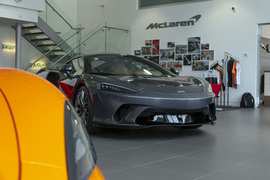
McLaren Speedtail: Following in the footsteps of the legendary F1, the McLaren Speedtail also achieved a verified top speed of 250 mph, notably exceeding its predecessor. This “Hyper-GT” shares the F1’s innovative three-seat configuration and features a hybrid powertrain delivering exceptional performance. Limited to 106 units, it’s a rare and sought-after masterpiece of British automotive engineering.
Czinger 21C V Max: The Czinger 21C V Max is a futuristic marvel that combines a powerful hybrid powertrain (1,233 bhp) with radical aerodynamic design. Its V Max variant, stripped of its aggressive aero kit, is optimized for maximum straight-line speed, exceeding 250 mph. The 0-62 mph sprint is dispatched in a mere 1.9 seconds, showcasing the explosive acceleration possible with advanced hybrid technology.
Koenigsegg Regera: Koenigsegg’s obsession with top-speed records is evident in the Regera. This hybrid hypercar, producing nearly 1,500 bhp, reaches 255 mph. Its innovative single-speed direct-drive transmission, enabled by its plug-in hybrid setup, is a marvel of engineering. The Regera also holds a 0–249–0 mph acceleration and braking world record, underscoring its all-around performance capabilities.
SSC Ultimate Aero: During its production run, the SSC Ultimate Aero claimed the title of the world’s fastest production car, achieving 256.18 mph. Powered by a 1,183 bhp twin-turbo V8, this American supercar famously dispensed with electronic driver aids for a raw, visceral driving experience. The record run was achieved on a temporarily closed public highway in Washington, USA, highlighting a bold approach to performance validation.
Rimac Nevera / Nevera R: The Rimac Nevera has redefined electric hypercar performance. With 1,888 bhp, it’s already one of the fastest cars on the planet, achieving 0-60 mph in 1.9 seconds and reaching 186 mph in a mere 9.3 seconds. Its charging capabilities are equally impressive, reaching 80% in 19 minutes and offering a 340-mile range. The recently introduced Nevera R, with 2,078 bhp and a claimed top speed of 268 mph, further solidifies Rimac’s position at the forefront of electric hypercar technology and the fastest electric cars sector.
Bugatti Veyron: Even years after its debut, the Bugatti Veyron remains an icon. The original Veyron, with its mighty 6.0-litre quad-turbo W16 engine, produced nearly 1,000 bhp. The subsequent Veyron Super Sport upped the ante to 1,183 bhp, achieving a remarkable 268 mph. Its sub-2.5 second 0-62 mph time is a benchmark that even modern EVs struggle to match, cementing its status as an all-time great in the annals of performance automotive.
Hennessey Venom F5: American tuner Hennessey has long been synonymous with extreme performance. The Venom F5, a potent evolution of their previous Venom models, has already hit 271.6 mph in testing, with a target of 311 mph. Its 1,817 bhp twin-turbo V8 is a colossal powerhouse, and while rear-wheel drive limits its initial acceleration, its straight-line speed capabilities are undeniable. Hennessey’s relentless pursuit of speed is a defining characteristic of American supercar manufacturers.
Bugatti Tourbillon: The upcoming Bugatti Tourbillon represents the future of Bugatti’s performance legacy. This hybrid hypercar, set to debut in 2026, will feature a new naturally aspirated V16 engine combined with electric motors, yielding over 1,770 bhp. Given Bugatti’s unparalleled engineering heritage, the Tourbillon is expected to not only meet but exceed the performance benchmarks set by its predecessors, further solidifying Bugatti’s reputation for automotive innovation.
Koenigsegg Agera RS: In 2017, Koenigsegg shattered speed records once again with the Agera RS, achieving a verified 277.87 mph on a closed public highway in Nevada, USA. This remarkable feat underscored the brand’s commitment to pushing the boundaries of track-focused cars adapted for road use.
Bugatti Mistral: The Bugatti Mistral, a stunning open-top hypercar, has set a new benchmark for production convertibles, reaching a breathtaking 282.05 mph. Powered by Bugatti’s iconic quad-turbocharged 8.0-litre W16 engine, the Mistral is a rare and exquisite piece of automotive art, limited to just 99 units. Its record-breaking run was conducted at the Papenburg test facility in Germany, showcasing the brand’s continued dominance in exclusive vehicles.
SSC Tuatara: The SSC Tuatara has been at the center of some controversy regarding its top-speed claims. However, after meticulous testing with independent witnesses and advanced timing equipment, it achieved a verified two-way average of 282.9 mph. Powered by a 5.9-litre twin-turbo V8 producing 1,750 bhp, the Tuatara is a rear-wheel-drive marvel built on a carbon-fiber chassis, emphasizing a high power-to-weight ratio.
Bugatti Chiron Super Sport 300+: Bugatti achieved a monumental milestone by becoming the first production car to break the 300 mph barrier, with the Chiron Super Sport 300+ reaching an astonishing 304.8 mph. This was achieved through an enhanced 8.0-litre W16 engine producing 1,578 bhp, coupled with critical aerodynamic upgrades, including an extended rear end. Only 30 of these extraordinary machines were produced for privileged customers.
Koenigsegg Jesko Absolut: Koenigsegg’s ultimate ambition is embodied in the Jesko Absolut, a low-drag variant of the Jesko. With meticulous aerodynamic refinements, including an extended body and a focus on weight reduction, this car is engineered to achieve a targeted top speed of 310 mph. The tweaked 5.0-litre twin-turbo V8 now produces 1,600 bhp, and Koenigsegg’s proven track record in setting speed records makes this target highly achievable. This represents a significant advancement in next-generation hypercars.
Yangwang U9 Xtreme: In a remarkable display of the advancements in electric vehicle technology, the Yangwang U9 Xtreme has claimed the current top spot with a blistering 308 mph. This electric hypercar, priced significantly lower than many of its internal combustion engine rivals, benefits from aerodynamic enhancements and four ultra-powerful electric motors producing a combined 2,978 bhp. Its 1,200V architecture enables exceptionally fast power transfer, and specialized battery setups prevent overheating at extreme speeds. This achievement underscores the potent disruption emerging EV manufacturers are bringing to the automotive market.
The Unseen Forces: Understanding the Science Behind Extreme Velocity
Achieving these astronomical speeds is not simply a matter of strapping a powerful engine into a car. It’s a symphony of interconnected engineering disciplines:
Aerodynamics: At speeds approaching and exceeding 200 mph, the air becomes a tangible force. Manufacturers employ sophisticated Computational Fluid Dynamics (CFD) and wind tunnel testing to meticulously sculpt bodywork, minimize drag, and generate downforce for stability. Features like active spoilers, diffusers, and smooth underbodies are critical.
Powertrain Efficiency: Whether internal combustion or electric, maximizing power output while maintaining efficiency is paramount. Advanced engine management systems, turbocharging technology, and sophisticated battery and motor management in EVs are key. The transition to electric powertrains offers instantaneous torque and simplifies power delivery.
Tire Technology: The tires are the only contact point between the car and the road. For extreme speeds, specialized tires are developed that can withstand immense centrifugal forces, heat, and pressure, offering both grip and durability.
Chassis and Suspension: A rigid and lightweight chassis is essential for handling the forces generated at high speeds. Advanced suspension systems are tuned to maintain optimal tire contact and vehicle stability, absorbing imperfections in the road surface.
Cooling Systems: Extreme performance generates extreme heat. Robust and efficient cooling systems for the engine, gearbox, brakes, and batteries are vital to prevent overheating and maintain consistent performance.
The Future of Speed: What Lies Beyond 2026?
The trajectory of automotive speed is undeniably pointing towards continued innovation. Electric powertrains, with their inherent advantages in instant torque and scalability, are poised to dominate the upper echelons of performance. We can anticipate even higher top speeds, faster acceleration, and a continued blurring of the lines between road-legal cars and track-focused machines. The integration of advanced driver-assistance systems and autonomous technologies may also play a role in how these extreme speeds are experienced and managed in the future. As the industry continues its rapid evolution, the definition of fastest cars in the world will undoubtedly continue to be rewritten.
The pursuit of the ultimate speed is more than just a competition; it’s a driving force for innovation that benefits all aspects of automotive technology. Whether you’re an ardent petrolhead or an advocate for electric mobility, the advancements seen in these world-class supercars are shaping the future of driving for everyone.
Are you ready to explore the next level of automotive performance? Discover how these incredible machines are engineered and learn about the companies pushing the boundaries of what’s possible. Take the next step and delve deeper into the thrilling world of high-performance automotive.