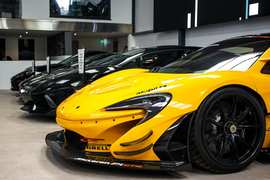
The Pinnacle of Automotive Velocity: Navigating the Apex of 2026’s Fastest Road Cars
For over a century, the automotive world has been locked in a perpetual dance of innovation, a relentless pursuit of speed that transcends mere transportation. While the practicality of achieving hyperspeed on public roads is debatable for the average commuter, the allure of being the absolute fastest remains an irrefutable benchmark of engineering prowess and a potent symbol of automotive prestige. As an industry veteran with a decade immersed in the intricate world of high-performance vehicles, I’ve witnessed firsthand the evolution of this quest. The world’s fastest road cars 2026 represent not just a collection of statistics, but a testament to human ingenuity, pushing the boundaries of what’s mechanically and aerodynamically possible.
This isn’t just about raw power; it’s a symphony of meticulous design, cutting-edge materials, and an unwavering commitment to breaking perceived limits. The journey from racing circuits to street-legal marvels has been long and arduous, with each generation of hypercar building upon the triumphs and lessons of its predecessors. Today, the conversation around the fastest cars in the world is more dynamic than ever, with established titans facing unprecedented challenges from agile newcomers and the electrifying surge of electric propulsion.
From Mythical Speeds to Tangible 300+ MPH Records: A Historical Perspective
Looking back, the 1990s were a pivotal era, etched in the minds of enthusiasts by the legendary “200 mph club.” Cars like the McLaren F1, the Porsche 959, the Jaguar XJ220, and the iconic Ferrari F40 captivated the world with their ability to breach the 200 mph threshold. These machines were engineering marvels, blending advanced aerodynamics with potent naturally-aspirated and forced-induction engines, proving that road-legal vehicles could indeed flirt with speeds previously reserved for dedicated race cars. The McLaren F1, with its revolutionary central driving position and groundbreaking V12 engine, remains an enduring icon, a benchmark against which many subsequent contenders have been measured. Its raw, unadulterated performance and driver-focused ethos continue to inspire.
The turn of the millennium saw an escalation in this engineering arms race. The 2000s and 2010s witnessed manufacturers like Bugatti and Koenigsegg relentlessly pursuing ever-higher top speeds. The Bugatti Veyron, with its quad-turbocharged W16 engine, fundamentally altered the landscape, offering a blend of extreme velocity and luxurious refinement that was previously unimaginable. Its successor, the Chiron, further refined this formula, pushing the boundaries closer to, and then decisively beyond, the 300 mph mark. This era solidified the concept of the hypercar not just as a vehicle, but as a statement of ultimate automotive achievement.
The 2026 Landscape: Electric Revolution Meets Internal Combustion Prowess
As we stand on the precipice of 2026, the automotive industry is undergoing a profound transformation. The relentless march of battery technology and electric powertrain development has ushered in a new breed of contenders capable of challenging the reign of gasoline-powered behemoths. Electric hypercars are no longer a distant dream; they are a tangible reality, delivering staggering torque and breathtaking acceleration that often eclipses their combustion-engined counterparts. This evolution is democratizing access to extreme performance, with innovative startups leveraging advancements in EV technology to rival, and in some cases, surpass the performance of century-old automotive giants.
The pursuit of the fastest accelerating cars 0-60mph production cars is now intrinsically linked to the top-speed battle. Instantaneous torque delivery from electric motors allows for launch capabilities that simply cannot be matched by traditional powertrains, blurring the lines between pure top speed and overall performance metrics. This synergy creates a fascinating dynamic, where raw velocity is increasingly complemented by the sheer ferocity of acceleration.
This list, compiled with insights from a decade navigating the nuances of the performance automotive sector, aims to provide a comprehensive overview of the world’s fastest road cars in 2026. We’ve focused on production vehicles, excluding heavily modified one-offs or prototypes where official data remains unverified. The aim is to present a clear, authoritative ranking that reflects the current state of the art, acknowledging both the enduring legacy of internal combustion and the electrifying future of automotive performance.
The Elite 20: Unveiling the Apex Predators of the Road (2026 Edition)
The following ranking represents the pinnacle of automotive speed, a curated selection of the fastest hypercars 2026 that push the very definition of road-legal performance.
McLaren F1
Top Speed: 240.1 mph (approx.)
Legacy Power: Naturally-aspirated V12
Era of Influence: Late 1990s
Even decades after its debut, the McLaren F1 remains a legendary figure in the automotive pantheon. Its groundbreaking 240.1 mph top speed, achieved with a naturally-aspirated V12 and a manual gearbox, cemented its status as a true driver’s car and a benchmark for engineering excellence. While newer machines may surpass its outright velocity, the F1’s timeless design and uncompromised performance continue to command immense respect and an astronomical price tag, often exceeding £15 million for pristine examples. It’s a car that defined an era and continues to inspire, with modern interpretations like the GMA T.50, from the same visionary Gordon Murray, carrying its torch.
W Motors Fenyr Supersport
Top Speed: 245 mph (claimed)
Powerplant: Twin-turbocharged Flat-Six (sourced from Ruf)
Origin: Dubai (established in Lebanon)
Following up its much-hyped Lykan HyperSport, W Motors introduced the Fenyr Supersport, a vehicle aimed at pushing the boundaries of exclusivity and speed. With a claimed top speed of 245 mph, powered by a potent twin-turbocharged flat-six engine meticulously tuned by German specialists Ruf, the Fenyr is a bespoke creation. Its construction incorporates exotic materials, and its presence in popular culture, particularly the Fast & Furious franchise, has amplified its notoriety.
Saleen S7 Twin Turbo
Top Speed: 248 mph (claimed)
Engine: Twin-turbocharged V8
Nationality: American Muscle
The Saleen S7 Twin Turbo, arriving in 2005, was an audacious American challenge to established European hypercars. With a claimed top speed of 248 mph, it aimed to eclipse the mighty McLaren F1. Its all-American V8 engine, augmented by a pair of formidable turbochargers, produced a staggering 750 horsepower. While the ultimate top-speed claim has remained a subject of intense discussion and has never been definitively proven in an official capacity, the S7’s raw power and aggressive styling left an indelible mark.
Koenigsegg Gemera & CCXR
Top Speed: 248 mph (400 km/h)
Powertrain: Hybrid (Gemera), Supercharged V8 (CCXR)
Manufacturer: Koenigsegg (Sweden)
Koenigsegg, a name synonymous with extreme performance, features prominently on this list. For this entry, we combine two remarkable machines, the Gemera and the CCXR, both capable of a blistering 248 mph. The Gemera represents the cutting edge of Koenigsegg’s innovation: a four-seat, hybrid grand tourer featuring three electric motors delivering immense power alongside a combustion engine. In contrast, the CCXR, an earlier model, showcases the brand’s mastery of the supercharged V8, offering a more traditional yet equally potent performance package.
Aspark Owl
Top Speed: 249 mph (claimed)
Propulsion: All-electric
Origin: Japan
The Aspark Owl emerges as a compelling example of how rapidly evolving electric vehicle technology is disrupting the hypercar segment. This Japanese newcomer, first revealed in prototype form in 2017, boasts an astonishing claimed acceleration of 0-60 mph in just 1.72 seconds, potentially making it the fastest accelerating production car. Its projected top speed of 249 mph, powered by an 1,985 bhp electric powertrain and a relatively compact 64 kWh battery, positions it as a formidable contender. Its lightweight construction and aerodynamic efficiency are key to its performance envelope.
Ultima RS
Top Speed: 250 mph (claimed)
Approach: Power-to-weight ratio, modified V8
Pricing: Exceptionally accessible for its class
The Ultima RS stands out as a unique proposition on this list, primarily due to its accessible price point of around £130,000, making it the most affordable by a significant margin. This British-built hypercar operates in the realm of kit cars, yet its capabilities are anything but amateur. By leveraging an ultra-lightweight chassis and a meticulously tuned Corvette V8 engine producing up to 1,200 bhp, the Ultima RS achieves its claimed 250 mph top speed through an old-school, brute-force power-to-weight advantage. It’s a testament to the fact that extreme speed doesn’t always require stratospheric budgets, but rather intelligent engineering and a focus on fundamental physics.
McLaren Speedtail
Top Speed: 250 mph
Configuration: Three-seater, hybrid powertrain
Exclusivity: Limited to 106 units
The McLaren Speedtail, a spiritual successor to the legendary F1, pushes the boundaries of what a road-legal hypercar can achieve. During rigorous testing at the Kennedy Space Center in Florida, the Speedtail reportedly surpassed 250 mph on more than 30 occasions. This remarkable feat places it faster than its illustrious predecessor. Limited to just 106 units, mirroring the F1’s production run, the Speedtail shares the F1’s distinctive three-seat layout with the driver positioned centrally. Its hybrid powertrain and advanced aerodynamics contribute to its exceptional velocity.
Czinger 21C V Max
Top Speed: 253 mph+ (claimed)
Performance: Hybrid V8 powertrain, advanced aerodynamics
Innovation: AI-driven design and manufacturing
The Czinger 21C V Max, a radical departure in hypercar design and manufacturing, is engineered for absolute velocity. Its hybrid V8 powertrain, augmented by electric motors, delivers a formidable 1,233 bhp. The V Max variant distinguishes itself by sacrificing extreme aerodynamic elements for enhanced top-speed capability, pushing beyond the already impressive performance of the standard 21C. Its 0-62 mph sprint is achieved in a mere 1.9 seconds, showcasing the immediate impact of its four-wheel-drive system and potent hybrid setup.
Koenigsegg Regera
Top Speed: 255 mph
Drivetrain: Hybrid with innovative single-speed transmission
Engineering: Groundbreaking powertrain technology
Koenigsegg’s obsession with setting new benchmarks in automotive speed is further exemplified by the Regera. While not their absolute fastest model, the Regera is a technological tour de force, capable of reaching 255 mph. Its hybrid powertrain generates nearly 1,500 bhp and employs a revolutionary single-speed direct-drive transmission, eliminating the need for traditional gear changes. This innovative approach, enabled by the plug-in hybrid system, contributes to its seamless acceleration and formidable performance.
SSC Ultimate Aero
Top Speed: 256.18 mph
Engine: Twin-turbocharged V8
Performance: Raw, driver-focused experience
The SSC Ultimate Aero carved its name into automotive history by briefly dethroning the Bugatti Veyron as the world’s fastest production car. Achieving a verified top speed of 256.18 mph on a temporarily closed public highway in Washington, USA, the Ultimate Aero was a testament to American engineering prowess. Powered by a 1,183 bhp twin-turbocharged V8, it offered an unadulterated, raw driving experience, notably by omitting electronic driver aids like traction control, thereby demanding a high level of driver skill.
Rimac Nevera / Nevera R
Top Speed: 258 mph (Nevera) / 268 mph (Nevera R)
Propulsion: All-electric hypercar
Performance: Unprecedented acceleration and charging capabilities
The Rimac Nevera is not only the fifth-fastest car on this list but also holds the distinguished title of the world’s fastest electric hypercar. Its ferocity stems from an astounding 1,888 bhp and 2,360 Nm of torque, enabling it to accelerate from 0-60 mph in a mere 1.9 seconds. The Nevera R, a recent iteration, pushes this performance even further with 2,078 bhp and a blistering 268 mph top speed, alongside a jaw-dropping 0-62 mph time of 1.8 seconds. Beyond its straight-line speed, the Nevera excels in charging speed, reaching 80% capacity in just 19 minutes, and offering a respectable range of 340 miles. This electric marvel is a harbinger of the future of high-performance automotive engineering.
Bugatti Veyron (Super Sport)
Top Speed: 268 mph (Super Sport)
Engine: 8.0-litre Quad-Turbocharged W16
Legacy: A revolution in hypercar performance
Though a seasoned veteran, the Bugatti Veyron, particularly in its Super Sport iteration, remains a legendary benchmark in the hypercar landscape. Its arrival shattered expectations with nearly 1,000 bhp and a monumental 1,500 Nm of torque. The Super Sport variant, with an enhanced 1,183 bhp output, achieved a remarkable 268 mph top speed. The Veyron’s sub-2.5-second 0-62 mph time is a feat that continues to challenge even modern electric vehicles, solidifying its status as an all-time automotive great.
Hennessey Venom F5
Top Speed: 271.6 mph (tested), targeting 311 mph
Engine: 6.6-liter Twin-Turbocharged V8
Performance Focus: Extreme top speed and acceleration
American tuner-turned-hypercar manufacturer Hennessey has consistently aimed for the stars with its Venom models. The Venom F5, boasting a colossal 1,817 bhp from its twin-turbocharged V8, has already achieved a verified 271.6 mph during testing. The company’s ambitious goal is to surpass the 311 mph (500 km/h) mark once development is fully complete. While its rear-wheel-drive setup can limit its initial acceleration (0-62 mph in 2.6 seconds), its ability to reach 249 mph in a mere 15.5 seconds underscores its formidable straight-line speed capabilities.
Bugatti Tourbillon (Estimated)
Top Speed: 277 mph (estimated)
Powertrain: Hybrid V16 system
Anticipated Launch: 2026
Reserved for the much-anticipated Bugatti Tourbillon, this entry is based on strong estimates and Bugatti’s unparalleled pedigree in the realm of extreme automotive performance. Expected to debut around 2026, the Tourbillon will feature a groundbreaking hybrid system, incorporating a 986 bhp V16 engine for a combined output exceeding 1,770 bhp. Given Bugatti’s history of engineering excellence and their relentless pursuit of speed, the Tourbillon is poised to seamlessly integrate into the upper echelons of this elite list.
Koenigsegg Agera RS
Top Speed: 277.87 mph
Achievement: Highest speed recorded on a public road
Production: Customer-owned vehicle used for record attempt
In 2017, Koenigsegg once again asserted its dominance by setting a new speed record with the Agera RS. Utilizing a customer-owned vehicle on a closed 11-mile stretch of highway in Nevada, USA, the Swedish marque achieved a staggering 277.87 mph. This record not only surpassed previous benchmarks but also etched its name as the highest speed ever officially recorded on a public road by a production car.
Bugatti Mistral
Top Speed: 282.05 mph
Type: Open-top hypercar
Exclusivity: Limited to 99 units
Bugatti continues to redefine automotive luxury and performance with the Mistral, its most expensive convertible to date. Limited to just 99 units, this breathtaking machine showcases Bugatti’s commitment to exclusive, high-performance creations. Piloted by esteemed test driver Andy Wallace, the Mistral achieved an exceptional 282.05 mph at a test facility in Papenburg, Germany, in 2024. Powering this remarkable feat is Bugatti’s iconic 8.0-liter quad-turbocharged W16 engine, destined to be succeeded by the new V16 in the upcoming Tourbillon.
SSC Tuatara
Top Speed: 282.9 mph (two-way average)
Engine: 5.9-liter Twin-Turbocharged V8
Performance: Extreme power and lightweight construction
The journey of the SSC Tuatara has been marked by its share of controversy and remarkable resilience. After an initial high-speed claim was challenged, SSC, with more precise timing equipment and independent witnesses, re-established its credentials with a verified two-way average top speed of 282.9 mph in 2021. Powered by a 5.9-liter twin-turbocharged V8 producing 1,750 bhp, and built on a carbon fiber chassis, the Tuatara emphasizes a rear-wheel-drive setup for maximum power delivery and a remarkably low weight of 1,247 kg.
Bugatti Chiron Super Sport 300+
Top Speed: 304.8 mph
Engineering: Enhanced W16 engine, aerodynamic refinements
Milestone: First production car to break the 300 mph barrier
The Bugatti Chiron Super Sport 300+ stands as a monumental achievement in automotive history, being the first production car to officially breach the seemingly insurmountable 300 mph barrier. This extraordinary feat was accomplished through significant enhancements to Bugatti’s legendary 8.0-liter W16 engine, boosting its output to 1,578 bhp, along with crucial aerodynamic upgrades, including an extended rear end for optimal airflow. The record-breaking run at the Ehra-Lessien test track in Germany reached a staggering 304.774 mph. Thirty of these exceptional machines were produced for discerning customers, each representing the pinnacle of Bugatti’s performance engineering.
Koenigsegg Jesko Absolut
Top Speed: Targeted 310+ mph
Design: Ultra-low drag coefficient, optimized aerodynamics
Engine: Tuned 5.0-liter twin-turbocharged V8
Koenigsegg has long been a formidable rival to Bugatti in the pursuit of ultimate speed, and the Jesko Absolut is their most ambitious endeavor yet. Christian von Koenigsegg himself has stated this is the “absolute fastest Koenigsegg we will ever make.” The Absolut variant of the 1,578 bhp Jesko is a masterpiece of aerodynamic engineering, featuring an extended body, removal of the rear wing, and significant weight reduction measures. The tuned 5.0-liter twin-turbocharged V8 produces 1,600 bhp. While official figures are still pending release, Koenigsegg’s target of exceeding 310 mph is a credible aspiration, backed by their proven track record in setting speed records.
Yangwang U9 Xtreme
Top Speed: 308 mph (verified)
Propulsion: Quad all-electric motors
Price Point: Remarkable value for its performance tier
In a stunning display of the rapid advancements in electric vehicle technology, the Yangwang U9 Xtreme has claimed the top spot on our list, achieving a verified 308 mph. This accomplishment, set by a vehicle priced significantly below many of its combustion-engine rivals, underscores the transformative impact of electrification on the hypercar segment. The U9 Xtreme’s performance is driven by four ultra-powerful electric motors, generating a colossal 2,978 bhp, and utilizes a 1,200V architecture for enhanced power transfer. Its batteries, supplied by parent company BYD, are specifically engineered to sustain high-speed operation without overheating, marking a new era in automotive velocity.
The Horizon of Speed
The landscape of the fastest road cars 2026 is a dynamic and thrilling arena. As technology continues its relentless march, we can anticipate even more astounding figures and the emergence of new contenders. Whether powered by the roaring symphony of a V16 or the silent surge of electric motors, the pursuit of speed remains a fundamental driver of automotive innovation.
For those captivated by the extreme end of automotive performance, the journey doesn’t end here. Exploring the technical specifications, manufacturer claims, and real-world testing data of these incredible machines offers a deeper appreciation for the engineering marvels they represent. If you’re inspired to learn more about the cutting-edge technology behind these hypercars, or if you’re considering acquiring a piece of automotive history, reaching out to specialized dealerships or automotive consultants can provide invaluable insights and opportunities.