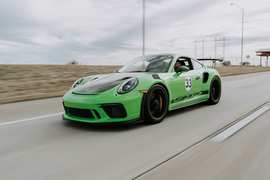
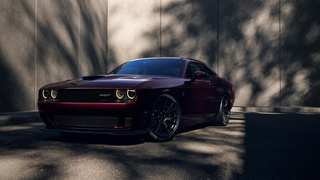
Unleashing the Track: Production Cars with Genuine Motorsport Hearts
For a decade now, I’ve been immersed in the automotive world, witnessing firsthand how the relentless pursuit of speed and innovation on the racetrack inevitably spills onto public roads. The thrill isn’t merely in the sleek bodywork or the sport-tuned suspension; it’s about the very soul of the machine – the engine. We’re talking about production cars with motorsport engines, powerplants forged in the crucible of competition, designed to wail at stratospheric RPMs and deliver a visceral, adrenaline-fueled experience. These aren’t just cars with racing aesthetics; they are vehicles that carry the DNA of true race machines, offering a tangible connection to the legends that dominate tracks like Le Mans and Formula 1.
This exploration delves into ten remarkable production vehicles that masterfully blur the lines between the race circuit and the everyday commute. From the ear-splitting symphony of a naturally aspirated V12 to the brute force of a twin-turbocharged beast, these ten automobiles offer a potent dose of motorsport prowess for the discerning driver on public thoroughfares. But before we celebrate these titans of engineering, it’s crucial to understand why manufacturers invest immense resources into the demanding world of motorsport and, more importantly, how that investment directly translates into the cars that regular enthusiasts can actually drive and acquire.
The Symbiotic Dance: Motorsport DNA on the Road
The relationship between motorsport and road-going automobiles is as old as the combustion engine itself. Racing serves as the ultimate proving ground, pushing the absolute boundaries of engineering, material science, and aerodynamic efficiency. Components and entire vehicles are subjected to extreme conditions where failure is not an option, only constant refinement and improvement. The hard-won lessons learned at race speeds – often during the heat of competition at prestigious GT racing events or grueling endurance racing circuits – invariably find their way into the production cars we rely on daily.
Consider, for instance, the ubiquitous disc brakes that now grace nearly every vehicle, or the paddle shifters that allow for lightning-fast gear changes, both of which originated as cutting-edge racing technologies. Beyond engineering advancements, motorsport success acts as an unparalleled brand accelerant. When a manufacturer’s race car consistently triumphs on the global stage, its road-going counterparts are perceived with greater desirability, performance credentials, and technological superiority. While the vast majority of us will never have the privilege of piloting a Formula 1 car or a Le Mans prototype, we can still experience a potent echo of that competitive spirit, particularly when a genuine race-bred engine roars to life beneath the hood of our personal vehicle. This “win on Sunday, sell on Monday” ethos, once a cornerstone of automotive marketing, is experiencing a powerful resurgence, signaling a golden era for the industry and its enthusiasts.
Ten Machines That Carry the Racing Heartbeat
Let’s shift our focus to the stars of the show – the production cars that have successfully integrated the raw power and engineering ethos of motorsport into their very being. These are not merely inspired by racing; they are racing, homologated for the street.
Alfa Romeo Montreal: A V8 Symphony from the Track
The Alfa Romeo Montreal, a design marvel from the late 1960s and early 1970s, houses a potent 2.6-liter Tipo 33 naturally aspirated V8 engine. This powerplant is a direct descendant of the engine that propelled Alfa Romeo’s Tipo 33 sports prototypes in grueling endurance races like the Targa Florio and the 24 Hours of Daytona. While meticulously detuned for road legality and comfort, the Montreal’s V8 retains a significant portion of its motorsport character. It eagerly spins up to a heady 7,000 RPM, delivering a thrilling 200 horsepower. The distinctive, high-pitched roar of this V8, combined with its sharp, avant-garde styling, cemented the Montreal’s status as one of the most captivating and regrettably underrated Alfas ever produced. Its performance and engineering prowess certainly showcase the trickle-down effect from elite racing programs.
BMW M Series (M1, E30 M3, E28 M5, E24 M6): The M Power Legacy
BMW’s performance division, M GmbH, has built its empire on translating motorsport excellence into exhilarating road cars. The iconic BMW M1, a mid-engine supercar from the late 1970s, was a showcase of this philosophy. It was powered by the formidable 3.5-liter M88 inline-six engine, a powerplant deeply rooted in BMW’s racing endeavors, most notably within the fiercely competitive M1 ProCar series. This engine’s prowess wasn’t confined to the M1; it later found its way into the legendary E28 M5 sedan and the E24 M6 coupe, bestowing them with supercar-beating performance.
Even more profoundly, the four-cylinder S14 engine that powered the E30 M3, a touring car racing icon, was directly inspired by the M88 and the turbocharged M12 Formula 1 engines. The S14 shared crucial engineering principles and components with the BMW cars that dominated the Deutsche Tourenwagen Meisterschaft (DTM) series, embodying the “win on Sunday, sell on Monday” mantra with every turn of its crankshaft. The engineering required for these high-performance German sedans and sports cars is a testament to decades of racing development.
Chevrolet Camaro ZL1 (1969): The Big-Block Beast for the Street
The 1969 Chevrolet Camaro ZL1 was a special beast, representing the pinnacle of American muscle car performance directly influenced by racing. Under its hood resided the legendary 427 cubic-inch (7.0-liter) V8 engine, an all-aluminum marvel originally conceived for the demanding world of Can-Am racing. Its lightweight construction for such a massive displacement was revolutionary. While the race versions produced an estimated 500 horsepower, the road-legal ZL1 was officially rated at a still-potent 430 horsepower, though many believe it was significantly underrated. This engine transformed the Camaro into a street-legal drag strip annihilator. The ZL1’s racing lineage was further solidified by its use in various race cars competing in the highly competitive SCCA Trans-Am series. With only 69 examples ever produced, the 1969 Camaro ZL1 remains an exceptionally rare and highly coveted collector’s item, a true embodiment of racing power brought to the street. The pursuit of American muscle cars with racing heritage continues to captivate collectors globally.
Ferrari Dino 206 GT: A V6 with F2 Pedigree
The Ferrari Dino 206 GT, a beautiful and significant model in Ferrari’s history, was powered by a 2.0-liter Dino naturally aspirated V6 engine. This compact yet potent powerplant was originally developed for Ferrari’s Formula 2 racing efforts in the 1960s. Although detuned for civilian use, the engine retained its characteristic high-revving nature, imbuing the Dino with a spirited racing character that made it an absolute joy to drive on winding roads. Producing 180 horsepower, this was ample motivation for a car that tipped the scales at just over 2,000 pounds. Notably, the Dino was one of the few Ferraris of its era that did not officially bear the iconic Prancing Horse badge. Its introduction marked Ferrari’s pioneering foray into mid-engine V6 sports cars, laying the groundwork for numerous successful models that followed. The engineering prowess demonstrated in these classic Italian sports cars remains a benchmark.
Ferrari F50: A Formula 1 Engine for the Road
The Ferrari F50, introduced to commemorate the Italian marque’s 50th anniversary, represents an almost unparalleled application of race-derived engineering for a road-legal vehicle. Its heart is a phenomenal 4.7-liter Tipo F130B naturally aspirated V12 engine, a direct descendant of the powerplant used in Ferrari’s 1990 Formula 1 car, the Tipo 641 – famously piloted by legends like Alain Prost. This naturally aspirated behemoth screams to an astonishing 8,500 RPM, unleashing a ferocious 513 horsepower. It delivers an experience astonishingly close to driving an actual F1 car, but on public roads. With only minor modifications to comply with street regulations, the F50 was arguably the closest a road-legal Ferrari could get to Formula 1 technology at the time of its release, embodying the ultimate supercar with F1 DNA. The demand for limited edition hypercars with such exclusive pedigrees is consistently high in the automotive collector market, especially for vehicles with such direct links to motorsport royalty.
Ford GT: A Homage to Le Mans Legends
The Ford GT stands as a modern tribute to one of the most iconic race cars in history: the Le Mans-winning Ford GT40. The 2005 iteration of the GT was propelled by a 5.4-liter modular supercharged V8 engine. Its design and development were intrinsically linked to Ford’s endurance racing programs, bearing a strong relation to the powerplants utilized in Ford’s Daytona Prototype race cars. Similarly, the cutting-edge 2017 Ford GT boasts performance inspired by its racing pedigree, powered by a sophisticated twin-turbocharged 3.5-liter EcoBoost V6 engine. This V6 was honed and proven through Ford’s extensive involvement in endurance racing, demonstrating the automaker’s commitment to pushing the boundaries of forced-induction technology in competition. The legacy of Ford GT performance cars is undeniable, continuously drawing enthusiasts to dealerships and collector showrooms.
Jaguar XJ220: A Race-Bred V6 Shattering Speed Records
The Jaguar XJ220, a landmark vehicle for the esteemed British marque, was initially conceived with a V12 engine in mind. However, its production version ultimately featured a formidable 3.5-liter twin-turbocharged V6 engine. This powerplant was directly sourced from the Jaguar XJR-11, a highly successful Group C race car. This competition-derived engine was instrumental in enabling the XJ220 to achieve a breathtaking top speed of 217 mph, earning it the title of the fastest production car in the world for a significant period. The XJ220’s engine represented one of the most advanced and race-proven powerplants ever to be fitted into a road-going automobile, solidifying its place among the fastest production cars with race engines. The pursuit of extreme speed and cutting-edge automotive engineering continues to drive interest in these exceptional machines.
Plymouth Belvedere (1964): The “Race Hemi” Muscle
While not immediately apparent as a track weapon from its styling alone, the 1964 Plymouth Belvedere housed a legend: the 426 naturally aspirated Hemi V8 engine. This engine, colloquially known as the “Race Hemi,” was meticulously developed specifically for NASCAR racing. It proved to be an overwhelmingly dominant force on the oval tracks of America and soon found its way into Plymouth’s production car lineup. The street-legal Belvedere, producing a stout 425 horsepower, quickly became one of the most formidable and sought-after muscle cars of the 1960s. This reputation for raw power and track-derived engineering carried forward, most famously with the legendary ‘Cuda models through the 1970s. These powerful American V8 cars continue to be revered for their straight-line performance and motorsport heritage.
Porsche 918 Spyder: Hybrid Power with an RS Spyder Soul
The Porsche 918 Spyder is a masterpiece of hybrid performance, powered by a 4.6-liter naturally aspirated V8 engine. This powerplant draws heavily on the engineering prowess of the RS Spyder, a prototype race car that achieved significant success in the LMP2 class at the prestigious 24 Hours of Le Mans. The 918 seamlessly integrates this race-derived V8 with advanced electric motors to produce a combined output of an astounding 887 horsepower. This formidable combination allows the 918 to rocket from 0 to 60 mph in a blistering 2.2 seconds, cementing its place as one of the quickest accelerating cars ever produced. While the electric motors contribute significantly to its astonishing performance figures, it is the soul-stirring roar and the high-revving nature of the race-derived V8 that deliver the car’s profound emotional and auditory thrills, embodying the future of performance hybrid supercars. The market for cutting-edge electric and hybrid sports cars is rapidly expanding, and the 918 Spyder remains a benchmark.
Porsche Carrera GT: A V10’s Unfulfilled Racing Destiny
The Porsche Carrera GT is widely regarded as one of the greatest analog supercars ever constructed, and a significant portion of its legendary status is attributed to its extraordinary 10-cylinder engine. The 5.7-liter V10 powerplant was initially developed for Formula 1 during the era of V10 engines. However, when that specific F1 program didn’t materialize, the engine was shelved. It later found a new purpose, slated for use in a Le Mans prototype car that, unfortunately, never made it to the racetrack. Instead of abandoning this remarkable piece of engineering, Porsche ingeniously decided to transplant this race-honed engine into its flagship supercar. This decision allowed the Carrera GT to produce a potent 612 horsepower and rev with exhilarating freedom all the way to 8,000 RPM. Combined with its exceptionally lightweight construction and pure motorsport DNA, the Carrera GT remains one of the most engaging and challenging supercars to pilot, a true driver’s machine for those seeking an unfiltered connection to the road and the track. The appreciation for analog driving experiences in the face of ever-increasing digital intervention is growing among automotive connoisseurs.
Embrace the Legacy, Experience the Thrill
These ten vehicles represent more than just impressive engineering; they are living legacies of motorsport’s relentless pursuit of excellence. They are tangible proof that the spirit of the race track can indeed thrive on public roads, offering an unparalleled driving experience.
If you are captivated by the raw power, the precision engineering, and the undeniable allure of cars that carry genuine motorsport DNA, the next step is clear. Explore the options available in your local market – whether it’s a classic icon or a modern marvel – and discover a vehicle that ignites your passion for performance and connection. Don’t just dream about the thrill of the track; bring it home.