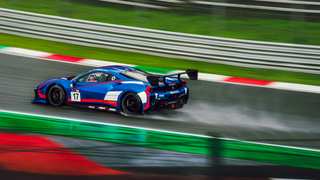
From Circuit to Street: Unpacking the Thrill of Road Cars Forged with Authentic Motorsport DNA and Race-Bred Engines
In the automotive world, few concepts ignite passion and excitement quite like the fusion of raw track capability with street-legal practicality. As an industry expert with a decade immersed in high-performance vehicles, I can attest there’s an undeniable allure to machines boasting genuine motorsport DNA cars. We’re not simply discussing styling cues or marketing-driven “performance packages”; rather, our focus is on an exclusive lineage of automobiles housing race-bred engines—power plants initially conceived, designed, and often campaigned in the crucible of competitive racing. These sophisticated, high-performance engines, born from the relentless pursuit of speed and durability, transcend mere transportation, transforming the daily commute into an adrenaline-fueled symphony.
The symbiotic relationship between motorsport and production vehicles is a cornerstone of automotive evolution. The unforgiving demands of the race track serve as the ultimate proving ground, pushing the boundaries of engineering, materials science, and aerodynamic efficiency to their absolute limits. Engineers, under immense pressure to extract every fraction of a second, innovate at an unprecedented pace. This accelerated development cycle inevitably trickles down, enriching the design and capability of the cars we can drive. From foundational technologies like disc brakes and sophisticated suspension systems to advanced aerodynamic profiles and, critically, the very heart of the machine—the engine—racing unequivocally elevates the breed. Beyond the tangible technological gains, motorsport success imbues a manufacturer’s brand with an intangible prestige, fostering a narrative of victory and excellence that resonates deeply with discerning buyers seeking luxury sports car investments and high-performance automotive parts. This deep dive explores a selection of iconic motorsport DNA cars that have successfully translated their competitive heritage into an unparalleled road experience, providing a rare glimpse into the engineering marvels that power these extraordinary vehicles, even as we look towards 2025 and beyond.
The Crucible of Competition: Why Race-Bred Engines Matter
The adage “Win on Sunday, Sell on Monday” is far more than a catchy marketing slogan; it encapsulates a fundamental truth about the automotive industry. Investment in motorsport, while astronomically expensive, yields dividends in both technological advancement and brand perception. When manufacturers pour resources into developing race-bred engines and chassis for Formula 1, Le Mans, NASCAR, or DTM, they are not merely chasing trophies. They are actively engaging in the most intensive R&D program imaginable, one where failure is dissected, lessons are learned instantly, and improvements are implemented at breakneck speed.
This relentless pressure cooker environment leads to innovations that might take decades to develop in a conventional road car program. Think about lightweight materials such such as carbon fiber and advanced alloys, sophisticated electronic control units, and incredibly precise engine architectures. These are first refined in track-focused vehicles before finding their way into production models. The efficiency, durability, and sheer power density achieved in a high-performance engine built for racing are unparalleled. When such an engine is adapted—even detuned—for street use, it brings with it an inherent robustness, an unparalleled responsiveness, and an auditory experience that is intrinsically linked to its racing origins. This is the essence of automotive engineering at its peak, creating motorsport DNA cars that offer a tangible connection to their competitive counterparts. For enthusiasts, owning such a vehicle is akin to owning a piece of living history, a testament to speed, engineering prowess, and the enduring human spirit of competition. It’s no wonder these vehicles often become highly sought-after collector cars for sale, representing significant investment-grade automobiles. The opportunity for performance car tuning and further customization also becomes a key draw for many owners.
Iconic Machines: Roaring Race-Bred Engines on the Open Road
Let’s delve into some of the most compelling examples where race-bred engines have transcended the track, imbuing their road-going counterparts with extraordinary character and capability.
Alfa Romeo Montreal: The Tipo 33’s Enduring Beat
The Alfa Romeo Montreal, with its striking Marcello Gandini design, possesses an engine of truly distinguished lineage. Tucked beneath its hood lies a 2.6-liter dry-sump V8, a direct descendant of the fearsome Tipo 33 sports prototype engine. This engine, born for endurance racing at legendary events like the Targa Florio and the 24 Hours of Daytona, was originally a 2.0-liter, four-cam V8. For the Montreal, it was enlarged to 2.6 liters and detuned from its full race specification, yet still produced a spirited 200 horsepower and revved enthusiastically to 7,000 RPM. The Tipo 33’s original specification was a high-strung, flat-plane crank design, and while the road version adopted a cross-plane crank for better civility, it retained much of its racing engine’s responsiveness and character.
The Montreal’s V8 delivered an intoxicating soundtrack, a true testament to its motorsport DNA cars heritage. Despite its relatively modest power figures by today’s standards, its lightweight construction and direct engine connection offered a visceral driving experience. As a classic, the Montreal represents a unique segment of luxury sports car investments, often appreciated by those who value exotic design and authentic racing heritage over sheer modern performance metrics. It’s an automotive gem, a testament to an era where the line between track-focused vehicles and road cars was beautifully blurred.
BMW M-Series: Precision Engineering from Track to Tarmac
BMW’s “M” division, short for Motorsport, is synonymous with high-performance engines and driver engagement. Its early models are prime examples of motorsport DNA cars. The legendary BMW M1, a homologation special, was powered by the magnificent 3.5-liter M88 inline-six engine. This engine was directly derived from BMW’s competitive racing programs, notably featuring in the M1 ProCar series. With 273 hp in road trim, it was a supercar for its time. This M88 engine, further refined, would also power the iconic E24 M6 and E28 M5, bestowing upon executive sedans and coupes truly race-bred engines characteristics.
Perhaps even more iconic, the E30 M3, revered for its phenomenal chassis dynamics, drew its power from the S14 four-cylinder engine. This S14 was a masterpiece of compact automotive engineering, essentially a four-cylinder version of the M88, which itself shared fundamental architecture with BMW’s M12 turbocharged F1 engines. The S14’s direct inspiration came from BMW’s touring car racing dominance, particularly in DTM. Producing around 197 hp from a 2.3-liter naturally aspirated unit, it offered a high-revving, responsive character that made the E30 M3 one of the most successful track-focused vehicles for the road. For enthusiasts of performance car tuning, these early M cars offer a fertile ground for optimization and appreciation, forming the bedrock of BMW’s reputation for building driver engagement into every vehicle.
Chevrolet Camaro ZL1 (1969): The Aluminum Big-Block Legend
The 1969 Chevrolet Camaro ZL1 is pure American muscle, elevated by an engine designed for a much higher purpose. Its heart was the monstrous 427 cubic-inch (7.0-liter) all-aluminum V8. While a 427 big-block was available in other Chevrolets, the ZL1’s version was specifically developed for Can-Am road racing—a series renowned for its “unlimited” regulations. This lightweight aluminum construction, a rarity for the era, allowed for immense power without excessive front-end weight, crucial for racing.
Though officially rated at 430 hp for the road, it was widely known that this race-bred engine produced well over 500 hp in racing trim. With only 69 examples ever built through the COPO (Central Office Production Order) system, the ZL1 is an exceptionally rare and incredibly valuable collector car for sale. It transformed the Camaro into a bona fide street-legal race car, capable of dominating drag strips and leaving an indelible mark on muscle car history. Its engine further cemented its racing heritage in the SCCA Trans-Am series, making it a legendary investment-grade automobile among classic American iron.
Ferrari Dino 206 GT: Formula 2’s Road-Going Spirit
The Ferrari Dino 206 GT holds a special place in history as Ferrari’s first mid-engine V6 production car, and its engine directly connects to Enzo Ferrari’s F2 ambitions. The 2.0-liter V6 engine powering the Dino was derived from Ferrari’s Formula 2 cars of the 1960s. Developed under Alfredo “Dino” Ferrari, Enzo’s late son, this engine was a compact, high-revving masterpiece, initially developed for Ferrari’s 156 F2 single-seater.
Despite being detuned for road use, the Dino V6, producing 180 hp, maintained its incredibly eager and sonorous character. Its high-pitched wail was unmistakably Ferrari, giving the lightweight Dino an agile, responsive feel that perfectly suited twisty roads. This engine’s success set a crucial precedent, proving the viability of smaller-displacement, mid-mounted engines for Ferrari, eventually paving the way for future V6 and V8 supercars. For members of exclusive car clubs, the Dino remains a pure, unadulterated example of early driver engagement and a pivotal moment in Ferrari’s illustrious racing heritage.
Ferrari F50: F1 Power for the Road
The Ferrari F50, created to celebrate the Prancing Horse’s 50th anniversary, is perhaps the ultimate expression of motorsport DNA cars. Its 4.7-liter naturally aspirated V12 engine, the Tipo F130B, was an almost direct derivative of the 1990 Ferrari 641 (F1-90) Formula 1 car engine, which famously propelled Alain Prost. This wasn’t merely inspired by F1; it was an F1 engine adapted for the road.
With only a handful of modifications to meet emissions and durability standards, this V12 screamed to an 8,500 RPM redline, producing a staggering 513 hp. The F50 was designed with minimal sound insulation, a stiff carbon-fiber monocoque chassis, and a direct connection to the driver, delivering an unfiltered, visceral experience that was as close as one could get to an F1 car on public roads. The F50 stands as a testament to bespoke automotive design and extreme automotive engineering, demanding premium car maintenance and skilled hands to extract its full potential. It remains one of the most evocative and pure examples of a race-bred engine transplanted into a hypercar.
Ford GT: Le Mans Legacy Reborn
The Ford GT, in both its 2005 and 2017 iterations, serves as a powerful homage to the legendary Le Mans-winning GT40, and critically, both feature race-bred engines at their core. The 2005 GT’s 5.4-liter supercharged Modular V8 engine had deep roots in Ford’s endurance racing programs, specifically sharing architecture with engines used in Ford’s Daytona Prototype race cars. It delivered 550 hp and 500 lb-ft of torque, providing immense, accessible power.
The newer 2017 Ford GT took this ethos even further. Its twin-turbocharged 3.5-liter EcoBoost V6 was not merely inspired by racing; it was the same fundamental engine that powered Ford’s successful Le Mans GTE-Pro class winner. Producing 647 hp and 550 lb-ft, this engine showcased cutting-edge automotive technology innovations and turbocharging expertise, proving that V6s could compete with V8s and V12s in supercars. The Ford GT embodies the spirit of track day experience for its owners, offering performance upgrades and a direct lineage to one of the most iconic racing heritage stories in history, making it a true American performance car.
Jaguar XJ220: Group C Heart in a Supercar Icon
The Jaguar XJ220, a sensation of the early 1990s, initially promised a V12 engine but ultimately arrived with a 3.5-liter twin-turbocharged V6. This wasn’t just any V6; it was a derivative of the formidable V64V engine from the Jaguar XJR-11 Group C race car. This specific race-bred engine had proven its mettle in endurance racing, delivering immense power and reliability under extreme conditions.
The XJ220’s adaptation of this competition-derived engine allowed it to achieve a top speed of 217 mph, briefly making it the fastest production car in the world. The twin-turbo V6, producing 542 hp, offered a raw, unadulterated power delivery that was both thrilling and challenging. The XJ220 remains a groundbreaking example of a street-legal race car, showcasing how high-performance engines from cutting-edge racing heritage could power road-going exotic cars. Its unique engine architecture makes it a fascinating piece of automotive engineering history, a car that demands specialized sports car insurance and high-end vehicle detailing.
Plymouth Belvedere (1964): The Birth of the Hemi Muscle Car
On the surface, the 1964 Plymouth Belvedere might seem like an unlikely candidate for a list of motorsport DNA cars. Yet, beneath its unassuming exterior lay an engine that redefined American performance: the legendary 426 Hemi V8. This engine was explicitly developed for NASCAR, earning it the moniker “Race Hemi.” It was a dominant force on the oval tracks, designed for sustained high-RPM output and brute force.
When the “Race Hemi” found its way into Plymouth’s production lineup, particularly in the Belvedere and eventually the ‘Cuda, it brought with it an unprecedented level of power for a street car. The road-going version, typically rated at 425 hp, was conservatively estimated, with actual output often much higher. This race-bred engine launched the muscle car era into a new dimension, cementing Plymouth’s reputation for building potent, track-derived street machines. The 426 Hemi is an icon, a cornerstone of American performance, and its presence in the Belvedere makes it a crucial piece of racing heritage for any enthusiast of classic performance cars.
Porsche 918 Spyder: Hybrid Hypercar with a Racing Heart
The Porsche 918 Spyder stands as a testament to modern automotive technology innovations, blending a formidable race-bred engine with cutting-edge hybrid propulsion. Its 4.6-liter V8 engine is a direct descendant of the unit used in the RS Spyder, Porsche’s highly successful prototype race car that competed and won in the LMP2 class at endurance events like the 24 Hours of Le Mans.
This naturally aspirated V8, capable of high-revving glory, is paired with electric motors, yielding a combined output of a staggering 887 hp and immense torque. The V8 itself provides the emotional and auditory thrill, a raw, mechanical scream that few modern hypercars can match, while the electric assistance delivers instant torque and incredible efficiency. The 918 Spyder represents the future of motorsport DNA cars, where hybrid systems enhance, rather than diminish, the driver engagement and adrenaline rush derived from a competition-proven internal combustion engine. It’s a complex machine, requiring highly specialized premium car maintenance and a thorough understanding of its advanced systems.
Porsche Carrera GT: The Analog V10 Masterpiece
The Porsche Carrera GT is celebrated as one of the last great analog supercars, and its incredible 5.7-liter V10 engine is at the heart of its legend. This magnificent race-bred engine has a fascinating origin: it was initially developed by Porsche for Formula 1 during the V10 era but was eventually shelved. Subsequently, it was repurposed for a Le Mans prototype car that, regrettably, never made it to the track.
Instead of letting this engineering marvel languish, Porsche made the audacious decision to deploy it in their flagship road car. The result was a 612 hp, 8,000 RPM screamer that delivered one of the most intoxicating soundtracks in automotive history. Its lightweight construction, combined with the power and high-revving nature of the V10, made the Carrera GT a supremely challenging yet incredibly rewarding car to drive, demanding immense skill and focus. It is the epitome of driver engagement, a pure track-focused vehicle experience condensed into a street-legal package. The Carrera GT, with its unparalleled racing heritage and visceral performance, stands as a crowning jewel for any collector car for sale and requires meticulous high-end vehicle detailing to preserve its iconic status.
The Evolving Landscape: Motorsport DNA in 2025 and Beyond
As we move toward 2025 and beyond, the concept of motorsport DNA cars continues to evolve, primarily influenced by the relentless march of electrification. While the sound and fury of a naturally aspirated race-bred engine may become rarer, the underlying principle of engineering excellence forged in competition remains. Modern hybrid hypercars, like the Porsche 918 Spyder and the Mercedes-AMG ONE (with its direct F1 engine), exemplify this shift, showcasing how electric motors can complement, rather than replace, internal combustion, enhancing both performance and efficiency in track-focused vehicles.
The future of high-performance engines will increasingly involve complex hybrid architectures, advanced battery technology, and sophisticated energy recovery systems—all innovations being perfected on the race track today in series like Formula E and Hypercar racing. The continuous development of high-performance automotive parts and automotive technology innovations will ensure that even fully electric performance cars will carry a form of motorsport DNA, expressed through unparalleled torque delivery, cutting-edge thermal management, and dynamic handling. The focus on lightweight materials, advanced aerodynamics, and integrated vehicle dynamics control systems will only intensify, ensuring that the thrill of driver engagement remains at the forefront, even as powertrains change. This convergence means that future supercars and hypercars will continue to be born from the fires of competition, offering a new generation of enthusiasts the adrenaline rush of a street-legal race car, redefined for a sustainable future. Even for those seeking custom car builders or specific performance upgrades, the underlying engineering principles from motorsport remain crucial.
Experience the Thrill
The world of motorsport DNA cars is a captivating realm where engineering excellence meets unbridled passion. From the vintage roar of a race-bred V8 to the symphony of a hybrid hypercar, these machines offer an unparalleled connection to the pinnacle of automotive performance. They are not merely vehicles; they are rolling testaments to human ingenuity, born from the intense pressures of competition and refined for the open road. Each one tells a story of innovation, bravery, and the enduring quest for speed.
If you’re captivated by the thought of experiencing this unique blend of history and performance, we invite you to explore the incredible engineering and racing heritage these vehicles represent. Dive deeper into the specifications, seek out opportunities to witness them in action, or consider adding one of these iconic investment-grade automobiles to your collection. The thrill of genuine race-bred engines awaits.