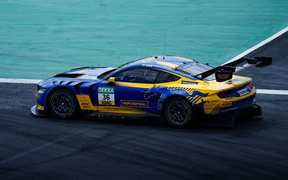
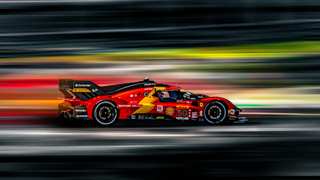
The Unseen Thread: Why Motorsport DNA Still Defines Automotive Excellence
For an industry veteran who has spent the better part of a decade immersed in the roar of engines and the relentless pursuit of speed, there’s an undeniable truth: the most visceral, engaging, and often groundbreaking road cars share an indelible connection to the race track. We’re not simply talking about superficial styling cues or bolt-on performance upgrades. We’re dissecting the very essence of these machines, delving into their motorsport DNA – the deep-seated engineering principles, material science, and high-performance engine architectures born in the crucible of competitive racing and then meticulously adapted for public roads. This fusion offers an unparalleled driving experience, bridging the chasm between grand prix circuits and daily commutes.
In an automotive landscape increasingly dominated by digital interfaces and autonomous aspirations, the allure of vehicles imbued with genuine motorsport DNA remains potent. These are the cars that stir the soul, demanding engagement and rewarding precision. They are a testament to the symbiotic relationship between track and tarmac, where innovation forged under extreme pressure eventually trickles down to enhance the capabilities and appeal of street-legal machines. As we peer ahead to 2025 and beyond, understanding this foundational connection is more critical than ever for anyone truly passionate about automotive engineering and high-performance vehicles.
The Symbiotic Relationship: Track to Tarmac Transfer
The question often arises: why do automotive manufacturers invest billions into the incredibly expensive and demanding world of motorsports? Beyond brand prestige and marketing narratives, the answer lies in accelerated research and development. The race track serves as the ultimate proving ground, a brutal laboratory where components are pushed to their absolute limits, and engineering solutions must perform under conditions far more rigorous than any road could impose. This relentless cycle of innovation generates a treasure trove of knowledge, directly influencing the next generation of performance car parts and entire vehicle architectures.
Consider the evolution of fundamental automotive technologies. Disc brakes, sophisticated suspension geometries, direct fuel injection, advanced aerodynamics, lightweight composite materials, and even the now-ubiquitous paddle shifters – all began as exotic racing innovations before becoming standard features, enhancing safety, efficiency, and performance across the board. The lessons learned in endurance racing, Formula 1, and rally stages translate into more robust, efficient, and dynamic road cars. For consumers, this means access to superior engineering, whether they’re seeking a daily driver with enhanced safety features or a weekend warrior that delivers exhilarating track day experiences.
Moreover, motorsport success undeniably elevates a brand’s image. The adage “Win on Sunday, Sell on Monday” still holds weight. A manufacturer’s dominance on the track fosters an aura of engineering prowess and reliability, making their road cars – particularly their luxury performance cars – more desirable. This intangible value is a significant driver for investing in high-stakes competition. For the discerning buyer, a vehicle carrying authentic motorsport DNA offers not just exceptional performance, but also a narrative of heritage and proven capability that no marketing campaign alone could replicate.
Engines Forged in Fire: The Heart of the Beast
The most direct and thrilling manifestation of motorsport DNA in a road car often resides under the hood: the engine. These powerplants are not merely “inspired by” racing; they are often direct descendants or heavily influenced derivatives of units designed for uncompromising competition. Their high-revving nature, explosive power delivery, and distinctive acoustic signatures create an immediate and visceral connection to their racing progenitors. Let’s explore some legendary examples where the engine, above all else, defines the vehicle’s motorsport DNA.
Alfa Romeo Montreal: A V8 with Pedigree
The Alfa Romeo Montreal, a design icon, harbored a secret weapon: a 2.6-liter V8 engine directly derived from the Tipo 33 sports prototype. The Tipo 33 was an endurance racer that battled at venues like the Targa Florio and the 24 Hours of Daytona, demanding immense reliability and power output. While detuned for street use, the Montreal’s V8 retained its electrifying character, enthusiastically revving to 7,000 RPM and delivering 200 horsepower. This wasn’t just an engine; it was a character statement, showcasing how automotive engineering consulting translated competition tech into accessible exhilaration. Its raw, unadulterated sound and responsive nature made it a truly special machine, a testament to Alfa’s rich motorsport DNA.
BMW M-Series: Bavarian Brutes with a Racing Heart
BMW’s “M” division (Motorsport) is synonymous with performance, and for good reason. Early M cars were practically homologation specials. The legendary BMW M1, for instance, featured a 3.5-liter M88 inline-six, an engine originally developed for the brand’s M1 ProCar series. This potent six-cylinder subsequently found its way into the E24 M6 and E28 M5, bestowing upon them a level of performance and refinement previously unheard of in their respective segments.
Similarly, the iconic E30 M3, a benchmark for sports sedans, was powered by the four-cylinder S14 engine. This unit was an engineering marvel, sharing its basic architecture with the M88 and even drawing inspiration from BMW’s M12 turbocharged F1 engines. Its lineage traces directly back to BMW’s dominant touring car programs, sharing crucial components and engineering philosophies with the very cars that conquered DTM (Deutsche Tourenwagen Masters). These examples underscore how deeply ingrained motorsport DNA is within the BMW M philosophy, offering enthusiasts a slice of racing heritage in every drive.
Chevrolet Camaro ZL1 (1969): American Muscle with Can-Am Fury
In 1969, Chevrolet unleashed a beast upon the streets: the Camaro ZL1. Its secret weapon was a monstrous 427 cubic-inch (7.0-liter) V8, a powerplant initially conceived for the unhinged world of Can-Am racing. This all-aluminum marvel was remarkably lightweight for its displacement and capable of producing over 500 horsepower in its raw racing form. Though officially rated at 430 hp for the street, the ZL1’s engine transformed the Camaro into a street-legal drag strip monster. This unit’s direct application in SCCA Trans-Am series race cars further cemented its motorsport DNA, making the extremely rare 69 production examples some of the most sought-after investment-grade classic cars today. This represents a quintessentially American approach to infusing racing technology directly into domestic performance cars.
Ferrari Dino 206 GT: A Prancing Horse of a Different Stripe
The Ferrari Dino 206 GT might not have worn the iconic Prancing Horse badge on its body, but its heart beat with pure Ferrari motorsport DNA. Its 2.0-liter V6 engine was born out of Ferrari’s Formula 2 program in the 1960s. This high-revving V6, though detuned for road use, delivered a spirited 180 horsepower to a car weighing just over 2,000 pounds. It instilled the Dino with an agile, racing-like character that made it a joy on winding roads. The Dino’s legacy also includes pioneering Ferrari’s first mid-engine V6 sports car, setting a crucial precedent for future exotic car engines and mid-engined supercar configurations.
Ferrari F50: F1 on the Road
When it comes to unadulterated Formula 1 motorsport DNA in a street car, few can rival the Ferrari F50. Created to celebrate Ferrari’s 50th anniversary, its 4.7-liter naturally aspirated V12 engine was a direct derivative of the Tipo 641 (F1-90) engine that powered Alain Prost’s 1990 Formula 1 car. Revving to an astonishing 8,500 RPM and producing 513 horsepower, the F50 delivered an auditory and visceral experience almost identical to an F1 car. With minimal modifications to meet road regulations, the F50 stands as one of the closest modern production cars to a Formula 1 machine, epitomizing the ultimate in track-derived engines and supercar technology.
Ford GT (2005 & 2017): Le Mans Legacy Reborn
The Ford GT, in both its 2005 and 2017 iterations, is a direct homage to the legendary Le Mans-winning GT40. The 2005 model’s 5.4-liter supercharged V8 engine shared its roots with Ford’s endurance racing powerplants, particularly those found in Daytona Prototype race cars. This connection ensured that its performance was not merely conceptual but proven under race conditions. Fast forward to the 2017 Ford GT, and the motorsport DNA is even more explicit. Its twin-turbocharged 3.5-liter EcoBoost V6 was developed concurrently for both the road car and Ford’s GTE-Pro class Le Mans challenger. The development cycle for this engine was heavily influenced by the demands of the FIA World Endurance Championship, making it one of the most potent and direct examples of race car technology transfer into a limited edition vehicle designed for the street.
Jaguar XJ220: The V6 That Conquered Speed Records
The Jaguar XJ220, a marvel of 1990s supercar engineering, nearly met its demise over its engine. Originally conceived with a V12, it ultimately arrived with a 3.5-liter twin-turbocharged V6. However, this was no ordinary V6; it was directly sourced from the formidable Jaguar XJR-11 Group C race car. This competition-proven engine allowed the XJ220 to briefly claim the title of the world’s fastest production car, hitting an astounding 217 mph. Its raw power (542 hp) and sophisticated forced induction system were a direct consequence of its motorsport DNA, showcasing how engineers cleverly adapted a track-focused powerplant for road legality, defining a new benchmark for premium sports cars.
Plymouth Belvedere (1964): Hemi History on the Street
On the surface, the 1964 Plymouth Belvedere might appear to be a quintessential American muscle car. However, beneath its unassuming exterior lay the legendary 426 Hemi V8, an engine explicitly engineered for NASCAR dominance. Nicknamed the “Race Hemi,” this V8 quickly proved to be a force on the oval tracks. Its eventual availability in production cars like the Belvedere, delivering 425 horsepower, made it one of the most fearsome and powerful muscle cars of its era. This direct transfer of a bespoke racing engine into a production model highlights a uniquely American tradition of infusing street cars with raw, uncompromised motorsport DNA.
Porsche 918 Spyder: Hybrid Hypercar with Endurance Roots
Porsche’s approach to motorsport DNA is often characterized by innovation, and the 918 Spyder exemplifies this perfectly. Its 4.6-liter V8 engine was directly derived from the RS Spyder, a prototype race car that fiercely competed in the LMP2 class at the 24 Hours of Le Mans. This high-revving V8, combined with an advanced electric powertrain, produced a mind-boggling 887 combined horsepower, catapulting the 918 Spyder into the hypercar elite. While the electric motors contribute significantly, it is the race-derived V8 that delivers the evocative sound, the immediate throttle response, and the emotional resonance, firmly anchoring the 918’s high-performance engine in its racing heritage. This fusion showcases the future trajectory of automotive performance upgrades blending traditional motorsport DNA with electrification.
Porsche Carrera GT: The V10 That Almost Raced
The Porsche Carrera GT is celebrated as one of the last truly analog supercars, and much of its mystique stems from its incredible V10 engine. This 5.7-liter unit was originally conceived for Formula 1 during the V10 era. When F1 regulations shifted, the project was repurposed for a Le Mans prototype that, regrettably, never saw the light of day. Instead, Porsche made the inspired decision to use this high-revving, race-built engine in its flagship supercar. Delivering 612 horsepower and screaming to an 8,000 RPM redline, the Carrera GT’s V10 offers a pure, unadulterated racing soundtrack. Its lightweight construction and unparalleled motorsport DNA make it one of the most challenging and rewarding supercars to master, a true icon of exotic car engines and a timeless example of track technology on the street.
Beyond the Engine: The Holistic Integration of Motorsport DNA
While the engine often grabs headlines, motorsport DNA extends far beyond the combustion chamber. Modern high-performance vehicles integrate a holistic suite of racing-derived technologies. Aerodynamics, for example, once exclusive to the track, now sculpt every surface of a supercar, generating downforce and managing airflow for stability at high speeds. Materials like carbon fiber, perfected in aerospace and racing, reduce weight and enhance structural rigidity, translating directly into improved handling and safety.
The chassis and suspension systems of these vehicles are often direct beneficiaries of racing development. Active suspension, advanced traction control, and sophisticated electronic differentials were all refined in competitive environments before making their way into street cars. Even the driver-centric ergonomics, the placement of controls, and the feedback from the steering wheel can be traced back to the imperative of maximizing control and driver confidence on the track. For those seeking the ultimate automotive performance upgrades, understanding this comprehensive integration of race car technology is key to unlocking a vehicle’s full potential.
Looking ahead to 2025 and beyond, the evolution of motorsport DNA will continue to shape the automotive landscape. Hybrid and electric powertrains, already dominating in categories like Formula E and endurance racing, are rapidly transitioning into production hypercars and high-performance vehicles for sale. The quest for efficiency, immediate torque, and sustainable performance on the track will directly influence the development of future luxury performance cars, proving that even in an electrified era, the lessons learned from racing remain paramount.
The Enduring Appeal
The connection between motorsport and road cars is an unbreakable thread, a continuous loop of innovation and aspiration. Cars endowed with genuine motorsport DNA offer more than just speed; they provide a narrative, a sense of heritage, and an unvarnished driving experience that speaks directly to the enthusiast’s core. They embody the pinnacle of automotive engineering, blending raw power with refined dynamics, all born from the intense demands of competition.
For those who understand the value of a meticulously engineered machine, these vehicles represent the ultimate expression of automotive passion. They are not merely modes of transport but living monuments to human ingenuity and the relentless pursuit of performance.
Are you ready to experience the thrill of genuine motorsport DNA? Explore the exceptional lineage of these performance icons and discover how track-proven engineering can transform your driving experience. Contact a specialist today to learn more about premium sports cars that carry this rich racing heritage.