Porsche 911 GT3 RS: A Track-Day Icon Evolving for 2025
For decades, the Porsche 911 GT3 RS has stood as the pinnacle of track-focused performance, a machine meticulously honed for the unforgiving demands of circuit driving. It’s a lineage that began with a clear objective: to distill the essence of motorsport into a road-legal package. From its inception, the GT3 RS wasn’t just another variant of the legendary 911; it was a declaration of intent, a commitment to raw, unadulterated driving dynamics. This unwavering dedication to the racetrack has cemented its status as an automotive icon, a benchmark against which all other performance cars are measured.
The journey of the GT3 RS, a story deeply intertwined with the evolution of the Porsche 911, is one of continuous refinement and a relentless pursuit of aerodynamic and mechanical excellence. It’s a narrative that speaks to the engineering prowess at Porsche, a company that consistently pushes the boundaries of what’s possible in automotive performance. Understanding the genesis of this formidable machine is crucial to appreciating its present and anticipating its future.
The Birth of a Legend: From GT3 to GT3 RS
When Porsche first introduced the GT3 variant of the 996 911 back in 1999, the automotive world largely considered it the ultimate expression of a track-hardened 911. With its race-tuned flat-six engine, strategically reduced weight, and homologation-driven development, it was undeniably a formidable machine. However, within the hallowed halls of Porsche’s engineering department, a vision for something even more extreme was taking shape. The team at Stuttgart recognized that even a car as potent as the GT3 could be further refined, that incremental tweaks could unlock a new level of performance.
This foresight led to the development of the GT3 RS. Following the launch of the facelifted 996.2 GT3, Porsche decided to push the envelope further. The “RS” designation, standing for Rennsport (racing sport), signaled a more aggressive, track-oriented iteration. This meant an even greater emphasis on shedding weight through the use of lighter wheels and body panels. The engine received a modest but significant power bump, and aerodynamic elements were subtly refined to enhance downforce and stability. The result was a car that made the already impressive GT3 seem almost ordinary and tame by comparison. For over two decades, this hardcore, race-derived evolution has been an undisputed icon at track days and spirited drives across the globe, a testament to Porsche’s unwavering commitment to motorsport DNA.
The 992.1 GT3 RS: A New Zenith of Track Performance
The current iteration, the 992.1 Porsche 911 GT3 RS, represents a significant leap forward, pushing the track-focused ethos to unprecedented degrees. This model exemplifies a holistic approach to aerodynamic efficiency and chassis tuning. A prime example of this is the carbon fiber bonnet, which houses a central radiator. Air is efficiently channeled through “nostril” outlets on the bonnet, directing airflow over the roof and contributing to overall aerodynamic balance.
Further demonstrating its racing pedigree, the 992.1 GT3 RS features a hydraulically adjustable front splitter and underbody flaps, technologies borrowed from the formidable 911 Turbo S. These elements actively manage airflow, optimizing downforce and reducing drag. The colossal swan-neck rear wing is not merely for aesthetics; it’s a functional masterpiece, incorporating a Drag Reduction System (DRS) similar to that found on Formula 1 cars and hypercars like the McLaren P1. This system can reduce drag on straights, enhancing top speed.
The chassis and suspension are equally sophisticated. Adjustable race-derived suspension allows for fine-tuning to specific track conditions, providing drivers with the tools to extract maximum performance. Dynamic engine mounts actively manage engine movement, ensuring consistent power delivery and responsive handling. Large air intakes and aggressive side skirts further underscore the car’s focus on cooling and aerodynamic efficiency.
Beneath the sculpted bodywork lies a potent 4.0-liter naturally aspirated flat-six engine. This powerhouse churns out an exhilarating 525 horsepower, a testament to Porsche’s mastery of naturally aspirated engine technology. The culmination of these engineering marvels results in breathtaking performance figures: a 0-62 mph sprint in just 3.2 seconds and a staggering 860 kilograms of downforce at 177 mph. Its blistering lap time of 6:44.85 around the legendary Nürburgring Nordschleife is a clear indicator that this machine operates in a league of its own, miles removed from a standard GT3, much like an eagle is to a swallow.
Spy Shots Reveal the Approaching 992.2 GT3 RS: The Final Testing Phase
As is tradition with every new generation of the 911, recent spy shots have offered a tantalizing glimpse of the camouflaged 992.2 GT3 RS undergoing its final testing phase. Appropriately, these rigorous trials are taking place at the spiritual home of performance testing – the Nürburgring. While the familiar Porsche evolutionary design language means the visual changes from the outgoing 992.1 are subtle, they are significant for those who understand the nuances of this performance icon.
The overarching aggressive and purposeful aesthetic remains. The central radiator configuration with its distinctive “nostril” outlets is present, along with the immense swan-neck rear wing, a signature element of the RS. Large air intakes and prominent side skirts continue to dominate the visual landscape, all contributing to the car’s formidable track-oriented stance. Even the door handles appear to be carried over, a detail that, while minor, highlights the evolutionary rather than revolutionary approach to this facelift.
A more specific detail observed is the placement of the lower lights for the turn signals. This is a departure from many standard 992.2 models, where the turn signals have been integrated into the main headlight clusters. At the rear, the diffuser has undergone a slight redesign, featuring new, subtle intakes positioned on either side of the exhaust outlets. While the presence of the 992.2 generation’s digital dashboard is yet to be confirmed, the overall impression is that the 992.2 GT3 RS will continue to be the aggressive, highly effective, and undeniably desirable track car that the GT3 RS has always been. The focus remains firmly on aerodynamic and mechanical refinement, not radical aesthetic transformation.
The Powertrain Enigma: Hybridization or Naturally Aspirated Purity?
Whispers and speculation have abounded regarding the potential powertrain for the new 992.2 GT3 RS. Some rumors suggest it might adopt the 3.6-liter twin-turbo hybrid flat-six that has become a centerpiece of the broader 992.2 generation lineup. Such a move would undoubtedly provide a significant boost in horsepower, surpassing the output of the outgoing 4.0-liter naturally aspirated engine.
However, as a seasoned observer of Porsche’s engineering philosophy, I am inclined to bet against this scenario. My reasoning is multi-faceted. Firstly, if Porsche intended to standardize a hybrid powertrain across its GT models, it’s highly probable they would have integrated it into the standard GT3 first. The fact that they haven’t done so speaks volumes about their strategy for the halo track variants.
Secondly, despite the remarkable advancements and engineering prowess demonstrated by Porsche in developing their new hybrid unit, it inherently carries more weight than a naturally aspirated flat-six. For a car like the GT3 RS, where every gram is scrutinized and every ounce contributes to agility and responsiveness, adding weight is almost sacrilegious.
But perhaps the most compelling reason is the very spirit of the GT3 RS. These cars are designed to thrill, to offer a pure, unadulterated connection between driver, machine, and road. They are not supercars built solely to chase lap records or break performance benchmarks. At their core, the GT3 and GT3 RS models represent the pinnacle of track-focused sports car engineering, prioritizing mechanical engagement and driver feedback above all else.
This is where the upcoming GT2 RS likely enters the picture. It is far more probable that the GT2 RS will be the recipient of the more powerful, potentially hybridized, 3.6-liter powertrain. Ultimately, Porsche understands that their loyal GT3 RS clientele seeks the most pure, mechanically engaging, and race-tuned driving experience available. To compromise this by fitting a powertrain that deviates from its naturally aspirated heritage would be a disservice to the model’s legacy. This sentiment is amplified by the high probability that the 4.0-liter naturally aspirated flat-six, a jewel of an engine, might be reaching its swansong with this generation of the GT3 RS.
Rivalry and Legacy: The GT3 RS’s Enduring Appeal
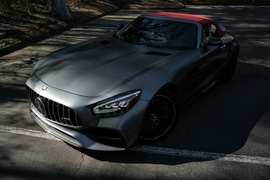
The competitive landscape for these hyper-focused track machines is intensifying. Recent spy shots of the new track-honed Mercedes-AMG GT offer a clear indication of their intent to challenge this segment. While the AMG GT appears impressively potent, it faces an uphill battle to match the nuanced performance and decades of track-honed development that define the GT3 RS. It’s not just about raw power; it’s about the holistic integration of aerodynamics, chassis, and a powertrain that sings the song of the racetrack.
There is a profound reason why the Porsche 911 GT3 RS has remained an icon for over two decades. It represents an unwavering commitment to a specific philosophy of performance. As the automotive world evolves and purists ponder the future of internal combustion engines, the GT3 RS stands as a beacon of what can be achieved when engineering excellence is singularly focused on the driver’s experience. With the end of an era in sight for naturally aspirated performance, if this 992.2 GT3 RS indeed marks the swansong for its beloved flat-six engine, it will undoubtedly be a glorious farewell, a thunderous roar that echoes the passion and precision that has made this car legendary.
The Porsche 911 GT3 RS isn’t just a car; it’s a statement. It’s a testament to what happens when engineers are given the freedom to pursue perfection on the racetrack. For those who understand its pedigree and its purpose, the choice is clear.
If you are captivated by the allure of track-bred performance and the legacy of the Porsche 911 GT3 RS, we invite you to explore how this iconic machine can elevate your driving experience. Contact us today to learn more about current models and future availability, and to schedule a consultation with one of our Porsche specialists.