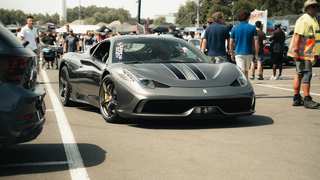
The Apex Predator Returns: Porsche 911 GT3 RS 992.2 – Evolution of a Track Icon
For over two decades, the Porsche 911 GT3 RS has been synonymous with unadulterated track performance, a no-compromise machine sculpted by relentless engineering for the ultimate driving enthusiast. Born from a lineage that traces back to the very essence of motorsport homologation, the GT3 RS has consistently pushed the boundaries of what a road-legal track car can achieve. As an industry veteran with a decade immersed in the automotive world, I’ve witnessed firsthand the evolution of these legends, and the anticipation surrounding the forthcoming 992.2 GT3 RS is palpable, promising a new chapter in its storied history.
The genesis of the GT3 RS legend can be traced back to the 996 generation. While the initial GT3 variant, launched in 1999, was undoubtedly a track-hardened marvel with its race-tuned flat-six engine, lightweight construction, and homologation-driven development, Porsche’s engineers, ever the perfectionists, saw room for improvement. This drive for ultimate performance led to the creation of the GT3 RS, a machine so focused, so intensely race-derived, that it rendered the standard GT3 almost tame by comparison. This early iteration cemented the RS moniker as the ultimate expression of the 911’s track capabilities, an icon that has graced countless track days and spirited drives ever since.
Fast forward to the current 992.1 generation, and the GT3 RS has ascended to new stratospheres of track-focused aggression. The design itself is a masterclass in aerodynamic efficiency. The carbon fiber bonnet, a signature element, now houses a central radiator flanked by “nostril” outlets that artfully channel airflow over the roof. This intricate airflow management extends to the hydraulically adjustable front splitter and underbody flaps, technologies borrowed from the formidable Turbo S. Dominating the rear is an colossal swan-neck rear wing, a visual testament to its aerodynamic prowess, incorporating DRS (Drag Reduction System) akin to Formula 1 machinery or the McLaren P1, a clear indicator of its racing pedigree.
Beneath this aggressive exterior lies a symphony of performance engineering. The 992.1 GT3 RS boasts adjustable race-derived suspension, dynamic engine mounts that intelligently manage power delivery, and gaping air intakes that feed its mighty 4.0-liter, 525-horsepower naturally aspirated flat-six engine. The result is a breathtaking acceleration from 0 to 62 mph in a mere 3.2 seconds, an astonishing 860 kg of downforce at 177 mph, and a legendary Nürburgring lap time of 6:44.85. This car is not merely a faster GT3; it represents a quantum leap, a vehicle so fundamentally different that comparing it to its standard sibling feels like comparing an eagle to a swallow – vastly different capabilities and purpose.
Now, the automotive world buzzes with excitement as spy shots reveal the 992.2 GT3 RS undergoing its final testing phases, appropriately at the hallowed grounds of the Nürburgring. As is tradition with every new iteration of the 911, the visual changes appear subtle, almost evolutionary rather than revolutionary. The camouflaged prototypes showcase the familiar central radiator with its distinctive “nostril” outlets, the imposing swan-neck rear wing with DRS, the purposeful air intakes, and the sleek side skirts. Even the door handles remain consistent, hinting at a deep respect for the established aesthetic.
However, upon closer inspection, subtle refinements emerge. The placement of the lower blinker lights is a notable change, a departure from the trend seen on many 992.2 variants where these are integrated into the headlights. The rear diffuser has undergone a slight redesign, featuring new, discreet intakes positioned on either side of the exhaust system. While the presence of the 992.2’s digital dashboard remains a question mark, the overall impression is that of a profoundly aggressive yet incredibly effective track car, a continuation of the GT3 RS’s unyielding identity.
Whispers in the industry have speculated about a radical powertrain shift, suggesting the new 992.2 GT3 RS might adopt the 3.6-liter twin-turbo hybrid flat-six engine that powers many other 992.2 models. Such a move would undoubtedly deliver a significant power increase over the outgoing 4.0-liter naturally aspirated unit. However, based on my experience and understanding of Porsche’s philosophy, I’m inclined to believe this is unlikely.
Firstly, if Porsche intended to standardize the hybrid powertrain across its GT models, it’s logical to assume it would have been integrated into the standard GT3 as well. The fact that it wasn’t suggests a deliberate differentiation between the GT3 and the GT3 RS, preserving the latter’s unique identity.
Secondly, while Porsche engineers have performed near-miracles in refining the weight and integration of their hybrid systems, any hybrid setup inherently introduces additional weight. For a car like the GT3 RS, where every gram is scrutinized and every ounce shaved contributes to enhanced agility and performance, adding weight is a considerable compromise, bordering on sacrilege.
Most crucially, however, fitting a hybrid powertrain solely for the sake of raw power would fundamentally alter the spirit of the GT3 RS. At its core, the GT3 and its RS variant are conceived as pure, track-focused sports cars designed to elicit visceral thrills and driver engagement, not simply to chase supercar lap records. That realm is more appropriately occupied by future iterations of the GT2 RS.
The upcoming GT2 RS is a far more likely candidate to feature the potent 3.6-liter hybrid flat-six, where its enhanced power and torque characteristics would be more fittingly utilized to redefine outright supercar performance. Porsche’s astute understanding of its customer base for the GT3 RS lies in delivering the most unadulterated, mechanically engaging, and race-honed driving experience available. Introducing anything other than the iconic 4.0-liter naturally aspirated flat-six would feel profoundly incongruous, especially considering the very real possibility that the 992.2 GT3 RS could represent the swansong for this magnificent engine. The inherent purity and intoxicating soundtrack of a naturally aspirated Porsche flat-six, particularly in its most potent GT3 RS iteration, are elements that define its very soul.
The competitive landscape is also evolving. Recent spy shots of the new track-focused Mercedes-AMG GT hint at a formidable rival, poised to challenge either the new GT3 RS or the anticipated GT2 RS. While the AMG appears impressive, it faces an immense challenge to match the established benchmark set by the Porsche 911 GT3 RS. There is a profound reason why this car has endured and evolved for over two decades, consistently setting the standard for track performance. As the automotive industry navigates the complex transition towards electrification, the 992.2 GT3 RS, especially if it signals the end of an era for its naturally aspirated flat-six, is poised to exit with a resounding roar, a testament to the enduring legacy of internal combustion at its most exhilarating.
For enthusiasts seeking the pinnacle of track-honed performance, the upcoming Porsche 911 GT3 RS 992.2 represents an unmissable opportunity to experience the zenith of decades of engineering refinement. Whether you are looking to enhance your track day performance in California, explore the limits of your vehicle on the legendary circuits of Europe, or simply own a piece of automotive history, this is the moment to engage. Explore the refined specifications and reserve your place in the legacy of the ultimate track-focused 911 by contacting your authorized Porsche dealership today.