The Unyielding Pursuit of Track Purity: Porsche 911 GT3 RS, A Decade-Long Evolution of Raw Performance
For over two decades, the Porsche 911 GT3 RS has stood as an unassailable benchmark in the realm of track-bred, road-legal performance vehicles. It’s not merely a car; it’s a philosophy, a testament to the unwavering dedication of Porsche engineers to extract the absolute pinnacle of driving engagement from their iconic flat-six powerplant and chassis. As an industry observer with a decade immersed in the high-octane world of performance automobiles, I’ve witnessed firsthand the evolution of this legendary machine, and the current trajectory, particularly with the impending 992.2 iteration, promises an even more distilled and exhilarating experience.
The genesis of the GT3 RS, born from the 996 generation in 1999, was already a bold statement. Porsche, in their inimitable fashion, took their already potent GT3 – a car widely perceived as the ultimate track-honed 911 with its race-spec flat-six, featherweight construction, and homologation-driven development – and declared it wasn’t quite enough. This inherent dissatisfaction with the status quo, this relentless pursuit of the theoretical limit, is what defines Porsche’s DNA. Even when the market deemed a car perfect, their internal engineers saw avenues for refinement, for an even more visceral connection between driver and machine.
This ethos was powerfully exemplified with the introduction of the facelifted 996.2 GT3 RS. It wasn’t just an incremental update; it was a deliberate escalation. Porsche meticulously shaved grams from the chassis through lighter wheels and body panels, coaxed a few more ponies from the already formidable engine, and subtly honed the aerodynamics. The result was a car that made the standard GT3 feel almost pedestrian by comparison. The RS designation, an acronym for Rennsport, meaning “racing sport” in German, was no mere badge; it was a declaration of intent. It was a car built for the serious enthusiast, the track day aficionado who understood and craved the raw, unfiltered feedback that only a purpose-built machine could deliver. For the subsequent two decades, the GT3 RS cemented its status as an icon, a fixture at every circuit and driver’s meeting, a whispered legend among those who truly understood the art of fast driving.
Fast forward to the current 992.1 GT3 RS, and Porsche has amplified this track-focused philosophy to unprecedented levels of intensity. This iteration represents a quantum leap in aerodynamic sophistication and mechanical prowess. The carbon fibre bonnet, a visual and functional masterpiece, now houses a central radiator feeding air through prominent “nostril” outlets that actively channel it over the roofline. This isn’t just for show; it’s a sophisticated solution to manage the intense heat generated by a track-focused engine under extreme load. The front splitter, hydraulically adjustable, mirrors the advanced technology found in the Turbo S, allowing for on-the-fly aerodynamic tuning. And then there’s the colossal swan-neck rear wing, a design clearly inspired by the cutting edge of motorsport, including Formula 1 and hypercars like the McLaren P1. Crucially, this wing integrates DRS (Drag Reduction System), a feature previously reserved for the pinnacle of motorsport, enabling drivers to reduce drag for higher top speeds on straights.
The mechanical symphony beneath the skin is equally impressive. The 992.1 GT3 RS boasts adjustable, race-derived suspension systems, dynamic engine mounts that stiffen under load to optimize power delivery and throttle response, and imposing air intakes that feed its potent 4.0-litre, naturally aspirated flat-six engine. This glorious engine, a masterpiece of engineering, churns out a staggering 525 horsepower. The culmination of these advancements is breathtaking: a 0-62 mph sprint in a mere 3.2 seconds, an astonishing 860kg of downforce at 177 mph, and a truly remarkable Nürburgring lap time of 6:44.85. This car is so far removed from a standard GT3, it occupies a different stratum of performance entirely. It’s akin to comparing a fighter jet to a nimble glider – both fly, but their purpose and capability are worlds apart.
The 992.2 GT3 RS: Whispers of Evolution and the Enduring Heart of a Champion
Recent espionage photography from the hallowed grounds of the Nürburgring has confirmed what many in the industry have been anticipating: the camouflaged facelifted 992.2 GT3 RS is undergoing its final testing phases. True to Porsche’s evolutionary approach, the visual distinctions between the outgoing 992.1 and the incoming 992.2 are subtle, almost imperceptible to the untrained eye. The core design language remains resolutely intact. We see the familiar central radiator arrangement with its signature “nostril” outlets, the imposing swan-neck rear wing complete with DRS, the prominent air intakes, and the aerodynamic side skirts. Even the door handles appear to be carried over.
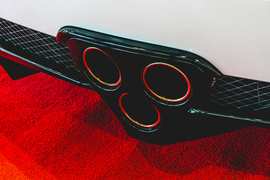
However, keen observers will note the inclusion of lower-mounted turn signals, a feature that was repositioned to the headlights on many standard 992.2 models. The rear diffuser has also undergone a mild redesign, incorporating small, discreet intakes flanking the central exhaust. While definitive details regarding the inclusion of the digital dashboard, a hallmark of the broader 992.2 range, remain elusive, the overarching impression is of a car that retains its aggressively purposeful, yet undeniably effective, track-honed aesthetic. This is the GT3 RS, uncompromised and uncompromising.
Speculation has been rife regarding a potential powertrain shift for the 992.2, with whispers suggesting the adoption of the 3.6-litre twin-turbo hybrid flat-six that has become the celebrated heart of many 992.2 models. This hybrid configuration would undoubtedly offer a substantial boost in power over the current 4.0-litre naturally aspirated unit. However, based on my extensive experience and insight into Porsche’s strategic direction, I firmly believe this is an unlikely scenario for the GT3 RS.
Firstly, if Porsche intended to standardize a hybrid powertrain across its performance spectrum, it stands to reason they would have integrated it into the standard GT3 first. The fact that the GT3 remains resolutely naturally aspirated speaks volumes about Porsche’s commitment to maintaining distinct identities and driving philosophies within their high-performance lineage.
Secondly, while Porsche’s engineers have performed near-miraculous feats in integrating the new hybrid unit, it inherently adds weight. For a car like the GT3 RS, where every gram is scrutinized and every ounce of weight reduction is celebrated, the introduction of a heavier powertrain would be considered almost sacrilegious. The very soul of the GT3 RS is rooted in its agility, its responsiveness, and its uncanny ability to feel impossibly light on its feet, a characteristic that a heavier hybrid system would inevitably compromise.
Most critically, however, is the fundamental ethos of the GT3 RS. This car is not engineered for the sole purpose of breaking outright performance records or chasing headline-grabbing horsepower figures. Its primary directive is to deliver an unparalleled driving thrill, a pure, mechanical connection to the road and the mechanics of motion. It is a track-focused sports car designed to engage the driver, to communicate every nuance of the chassis and tire grip, and to inspire confidence at the limit. Supercars may be built to conquer lap times, but the GT3 RS is built to be driven. Injecting a hybrid system merely for the sake of brute force would fundamentally dilute this core identity, sacrificing the visceral, analog experience that defines its appeal.
For those craving ultimate straight-line velocity and groundbreaking performance metrics, Porsche has a distinct offering: the upcoming GT2 RS. It is far more probable that this more extreme variant will indeed house the potent 3.6-litre hybrid flat-six, channeling its prodigious power towards outright record-breaking achievements. Porsche understands its customer base intimately. The discerning individuals who gravitate towards the GT3 RS are seeking the purest, most engaging, and most mechanically rewarding driving experience available. Deviating from the naturally aspirated 4.0-litre flat-six, particularly given its legendary status and the distinct possibility that this 992.2 iteration might represent its swansong, would be a profound misstep. The thought of fitting anything other than this iconic engine into the heart of a GT3 RS feels fundamentally incongruous with its celebrated heritage and purpose.
In the competitive landscape of track-focused machines, the AMG GT, particularly its track-hardened variants, is emerging as a formidable challenger. Mercedes-Benz has been seen conducting extensive testing of their new AMG GT models, which are positioned to compete directly with either the future GT2 RS or potentially even push the boundaries of what the GT3 RS offers. While these German rivals undoubtedly present impressive engineering and formidable performance, the enduring legacy and intrinsic appeal of the Porsche 911 GT3 RS are not easily replicated. There’s a reason this icon has commanded respect and desirability for over two decades.
As the automotive world increasingly electrifies, the 992.2 GT3 RS stands at a pivotal juncture. The potential for this to be the final chapter for the naturally aspirated flat-six in the RS lineage adds a layer of poignant significance to its imminent debut. If this is indeed the swansong, it will be a thunderous, unforgettable crescendo. It will be a final, glorious roar from an engine that has defined an era of performance driving, a fitting testament to an unwavering commitment to mechanical purity and driver engagement. The prospect of experiencing this ultimate naturally aspirated iteration is something that stirs the soul of any true automotive enthusiast.
For enthusiasts and potential buyers specifically seeking performance vehicles in regions like California, Florida, or the Northeast, the allure of a track-ready Porsche 911 GT3 RS, especially a final naturally aspirated model, is immense. These regions are known for their vibrant car culture and active track day communities, making Porsche track day experiences and GT3 RS for sale California highly searched terms. Similarly, prospective owners interested in used Porsche GT3 RS models or exploring Porsche lease deals will find the anticipation surrounding the 992.2 only heightens the desirability of its predecessors and its eventual successor.
The automotive industry is in constant flux, with technological advancements reshaping how we perceive and interact with performance. Yet, the Porsche 911 GT3 RS transcends fleeting trends. It represents a steadfast commitment to the art of driving, an unwavering dedication to mechanical precision, and an enduring promise of unparalleled exhilaration. If you’re seeking a machine that ignites your passion and sharpens your senses, a machine that embodies the very essence of track-bred performance, then the journey with the Porsche 911 GT3 RS is one that demands your attention.
The road to automotive nirvana is paved with intention and passion. If the relentless pursuit of track-honed perfection speaks to your driving soul, we invite you to explore the legacy and future of the Porsche 911 GT3 RS. Contact your local Porsche Centre or connect with our performance specialists today to discuss how you can become part of this extraordinary automotive narrative and arrange a consultation on securing your piece of track-day history.