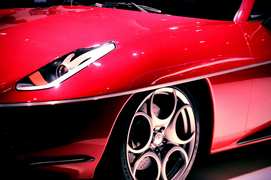
Pagani Utopia 2025: The Apex of Hypercar Artistry and Engineering
For over two decades, the name Pagani has resonated with a rarefied stratum of automotive enthusiasts, a beacon of uncompromising artistry, groundbreaking engineering, and a visceral connection to the driving experience. Now, in 2025, Horacio Pagani and his maestro team have unveiled their third masterpiece: the Pagani Utopia. This isn’t merely a successor to the legendary Huayra; it’s a profound evolution, a distillation of everything that defined its predecessors, meticulously refined and imbued with a soul all its own. As a seasoned observer of the hypercar landscape for the better part of a decade, witnessing the genesis and execution of a machine like the Utopia offers a unique perspective on the pinnacle of automotive achievement.
The allure of a Pagani transcends mere statistics. It’s about an experience, a symphony of senses orchestrated by a V12 engine and a chassis that dances on the precipice of physics. The Utopia embodies this philosophy with an 852 horsepower, twin-turbocharged, AMG-developed V12 engine, a powerplant that promises not just blistering acceleration but a narrative of torque that will recalibrate your understanding of what “force” truly means. The sensation of 30 mph, poised in third or fourth gear, then unleashing the throttle, is an awakening. A fleeting moment of stillness, a breath held, and then the eruption. The air itself seems to warp as the engine inhales deeply, transforming potential energy into raw, unadulterated thrust. It’s a longitudinal acceleration so profound it can momentarily recalibrate your inner ear, a sensation akin to the exhilaration of a perfectly executed rollercoaster drop, yet infinitely more nuanced and sophisticated.
This initial surge of primal power, followed by the involuntary chuckle of pure delight, is the Utopia’s immediate handshake. It’s a promise of the untamed, a commitment to the elemental thrill of motion. While some hypercars might chase abstract figures on a dyno, the Utopia’s genius lies in translating that immense power into an immediate, tangible, and deeply rewarding experience. The straight-line surge, seemingly a simple demonstration, is actually a profound insight into the car’s core character: an exquisite, extraordinary machine designed to stir the soul.
A Legacy Forged in Art and Science
The very name “Utopia” evokes a sense of perfection, a realm of ideals. Sir Thomas More’s seminal work envisioned a societal ideal, and over five centuries later, Horacio Pagani’s Utopia materializes this aspiration within the realm of automotive engineering. This £2.2 million, 1280kg marvel, powered by that potent V12, is a testament to the harmonious marriage of advanced composites and exotic alloys. Unlike More’s philosophical construct, Pagani’s Utopia is tangible, attainable for a select few – the 99 fortunate individuals who secured a coupe build slot, with the tantalizing prospect of a Roadster to follow. For those of us in the automotive press, it’s a fleeting, almost dreamlike encounter, a precious window into a world of unparalleled automotive craftsmanship, best savored on the sinuous roads that grace the Italian countryside surrounding Pagani’s headquarters in San Cesario sul Panaro.
The arrival of an all-new Pagani model is an event, akin to a new symphony from a celebrated composer or a lost manuscript from a revered author. The Utopia represents only the third new model line to emerge from Pagani Automobili in over 25 years. This scarcity amplifies the anticipation, the weight of expectation. Has the wait been justified? Absolutely.
Pagani’s journey from its inception to the modern era is a fascinating narrative. I recall my first visit in 1999, when the entire operation – and indeed, Horacio Pagani’s residence – was housed within a striking, wedge-shaped glass and steel structure, now the Art & Science Research Centre, still serving as a modest hub for prototype development. Today, the company has blossomed into its magnificent ‘Atelier,’ an impressive headquarters and museum inaugurated in 2017, encompassing car production, alongside the bespoke departments for restoration (Rinascimento), personalization (Unico), and special projects (Grandi Complicazioni). It’s within this sanctum of automotive artistry that our intimate audience with the Utopia begins.
My initial experience is not from the driver’s seat, but as a privileged passenger, riding shotgun with Pagani’s seasoned R&D test driver, Alberto Scilla. While my natural inclination is to be behind the wheel, this handover process is a profound exercise in trust and respect, offering invaluable insight into the car’s character and behavior before I even grip the steering wheel myself.
The Dance on the Futa Pass
Our destination: the Futa Pass, a mere 90 minutes from Pagani’s HQ, a route steeped in automotive history, famously part of the Mille Miglia legendary circuit. It’s the ideal canvas upon which to appreciate the Utopia without attracting undue attention. With colleagues Aston Parrott and Sebastian Berridi navigating the camera car behind us, Scilla and I merge onto the autostrada, a sense of giddy anticipation, almost akin to a first-time encounter with such a machine, washing over me.
Even from the passenger seat, the Utopia is an immersive experience. It possesses a surprising suppleness, and while the V12 is ever-present, its formidable character remains restrained at lower speeds and with gentle throttle inputs, only to unleash its might when provoked. Paganis have always prioritized the road-going experience, and the Utopia elevates this ethos with an unprecedented level of refinement, seamlessly integrated with its mouth-watering performance capabilities.
Scilla elaborates on the painstaking effort dedicated to honing the manual transmission. It’s not just about the precision of the gearshifts but the tactile feedback of the clutch. Managing a colossal 811 lb-ft of torque with the delicacy required for a truly celebratory manual gearbox is an extraordinary feat. Yet, observing Scilla’s fluid shifts, the Utopia’s transmission exhibits a remarkable lightness of touch, a testament to meticulous engineering.
We glide along the A1 autostrada, an apex predator in a sea of ordinary traffic, our passage marked by an effortless glide and an undeniable presence. The lane ahead seems to magically clear, reminiscent of the fervent crowds of rallying’s Group B era. Periodically, Scilla orchestrates a series of downshifts, not out of necessity, but seemingly for the sheer joy of it. A gentle prod of the throttle ignites the V12, a guttural hiss and a resonant growl emanating from its 6-liter heart as the turbos spool. The delivery is sweeter, sharper, and more outgoing than the original Huayra’s, yet with a steelier, more assertive edge. This is an engine that speaks a language of raw power and refined character.
A Masterpiece of Form and Function
Our pit stop for fuel presents an immediate, almost surreal, phenomenon: people emerge from seemingly nowhere, drawn by the Utopia’s gravitational pull. While some might find this attention intrusive, there’s an undeniable reassurance in the enduring fascination a wide, low, and spectacularly beautiful car commands. As bystanders brandish their phones, I find myself captivated, even after an hour in its presence. The Utopia eschews the overt aerodynamic appendages and cavernous diffusers that dominate current hypercar design, opting instead for a more artistic pursuit: the celebration of pure form. It’s a delicate balance of artistic endeavor, lavish embellishment, and eye-catching flourishes – the very essence of Pagani’s distinctive aesthetic.
Possessing the key – a satisfyingly weighty, Utopia-shaped fob – should inspire a sense of cool detachment, yet my gaze is drawn to its compound curves, as if scanning a 3D model. Every exterior and interior metallic element is meticulously machined from a solid billet, lending it a jewelry-like quality and creating the illusion that the entire car has been sculpted from a single piece. Witnessing such meticulous craftsmanship in the flesh is a truly remarkable experience.
The distinctive dihedral doors, a departure from the Huayra’s gullwings and the Zonda’s conventional hinges, open to reveal an extraordinary cockpit. A riot of exquisite materials, shapes, and finishes creates a dazzling exercise in controlled maximalism. The familiar Pagani signatures are all present: the periscope air vents, the floating crescent-shaped instrument binnacle, the flawlessly exposed carbon fiber monocoque, and the ingenious use of glazing that extends into the roof panel, bathing the interior in light and enhancing the sense of spaciousness.
True to its philosophy, the Utopia reveres mechanical artistry. The analog instruments feature small portholes, offering glimpses into their intricate workings, akin to the back of a fine Swiss watch. And there, rising from the transmission tunnel like a sculpted piece of art, sits the machined-from-solid gear lever for the optional seven-speed manual gearbox, its complex linkage proudly displayed. Pagani’s profound admiration for Leonardo da Vinci and his principle of inseparably linking art and science is evident throughout. The steering wheel is a prime example: one of over 750 components fabricated in Modena Design’s state-of-the-art CNC facility, it begins as a 43kg billet of high-grade alloy. After 28 hours of five-axis machining to tolerances of just 0.5 microns, followed by meticulous hand-polishing, the finished wheel weighs a mere 1.6kg. The 41.3kg of leftover swarf is, of course, responsibly recycled.
The Analog Heartbeat in a Digital Age
The era of manual supercars often meant a clutch pedal that felt like a gymnasium leg-press. The Utopia’s clutch, however, is light and remarkably smooth. It offers just enough resistance to convey a satisfying mechanical connection, while the precise bite point allows for seamless, delightful take-offs. The gearshift itself is clean and precise – perhaps a fraction longer than one might expect, and lacking the pronounced resistance of a gated Ferrari shift, but undeniably pleasing.
The inclusion of a dog-leg first gear adds a welcome touch of nostalgia. In truth, the sheer abundance of torque from idle allows for pull-away in second gear. However, a positive spring bias guiding the lever towards the center of the open gate ensures that upshifts to second and subsequent gears are slick and exact. It’s no surprise that a remarkable 70% of Utopia customers opt for the manual gearbox.
Despite its proudly analog aesthetic, the Utopia integrates advanced electronics with sophisticated finesse. A selection of dynamic modes – Comfort, Sport, Race, and Wet – allows for the fine-tuning of the car’s demeanor, while a Supersoft mode, akin to a Ferrari’s bumpy road button, provides instant access to the most compliant suspension setting.
The need for Supersoft is infrequent, as the semi-active TracTive dampers are exceptionally well-calibrated, achieving an impressive equilibrium between bump absorption and body control. Sport mode becomes my default, injecting a potent surge of energy without rendering the Utopia overly frantic. The Electronic Stability Control (ESC) provides a reassuring safety net, gently intervening if one becomes too ambitious with throttle application on corner exits, yet allowing for blistering progress. This is particularly true once the 265/35 R21 front and 325/30 R22 rear Pirelli P Zero Corsa tires reach optimal temperature.
The decision to switch to Race mode requires a moment of reflection, tinged with the mental image of having to explain a mishap with a £2.2 million car to Horacio Pagani. My internal dialogue presents a fascinating debate: the cautious voice of reason versus the persuasive devil advocating for a full-throttle experience, even suggesting that true drivers would disengage the ESC entirely.
Ultimately, a compromise is reached. Race mode is engaged, but the ESC button remains untouched. This proves to be the judicious choice. The heightened performance unleashed in Race mode allows the Utopia to truly reveal its capabilities, and the more relaxed ESC calibration permits a delightful degree of controlled oversteer at the rear wheels, while still offering dependable intervention when needed.
Accelerating through the gears in the Utopia is akin to riding a rocket. The AMG-designed, hand-built Pagani V12 is not an engine that screams towards a stratospheric redline (6700rpm), but rather one that invites you to savor each gear. Third and fourth become the sweet spots, with occasional forays into fifth and precise drops into second. In Race mode, the V12’s roar intensifies, becoming more guttural under acceleration, accompanied by a symphony of induction chuffs and turbo whistles as the throttle is modulated. The off-throttle experience is equally captivating, with a bass-heavy artillery barrage erupting from the Gatling-gun exhaust on the overrun.
This raw, explosive power stands in stark contrast to the Utopia’s seductive form and refined character. Yet, its precision, poise, and illusion of compactness are entirely contemporary. Where larger supercars of the past often wore their unwieldiness as a badge of honor, the modern breed, exemplified by hybrid marvels like the Lamborghini Revuelto, has redefined expectations. Paganis have always possessed a genetic advantage: a chassis built from titanium-infused carbon fiber and a mechanical purity that sidesteps the need for complex solutions to mitigate mass. Despite its timeless objectives, the Utopia has, indeed, moved with the times.
The Illusion of Effortlessness
Power-to-weight ratios, while informative, can be deceptive. A 500bhp car weighing a ton offers the same numerical advantage as a 2-ton car with 1000bhp, yet their driving dynamics are worlds apart. The Utopia, weighing in at a dry 1280kg (1340kg wet) and producing 852bhp and 811 lb-ft, might be numerically surpassed by electric hypercars like the Pininfarina Battista or even the Bugatti Chiron. However, it feels more energized and alert at all times, its comparatively lighter mass to propel and maneuver granting it an inherent agility.
Ascending the more demanding sections of the Futa Pass, this translates into a car with colossal potency between corners, one that revels in braking zones and the turns themselves. It feels natural, predictable, and even exploitable, belaying the immense forces at play and encouraging the driver to delve deeper into its prodigious performance reserves. The steering is light and precise, possessing sharp reflexes yet maintaining a composure that allows for accurate, consistent, and confident apex targeting. The ability to precisely place the inside front wheel is uncanny. While an initial desire for slightly more tactile feedback might surface, with more mileage, the absence of distraction becomes apparent as an integral part of the Utopia’s playbook. Combined with the light clutch, the free-shifting gearbox, and the titanic powerplant, the driver and the Utopia achieve a state of harmony, never a battle.
This sense of effortless control extends to the Utopia’s formidable braking system. Massive 410mm front and 390mm rear Brembo CCM-R discs, gripped by enormous six-piston front and four-piston rear calipers, apply progressive clamping force to the vast carbon rotors. The brakes are remarkably easy to modulate at low speeds, offering seemingly endless bite at higher velocities, with a consistently firm pedal that instills unwavering confidence.
A Symphony of Perfection
The magic of the Utopia lies in its transcendence of conventional hypercar doctrine. Yes, it is immensely powerful and blindingly fast. But, as its name suggests, its emphasis is on achieving a state of perfect harmony in all aspects, rather than prioritizing extremes at the expense of the overall experience. The marriage of the monumental biturbo V12 to a sweet-shifting manual gearbox is transformative. Similarly, eschewing four-figure horsepower figures and five-figure redlines results in a powertrain brimming with awe-inspiring, and crucially, nuanced performance that excels on the road at all speeds. The fact that it effortlessly meets global emissions and homologation standards further underscores Pagani’s meticulous approach and the invaluable partnership with AMG as its engine supplier.
Sophisticated electronics might often be perceived as antithetical to organic, analog-feeling cars. However, the Utopia’s deft implementation of adaptive damping, ESC, and the electronic differential skillfully refines (and, when necessary, tames!) the car, enhancing the feel and dynamism that discerning drivers crave.
The outcome is a savagely quick and sublimely sorted machine. It seamlessly blends the purity and engagement of the Zonda with the epic reach and modern refinements of the Huayra, while layering its own authentic character and distinct capabilities. The Utopia pushes the boundaries of what’s possible, yet adheres to its own set of rules – contemporary where it matters most, and timeless where it counts. Pagani has once again achieved the extraordinary.
The Pagani Utopia Roadster: A Symphony Uncompromised
While Pagani has previously graced us with open-top versions of the Zonda and Huayra, the Utopia marks the first instance where the design process for the coupe and Roadster versions occurred concurrently. The result is a car with even fewer compromises. The dry weight remains an identical 1280kg, a testament to Pagani’s unparalleled mastery of carbon fiber, where the bespoke tub retains exceptional rigidity without the need for additional reinforcement. Like its coupe counterpart, the Utopia Roadster boasts worldwide homologation for safety and emissions. Production numbers and price have seen an increase, with Pagani commanding £3.1 million for each of the 130 Roadsters planned, produced at a rate of approximately 50 to 60 cars per year.
For those seeking the ultimate expression of automotive artistry and performance, the Pagani Utopia represents not just a vehicle, but a destination.
Ready to explore the pinnacle of hypercar engineering and design? Discover more about the Pagani Utopia and its availability by contacting our dedicated team of luxury automotive specialists today.