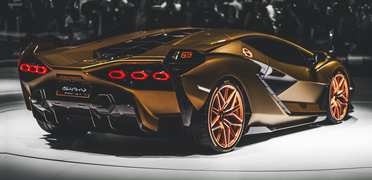
Pagani Utopia 2025: Redefining Hypercar Excellence with Timeless Engineering and Breathtaking Performance
For over a quarter-century, the name Pagani has been synonymous with automotive artistry, pushing the boundaries of what’s possible in the realm of hypercars. Now, with the arrival of the Pagani Utopia 2025, Horacio Pagani and his dedicated team at the San Cesario sul Panaro atelier have once again delivered a masterpiece. Building upon the legendary legacies of the Zonda and Huayra, the Utopia isn’t merely a successor; it’s a profound evolution, a meticulous redefinition of the hypercar formula that seamlessly blends raw, unadulterated performance with exquisite craftsmanship and an unparalleled driving experience. This £2.2 million marvel, powered by a formidable 852bhp twin-turbo V12, represents the zenith of automotive engineering and design for discerning collectors and driving enthusiasts alike.
The Essence of Utopia: Torque, Thrill, and Timeless Design
The experience of driving the Pagani Utopia 2025 is, at its core, about the intoxicating sensation of torque. Imagine yourself at a steady 30 mph, selecting a lower gear – perhaps third or even fourth for maximum impact. With your hands confidently gripping the steering wheel, you take a deep, anticipatory breath. Then, you gently depress the throttle. For a fleeting moment, there’s a subtle anticipation, a pregnant pause. But then, the 6-litre, AMG-derived, twin-turbo V12 engine, meticulously engineered by Pagani, awakens. It inhales deeply, transforming mere air into an explosive force that propels you forward with relentless intensity. The world around you begins to blur at the edges, not with the jarring, unpleasant lurch of some contemporary electric hypercars, but with an ever-intensifying, exhilarating surge of longitudinal g-force.
This initial sensation is profound, evoking a primal response, akin to the thrill of a rollercoaster or a bungee jump. You instinctively ease off the throttle, your palms perhaps a little damp, a moment of exhilaration washing over you. And then, the familiar symphony of adrenaline and sheer joy begins. Giggles erupt, followed by an irresistible urge to repeat the experience. This potent, exhilarating surge towards the horizon, the sheer visceral thrill of the Utopia’s acceleration, is a novelty that never diminishes. While these straight-line bursts of acceleration might seem to trivialise the Utopia’s profound capabilities, they underscore its elemental appeal: a machine of exquisite beauty and extraordinary engineering that offers a pure, unadulterated driving thrill.
A Philosophy Forged in Art and Science
More than five centuries ago, Sir Thomas More penned his seminal work, “Utopia,” envisioning a perfect society. Today, Horacio Pagani has brought his own vision of perfection to life in the form of the Pagani Utopia. This £2,200,000, 1280kg (dry weight) machine, boasting 852bhp and a colossal torque output, is a breathtaking fusion of advanced composites and exotic alloys. While More’s vision remained an ideal, Pagani’s Utopia is a tangible reality, albeit one accessible to a select few. The coupe version is strictly limited to 99 fortunate customers, with some also opting for the equally stunning Roadster variant. For automotive journalists and enthusiasts, the Utopia represents a fleeting, vicarious dream – an opportunity to experience automotive nirvana on the most exquisite roads, a day to truly inhale the rarefied air of true automotive connoisseurs.
The arrival of an all-new Pagani model is a rare and significant event, much like the unveiling of a masterpiece by a celebrated artist. The Utopia marks only the third entirely new model line to emerge from Pagani’s esteemed San Cesario sul Panaro factory in the past 26 years. The anticipation, therefore, has been immense. Has it been worth the wait? For those fortunate enough to witness and experience it, the answer is unequivocally yes.
The landscape of Pagani has evolved dramatically since the company’s early days. What was once a modest workshop within Horacio Pagani’s home has transformed into a sprawling, state-of-the-art Atelier. This impressive headquarters, inaugurated in 2017, now houses not only car production but also the revered Rinascimento (restoration), Unico (personalisation), and Grandi Complicazioni (special projects) departments. The Art & Science Research Centre, a striking modern glass and steel edifice, remains a hub for innovation, while the development prototypes are still meticulously prepared and maintained in a dedicated, modest workshop.
An Immersive Introduction: The Passenger’s Perspective
My initial encounter with the Utopia was from the passenger seat, alongside Pagani’s seasoned R&D test driver, Alberto Scilla. While I typically prefer to be in control of the reins, especially in such an extraordinary machine, this handover is a ritual of profound trust and mutual respect. It also offers an invaluable opportunity to observe and absorb the car’s behaviour and performance before taking the helm myself.
Our destination was the Futa Pass, a legendary route just 90 minutes from the Pagani factory, famed for its inclusion in the historic Mille Miglia. It’s the perfect setting to experience the Utopia without attracting undue attention – or at least, as much attention as a hypercar of this caliber can avoid. With Aston Parrott and Pagani’s PR representative Sebastian Berridi following in our camera car, Scilla and I navigated out of Modena and onto the autostrada. Even from the passenger seat, the experience was nothing short of breathtaking. The Utopia exhibited a surprising degree of suppleness, and while the V12 engine’s presence was ever-felt, it remained remarkably unobtrusive at lower speeds and gentle throttle inputs, only to unleash its immense power when provoked. This duality is a hallmark of Pagani vehicles: undeniably road-focused, yet capable of delivering mind-bending performance.
Scilla elaborated on the immense effort invested in perfecting the manual transmission. The challenge of managing over 811 lb-ft of torque while maintaining the delicate precision required for a sublime manual gear change is monumental. Yet, judging by the effortless grace with which Scilla shifted gears, the Utopia’s manual gearbox is a triumph of engineering, offering a lightness of touch that celebrates traditional driver engagement. Cruising along the autostrada, we moved through traffic with an almost regal presence. The Utopia’s ability to effortlessly clear a path, reminiscent of the fervent crowds during the Group B rallying era, was palpable. Occasionally, Scilla would downshift a gear or two – seemingly for the sheer joy of it – and apply a moderate amount of throttle. The V12 would respond with a deep, resonant growl, a potent symphony of hissing turbos and a guttural roar that was distinctly sweeter and more outgoing than the Huayra’s, yet possessed a sharper, more steel-like edge. It is, quite simply, an astonishing engine.
A Visual Masterpiece: The Art of Form and Detail
Our stop for fuel marked the moment of truth – the swap to the driver’s seat. One of the immediate observations about the Utopia is its magnetic allure. Upon any halt, people inexplicably emerge from the periphery, drawn by its undeniable charisma. While this might sound inconvenient, there’s a reassuring confirmation in the enduring fascination that a wide, low, and exquisitely designed automobile can evoke.
As bystanders captured images with their phones, I took a moment to truly appreciate the Utopia’s form. Absent are the aggressive wings and cavernous diffusers that often dominate contemporary hypercars. Instead, the Utopia embraces a more artistic philosophy, celebrating purity of form while indulging in lavish embellishment and eye-catching flourishes. This unique fusion is the very essence of Pagani’s distinctive aesthetic.
Even with the coveted, weighty Utopia-shaped key in my hand, I found myself captivated, my gaze tracing its compound curves as if with a 3D scanner. Every piece of exterior and interior brightwork is meticulously machined from solid billet, lending a jewellery-like quality and creating the impression that the entire car has been sculpted from a single, monolithic block. It is a truly remarkable spectacle to behold in the wild.
The Cockpit: A Symphony of Materials and Mechanical Purity
The dihedral doors, a hallmark of modern supercars and a departure from the Huayra’s dramatic gullwings and the Zonda’s conventional hinges, swing upwards to reveal an extraordinary cockpit. It’s an opulent yet meticulously organised space, a dazzling exercise in maximalism, brimming with exquisite materials and a riot of shapes and finishes. All the signature Pagani cues are present: the iconic periscope air vents, the floating crescent-shaped instrument binnacle, the flawless exposed carbonfibre chassis, and the intelligent use of glazing that extends into the roof panel, flooding the cabin with light and enhancing the sense of spaciousness.
True to its philosophy, the Utopia celebrates the pinnacle of mechanical artistry. The analogue instruments feature small portholes, allowing a glimpse into their intricate inner workings, reminiscent of the back of a fine Swiss watch. And there, rising from the transmission tunnel like a piece of functional sculpture, sits the machined-from-solid gear shifter for the optional seven-speed manual gearbox, its complex linkage proudly on display.
Pagani’s profound admiration for Leonardo da Vinci, who championed the inseparable link between art and science, is evident throughout the Utopia. The steering wheel serves as a prime example. Crafted in Modena Design’s advanced CNC facility, it begins life as a 43kg billet of high-grade alloy. Over 28 hours of five-axis machining, to tolerances of a mere 0.5 microns, followed by meticulous hand-polishing, reduces its weight to a feather-light 1.6kg. The impressive 41.3kg of recycled swarf is a testament to Pagani’s commitment to sustainability.
The Driving Experience: Analogue Soul, Digital Precision
The era of hypercars with physically demanding clutches is long gone, and the Utopia’s is a revelation. It’s light, smooth, and offers just the right amount of resistance to feel mechanical, allowing for effortless modulation and a delightful take-up point for smooth departures. The gearshift itself is clean and precise – perhaps a fraction longer than some might expect, lacking the definitive detent of a gated Ferrari shifter, but undeniably pleasing.
A dog-leg first gear adds a welcome touch of nostalgia. Frankly, the surge of torque from tickover means second gear can be used for initial acceleration, but the positive spring bias pulling the lever towards the centre line of the open gate makes the upshift to second and beyond incredibly slick and precise. It’s no surprise that a remarkable 70% of Utopia customers have opted for the manual transmission.
Despite its proudly analogue soul, the Utopia benefits from sophisticated and fully integrated electronic systems. A choice of dynamic modes – Comfort, Sport, Race, and Wet – allows for immediate adjustment of the car’s demeanor, softening or sharpening its response. A “Supersoft” mode, akin to Ferrari’s bumpy road setting, provides instant access to the most compliant suspension configuration.
However, such adjustments are often unnecessary. The semi-active TracTive dampers are exceptionally well-calibrated, achieving an impressive balance between bump absorption and body control. Sport mode is my personal preference, infusing the Utopia with a spirited, espresso-like jolt without inducing excessive edginess. The Electronic Stability Control (ESC) offers reassuring oversight, subtly intervening to curb enthusiastic throttle application out of corners, yet allowing for blistering progress. This is further enhanced by the P Zero Corsa tires – 265/35 R21 at the front and 325/30 R22 at the rear – which, once warmed, provide exceptional grip.
The temptation to engage Race mode is strong, though the thought of explaining an encounter with the Armco to Horacio Pagani is a sobering one. A mental tug-of-war ensues between prudence and the persuasive devil advocating for maximum performance. Ultimately, a compromise is reached: Race mode is engaged, but the ESC remains untouched. This proves to be the optimal decision. Race mode unlocks the Utopia’s full potential, and the more relaxed ESC allows for a gratifying amount of rear-wheel oversteer, all while maintaining a dependable level of electronic intervention.
Unleashing the V12: A Symphony of Power and Precision
Accelerating the Utopia through its gears is akin to being launched from a rocket. The AMG-designed, hand-built Pagani V12, while not a high-revving screamer (its redline is a relatively modest 6700rpm), delivers each gear change with a visceral thrill that demands to be savoured. Third and fourth gears become familiar companions, with occasional forays into fifth and judicious drops into second. In Race mode, the V12’s roar intensifies, becoming harder and more guttural under acceleration. Exquisite chuffs and gurgles emanate from the induction and turbo systems as you modulate the throttle. Off-throttle, the soundtrack transforms into a bass-heavy artillery barrage from the Gatling-gun exhaust on the overrun.
This raw, explosive power is at stark contrast to the Utopia’s svelte form and refined character. Yet, its precision, poise, and illusion of compactness are utterly contemporary. Older generations of supercars often wore their bulk like a badge of honour, but the latest breed, exemplified by the torque-vectoring Lamborghini Revuelto, have redefined expectations. Pagani, however, possesses a genetic advantage: chassis structures forged from titanium-infused carbonfibre and a mechanical purity that sidesteps the need for complex solutions to mitigate mass. Despite its timeless objectives, the Utopia has demonstrably moved with the times.
Power-to-weight ratios can be deceptive. While numerically, a 500bhp car weighing a ton offers the same theoretical performance as a 2-ton car with 1000bhp, their driving dynamics will be vastly different. The 1280kg (dry) / 1340kg (wet) Utopia, with its 852bhp and 811 lb-ft of torque, may not match the outright power figures of EV hypercars like the Pininfarina Battista or the Bugatti Chiron. However, its significantly lower weight imbues it with a palpable sense of energy and alertness. It requires less effort to propel, contain, and manoeuvre, a crucial factor in its dynamic character.
On the Futa Pass: A Dance of Performance and Predictability
On the most exhilarating stretches of the Futa Pass, this translates into a car with colossal potency between corners, a machine that revels in braking zones and the turns themselves. It feels natural, predictable, and even exploitable, a testament to its incredible performance reserves. The steering is light and precise, possessing a keen responsiveness without sacrificing the calmness required to accurately place the Utopia at the apex. The ability to precisely position the inside front wheel is uncanny. Initially, a fraction more steering feedback might be desired, but with more time behind the wheel, one understands that this lack of distraction is a deliberate part of the Utopia’s inherent character. Coupled with the light clutch, the slick-shifting gearbox, and the titanic powerplant, the result is a car with which you never struggle; instead, you find perfect harmony.
This harmony extends to the Utopia’s formidable braking system. Massive 410mm front and 390mm rear Brembo CCM-R discs, gripped by enormous six-piston front and four-piston rear calipers, exert progressive clamping force. The pedal feel is consistently firm, inspiring confidence, and while modulation is easy at lower speeds, there’s an abundance of bite for high-speed deceleration.
The Utopia’s Enduring Appeal: Harmony Over Extremes
The magic of the Pagani Utopia lies in its ability to transcend conventional hypercar doctrine. It is undeniably powerful and astonishingly fast, but as its name suggests, the Utopia prioritises delivering perfect harmony above all else, rather than chasing extremes at the expense of the overall experience. The marriage of the monumental biturbo V12 to a beautifully executed manual gearbox is transformative. Likewise, eschewing the pursuit of four-digit horsepower figures or stratospheric redlines has resulted in a powertrain that delivers eye-widening, and crucially, nuanced performance that excels on the road at all speeds. The fact that it meets global emissions and homologation standards is a testament to Pagani’s meticulous engineering and the invaluable partnership with AMG as its engine supplier.
Sophisticated electronics are often perceived as antithetical to the analogue feel of pure driving machines. However, the Utopia masterfully integrates adaptive damping, ESC, and an electronic differential to refine and, when necessary, tame the car’s prodigious power. This judicious application enhances the very feel and dynamism that discerning drivers crave.
The outcome is a savagely quick and sublimely sorted automobile. It seamlessly combines the purity and engagement of the Zonda with the epic reach and modern refinements of the Huayra, all while imbuing it with its own distinct character and capabilities. The Utopia propels the hypercar game forward while adhering to its own unwavering principles; it is contemporary where it matters and timeless where it counts. Pagani has, once again, achieved automotive perfection.
The Pagani Utopia Roadster: Open-Top Exhilaration
Pagani has a storied history of producing open-top versions of its iconic models, the Zonda and Huayra. However, with the Utopia, the design process for both the coupe and Roadster variants was conducted concurrently. This integrated approach has resulted in a car with even fewer compromises. The dry weight remains an identical 1280kg, and Pagani’s unparalleled expertise in carbonfibre construction ensures the bespoke tub retains exceptional rigidity without the need for additional reinforcement. Like its coupe sibling, the Utopia Roadster benefits from worldwide homologation for safety and emissions standards.
Production numbers and pricing have seen an increase for the Roadster, with Pagani commanding £3.1 million for each of the 130 units planned. Production will proceed at a rate of approximately 50 to 60 cars per year.
Embark on Your Automotive Journey
The Pagani Utopia represents the pinnacle of automotive achievement, a rare opportunity to experience a machine where art, science, and performance converge in perfect harmony. If you are a discerning collector or an enthusiast seeking the ultimate driving experience, we invite you to explore the world of Pagani and discover how you can become part of this extraordinary legacy. Contact us today to learn more about the Pagani Utopia and its availability.