The Unrelenting Pursuit of Track Purity: Inside the Evolution of the Porsche 911 GT3 RS
For over two decades, the Porsche 911 GT3 RS has stood as a beacon of uncompromised performance, a machine meticulously engineered for the visceral thrill of the racetrack. As an industry veteran with a decade immersed in the automotive world, I’ve witnessed firsthand the evolution of this legendary nameplate, a journey defined by an unwavering commitment to aerodynamic dominance, raw power, and driver engagement. This isn’t merely a car; it’s a testament to Stuttgart’s relentless pursuit of perfection, a rolling symphony of engineering prowess that continues to redefine the boundaries of what a road-legal track weapon can achieve.
The genesis of the GT3 RS can be traced back to 1999 with the introduction of the 996 generation GT3. At the time, this “track-hardened” variant, boasting a race-tuned flat-six engine, a featherlight construction, and homologation-driven development, was widely perceived as the zenith of the 911 lineage. It was, by all accounts, the ultimate expression of the 911’s sporting DNA. Yet, within the hallowed halls of Porsche’s engineering department, a small, dedicated cadre of enthusiasts saw potential for even greater heights. They envisioned a car that pushed the envelope further, a machine stripped of any non-essential elements, allowing for an even more direct connection between driver, machine, and asphalt.
This vision culminated in the 996.2 GT3 RS. Following the facelift of the standard GT3, Porsche’s engineers didn’t just refine; they intensified. The RS variant saw a further reduction in weight, achieved through lighter wheels and more aggressive body paneling. The already potent flat-six received a subtle yet significant power boost, and the aerodynamics were meticulously sculpted to enhance downforce and stability. The result was a car so hardcore, so fundamentally race-derived, that it rendered the standard GT3 seemingly ordinary, a gentle prelude to the RS’s electrifying crescendo. For the subsequent two decades, this iteration cemented the GT3 RS’s status as an undisputed icon, a magnet for enthusiasts at track days and spirited drives across the globe.
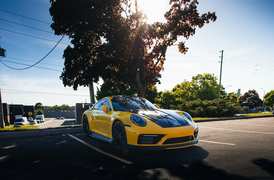
Fast forward to the current 992.1 GT3 RS, and we witness the track-focused ethos elevated to astonishing new levels. This iteration is a masterclass in extreme automotive engineering. The carbon fiber bonnet, a defining feature, incorporates a central radiator with distinctive “nostril” outlets that strategically channel airflow over the roof. Complementing this is a hydraulically adjustable front splitter and underbody flaps, technologies borrowed from the formidable Turbo S, demonstrating a clear trickle-down of high-performance solutions. Dominating the rear is an enormous swan-neck rear wing, a visually striking element that houses a Drag Reduction System (DRS), akin to those found on Formula 1 machines and the hyper-exclusive McLaren P1. This is not mere aesthetic flair; each component is a crucial element in the car’s pursuit of aerodynamic supremacy.
Beyond the visual drama, the 992.1 GT3 RS is a technical marvel. It features adjustable, race-derived suspension systems, allowing for granular tuning to suit specific track conditions. Dynamic engine mounts actively manage powertrain movement, ensuring optimal power delivery under extreme loads. Large air intakes are strategically placed to feed the engine and ancillary systems with vital cool air. Aggressively sculpted side skirts aid in managing underbody airflow. At its heart lies a potent 4.0-liter naturally aspirated flat-six engine, delivering a formidable 525 horsepower. The culmination of these advancements is breathtaking: 0-62 mph in a mere 3.2 seconds, a staggering 860 kilograms of downforce at 177 mph, and a blistering Nürburgring Nordschleife lap time of 6:44.85. This is not a car that merely treads the line between road and track; it is a dedicated circuit warrior that happens to be street-legal. The chasm between a standard GT3 and the RS variant is as profound as the difference between a swift swallow and a soaring eagle.
The Unseen Evolution: What the 992.2 Porsche 911 GT3 RS Might Bring
Whispers and tantalizing glimpses from the rigorous testing grounds of the Nürburgring suggest that the next chapter for the track-focused 911 is already being written. Spy shots of the camouflaged 992.2 GT3 RS reveal a vehicle undergoing its final development phases. True to Porsche’s evolutionary design philosophy for the 911, the visual distinctions from its 992.1 predecessor are subtle, almost imperceptible to the untrained eye. We can anticipate the continuation of the central radiator with its signature “nostril” outlets, the imposing swan-neck rear wing with DRS, the prominent air intakes, and the assertive side skirts. Even the door handles appear to remain consistent, a nod to the enduring design language that defines the 911.
However, closer inspection reveals nuanced refinements. The placement of the turn signals, which on many 992.2 models have been integrated into the headlight clusters, appears to revert to a lower position on the RS variant, a detail that might be driven by aerodynamic or functional considerations specific to its track-focused nature. The rear diffuser, a critical component for managing aerodynamic forces, has undergone a slight redesign, featuring new, understated rear intakes flanking the exhaust. The extent to which the 992.2 generation’s digital cockpit will be integrated into the GT3 RS remains an open question. Nevertheless, the overarching impression is that the 992.2 GT3 RS will maintain its aggressive, highly functional, and unmistakably purposeful aesthetic.
The automotive cognoscenti are buzzing with speculation regarding the powertrain of the upcoming 992.2 GT3 RS. Rumors have circulated suggesting the adoption of the 3.6-liter twin-turbo hybrid flat-six that powers many other 992.2 models. Such a powertrain would undoubtedly offer a significant surge in power, potentially eclipsing the output of the current 4.0-liter naturally aspirated engine. However, based on my experience and an intimate understanding of Porsche’s strategic thinking, I am inclined to predict that this will not be the case.
My reasoning is multi-faceted. Firstly, if Porsche intended to standardize the hybrid powertrain across its performance lineup, it stands to reason they would have introduced it in the standard GT3 first. The fact that the GT3 remains naturally aspirated speaks volumes about a deliberate commitment to a specific driving experience for its purest variants. Secondly, while Porsche’s engineers have achieved remarkable feats in managing the weight and integration of their new hybrid units, they are inherently heavier than their naturally aspirated counterparts. For a vehicle where every gram is scrutinized and minimized to enhance agility and responsiveness – the very essence of the GT3 RS – adding weight is, to put it mildly, a cardinal sin.
Most critically, however, is the fundamental philosophy that underpins the GT3 RS. Fitting this halo model with a hybrid system purely for the sake of outright power would, in my opinion, fundamentally betray its spirit. At their core, GT3 and GT3 RS models are not hypercars designed solely to chase ultimate lap records. They are track-focused sports cars meticulously crafted to deliver an unparalleled, visceral thrill to the driver. They are about engagement, feedback, and the raw, unadulterated joy of mechanical precision. This is where the upcoming GT2 RS will likely play its role, potentially embracing the 3.6-liter hybrid flat-six to achieve its own set of performance benchmarks.
Porsche’s enduring success with the GT3 RS customer base lies in their ability to create the most pure, mechanically engaging, and track-tuned driving experience on the market. To compromise the naturally aspirated flat-six for anything less than its iconic 4.0-liter displacement would feel profoundly misaligned with the RS ethos. This is particularly true when considering the high probability that the 992.2 GT3 RS could represent the swan song for this magnificent engine. The prospect of this legendary powerplant bowing out with such a focused and extreme iteration of the RS is a tantalizing one, promising an unforgettable finale.
The competitive landscape is also evolving. Mercedes-Benz has recently unveiled spy shots of its new track-focused AMG GT, a formidable contender that will undoubtedly vie for attention against the GT3 RS and potentially the future GT2 RS. While the new AMG GT promises impressive performance credentials, it will have its work cut out to truly rival the ingrained performance pedigree and razor-sharp focus of the GT3 RS. Ultimately, there’s a profound reason why this machine has captivated enthusiasts for over two decades. And as the chapter of the naturally aspirated GT3 RS draws to a close, there’s an undeniable sense that it is going out with the most glorious, unbridled roar of a flat-six, a fitting crescendo to an era of pure driving exhilaration.
The automotive world is in constant flux, with electrification and advanced technology reshaping the future of performance vehicles. Yet, the Porsche 911 GT3 RS stands as a powerful reminder that sometimes, the most advanced engineering is found in the relentless pursuit of purity. The dedication to driver involvement, the surgical precision of its aerodynamic design, and the soul-stirring soundtrack of its naturally aspirated engine are elements that resonate deeply with those who seek the ultimate driving experience.
If you’re captivated by the pinnacle of track-focused engineering and the enduring legacy of the Porsche 911 GT3 RS, or if you’re eager to explore the latest in high-performance automotive innovation, we invite you to connect with our team of experts. Discover how we can help you navigate the exhilarating world of performance vehicles and find the machine that perfectly aligns with your passion for driving.