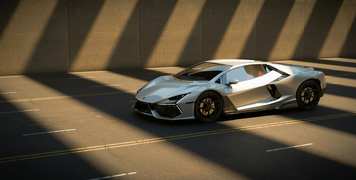
Pagani Utopia 2025: A Masterclass in Modern Hypercar Artistry and Performance
For over two and a half decades, Pagani Automobili has occupied a unique, almost mythical space in the automotive pantheon. They don’t just build cars; they craft rolling sculptures, mechanical marvels that push the boundaries of what’s possible in both design and engineering. Their latest creation, the Pagani Utopia, is not merely a successor to the legendary Huayra, but a bold evolutionary leap, a testament to Horacio Pagani’s unwavering vision and a true embodiment of the Pagani Utopia hypercar experience. This isn’t just about breaking speed records or achieving astronomical horsepower figures; it’s about achieving a profound, almost spiritual connection between driver, machine, and the open road. Having witnessed and been part of the hypercar evolution for the better part of a decade, I can confidently say that the Utopia stands as a pinnacle achievement, a harmonious blend of raw power and exquisite refinement.
The very essence of the Pagani Utopia lies in its name – a vision of perfection. Sir Thomas More’s philosophical treatise sought an ideal society, and in the automotive realm, Horacio Pagani has relentlessly pursued an ideal machine. Unlike the fleeting, often jarring, thrust of modern electric hypercars, the Utopia delivers its staggering performance through a more primal, visceral force: torque. Engage a lower gear, perhaps third or fourth, at a modest 30 mph, and gently depress the throttle. The initial breath of the twin-turbocharged, AMG-developed 6-litre V12 is almost imperceptible. But then, it inhales deeply. The boost pressure builds, not with the instantaneous, brutal force of electric motors, but with an intoxicating, ever-intensifying surge of longitudinal g-force. It’s a sensation that momentarily reorients your senses, much like a sudden, exhilarating lean back in a school chair. The initial reaction is often a startled breath, a tightening grip on the steering wheel. Then comes the wave of adrenaline, followed by an irrepressible grin, and the irresistible urge to repeat the experience. This elemental appeal, the sheer joy of physics in motion, is the heart and soul of the Utopia.
Pagani’s design philosophy has always been a delicate dance between art and engineering, and the Utopia is arguably its most refined expression yet. Eschewing the current trend of gratuitous aero appendages and cavernous diffusers, the Utopia embraces a more fluid, artistic silhouette. Its lines are clean, purposeful, and breathtakingly beautiful, yet beneath the surface lies an intricate tapestry of advanced composites and exotic alloys. This is a car that commands attention not through aggression, but through an inherent, undeniable presence. The £2.2 million price tag, while astronomical, reflects the painstaking craftsmanship and the limited production numbers – just 99 coupes are slated for manufacture. For those fortunate enough to secure one, and subsequently for those of us granted a glimpse, the Utopia is a fleeting, vicarious reality, a chance to immerse ourselves in a world where automotive excellence meets artistry.
The journey to the Pagani Utopia has been a long and deliberate one. In over 25 years, Pagani has introduced only two prior model lines: the iconic Zonda and the groundbreaking Huayra. Each has left an indelible mark on the hypercar landscape. The Utopia, therefore, carries the weight of immense expectation, building upon the foundations laid by its illustrious predecessors while forging its own distinct identity. The company’s physical footprint has also evolved dramatically. From its humble beginnings, housed within the same structure as Horacio Pagani’s home, to the state-of-the-art ‘Atelier’ – a sprawling headquarters and museum opened in 2017 – Pagani’s growth mirrors its ascent in the automotive world. This new facility, a testament to their success, now houses not only production but also dedicated departments for restoration, personalization, and special projects, known as Rinascimento, Unico, and Grandi Complicazioni, respectively.
My initial encounter with the Utopia was from the co-pilot seat, a position of trust and privilege, riding alongside Pagani’s seasoned R&D test driver, Alberto Scilla. This offers a unique perspective, allowing one to absorb the car’s demeanor and performance before taking the reins. Our chosen theatre for this unfolding drama was the Futa Pass, a legendary route steeped in motorsport history, just a short drive from Pagani’s San Cesario sul Panaro base. Its storied past, as part of the famed Mille Miglia, provided a fitting backdrop for experiencing the Utopia without drawing undue attention – a near impossibility, as it turned out.
Even as a passenger, the Utopia’s experience is nothing short of captivating. Its ride quality, remarkably supple for a hypercar of this caliber, belies the immense power lurking beneath. The V12, while ever-present, remains remarkably composed at lower speeds, its immense capability hinted at rather than overtly displayed. This duality – a refined cruiser one moment, a ballistic missile the next – is a hallmark of Pagani’s road-biased approach. The meticulous attention paid to the manual transmission is particularly noteworthy. Developing a gearbox capable of harnessing over 811 lb-ft of torque while retaining a delicate, engaging feel is a monumental engineering feat. Yet, judging by Scilla’s fluid shifts, the Utopia’s manual transmission offers a level of precision and tactility that celebrates the art of driving. This dedication to mechanical engagement is a key differentiator in an era increasingly dominated by automated or dual-clutch systems.
As we navigated the autostrada, the Utopia moved with an predatory grace, effortlessly parting traffic with an almost regal aura. It’s a machine that commands respect, not through intimidation, but through sheer presence. Occasionally, Scilla would downshift, a playful flex of the V12’s muscles. The engine would respond with a sonorous growl, a deeper, richer, more outgoing personality than the Huayra’s, yet with a sharper, more defined edge. It’s an engine that sings a symphony of power, a testament to the enduring magic of naturally aspirated principles enhanced by forced induction.
Our first stop for refuelling offered a glimpse into the Utopia’s irresistible allure. As if conjured from thin air, onlookers materialized, drawn by the car’s gravitational pull. It’s a testament to Pagani’s design prowess that even after an hour behind the wheel, the sheer visual spectacle of the Utopia remains mesmerizing. Unlike many of its contemporaries, its beauty lies in its purity of form, a sculpted masterpiece devoid of ostentatious wings and aggressive aerodynamic elements. This artistic endeavor, celebrated with lavish embellishments and eye-catching flourishes, is the very essence of Pagani’s distinctive aesthetic.
Holding the substantial, Utopia-shaped key in hand, one might expect to maintain a cool demeanor, yet the car’s compound curves continue to captivate, drawing the eye like a 3D scanner. Every piece of brightwork, inside and out, is meticulously machined from a solid billet, bestowing a jewel-like quality and the impression that the entire vehicle has been hewn from a single block of material. Witnessing such craftsmanship in the wild is a truly remarkable experience.
The upswept dihedral doors, a signature supercar element, swing open to reveal a cockpit that is nothing short of extraordinary. It’s a dazzling symphony of exquisite materials, a riot of shapes and finishes that embodies Pagani’s philosophy of maximalism. Familiar Pagani cues abound: the periscope air vents, the floating crescent-shaped instrument binnacle, the flawless exposed carbon fiber structure, and the ingenious use of glazing that extends into the roof, flooding the cabin with light and a sense of spaciousness.
True to its name and design ethos, the Utopia celebrates the finest mechanical creations. The analogue instruments, a nod to a bygone era of automotive purity, feature intricate portholes revealing their inner workings, reminiscent of a high-end Swiss watch. And there, emerging from the transmission tunnel like a piece of functional sculpture, sits the gear shifter for the optional seven-speed manual transmission, its complex linkage proudly on display. This is a car that not only performs exceptionally but also showcases its engineering prowess with pride.
Horacio Pagani’s lifelong admiration for Leonardo da Vinci, particularly his principle of the inseparable link between art and science, is evident throughout the Utopia. The steering wheel exemplifies this philosophy. Crafted using state-of-the-art CNC machinery in Modena Design’s facility, a 43kg billet of high-grade alloy undergoes 28 hours of five-axis machining to tolerances of just 0.5 microns, followed by meticulous hand-polishing. The result is a 1.6kg masterpiece. The 41.3kg of recycled swarf is a testament to Pagani’s commitment to sustainability alongside innovation. This dedication to detail is what sets Pagani apart.
In an era where manual supercars often feature clutches akin to a gymnasium leg press, the Utopia’s clutch pedal is a revelation. It’s light, smooth, and offers just the right amount of resistance to feel mechanical, making it a delight to find the bite point and pull away seamlessly. The gearshift itself is clean and precise, slightly longer than some might expect but undeniably pleasing. The dog-leg first gear adds a touch of nostalgia, though the sheer torque available from tickover means pulling away in second is entirely feasible. The positive spring bias, guiding the lever towards the centre of the open gate, ensures slick and precise upshifts. It’s no surprise that 70% of Utopia customers opt for the manual gearbox; it’s an integral part of the Pagani Utopia driving experience.
While proudly analogue in its aesthetic, the Utopia incorporates sophisticated and seamlessly integrated electronics. The dynamic modes – Comfort, Sport, Race, and Wet – allow for precise calibration of the car’s demeanor. A Supersoft mode, akin to a Ferrari’s bumpy road button, provides instant access to the most pliant suspension setting. However, the semi-active TracTive dampers are so expertly judged that this mode is rarely needed. They strike an impressive balance between bump absorption and body control. Sport mode becomes my default, infusing the Utopia with a heightened sense of urgency without making it overly frantic. The Electronic Stability Control (ESC) offers a reassuring safety net, gently intervening if throttle application becomes too ambitious on corner exits, while still allowing for blistering progress. The Pirelli P Zero Corsas, measuring 265/35 R21 at the front and 325/30 R22 at the rear, provide exceptional grip once warmed to the task.
The decision to switch to Race mode is a internal debate, a weighing of exhilaration against the potential consequences of pushing a £2.2 million masterpiece too close to its limits. The devil on my shoulder whispers promises of ultimate performance, urging the deactivation of ESC. Ultimately, a compromise is reached: Race mode engaged, but ESC left in its more lenient setting. This proves to be the correct decision. Race mode unlocks the Utopia’s full performance potential, and the relaxed ESC permits a delightful degree of controlled oversteer, while still providing a dependable safety net.
Extracting the Utopia’s performance through the gears is akin to riding a rocket. The AMG-designed, hand-built Pagani V12, while redlining at a relatively modest 6700rpm, delivers each gear change with exhilarating force. Third and fourth gears become the sweet spot, with occasional forays into fifth and a judicious drop into second. In Race mode, the V12’s roar intensifies, becoming harder and more guttural under acceleration, accompanied by a symphony of induction and turbocharger chuffs and gurgles as the throttle is modulated. The off-throttle experience is equally thrilling, with a bass-heavy artillery barrage emanating from the quad exhaust system.
This raw, explosive power, juxtaposed with the Utopia’s seductive shape and refined character, is a testament to Pagani’s mastery. The car’s precision, poise, and illusion of compactness are truly contemporary. While larger supercars of the past might have worn their unwieldiness as a badge of honor, modern hypercars, particularly those featuring advanced torque-vectoring systems like the Lamborghini Revuelto, have redefined expectations. Pagani’s inherent advantage lies in its lightweight construction – titanium-infused carbon fiber chassis and a focus on mechanical purity – negating the need for complex solutions to manage mass. Despite its timeless objectives, the Utopia has seamlessly embraced modern advancements.
Power-to-weight ratios can be misleading. A 500bhp car weighing one ton offers the same numerical ratio as a two-ton car with 1000bhp, but the driving experience is vastly different. The Utopia, tipping the scales at a dry 1280kg (1340kg wet) with 852bhp and 811 lb-ft of torque, might be outgunned in sheer horsepower by electric hypercars like the Pininfarina Battista or the Bugatti Chiron. However, its significantly lower weight translates into a more energetic and alert demeanor. This translates to colossal potency between corners, a car that revels in braking zones and turn-ins. It feels natural, predictable, and exploitable, encouraging the driver to delve deeper into its prodigious reserves. The steering is light and precise, possessing a sharp responsiveness balanced with the composure needed to guide the Utopia to the apex with accuracy and confidence. The ability to place the inside front wheel with such precision is uncanny. Initially, a fraction more feedback might be desired, but with more time behind the wheel, one realizes that this lack of distraction is a deliberate part of the Utopia’s design philosophy. Coupled with the light clutch, smooth gearbox, and immense powerplant, the driver doesn’t fight the Utopia; they find harmony.
This sentiment extends to the braking system. The colossal 410mm front and 390mm rear Brembo CCM-R brakes, activated by enormous six-piston front and four-piston rear calipers, apply progressive clamping force to the vast carbon rotors. Effortless to modulate at low speeds, they offer immense bite at higher velocities, with a consistently firm pedal that inspires unwavering confidence.
The magic of the Pagani Utopia lies in its ability to transcend conventional hypercar doctrine. While undeniably powerful and extraordinarily fast, its essence, as its name suggests, is the pursuit of perfect harmony rather than the prioritization of extremes at the expense of the whole. Mating the monumental twin-turbo V12 to a sweet-shifting manual gearbox is transformative. The decision to refrain from chasing four-digit horsepower figures or extreme redlines has resulted in a powertrain packed with awe-inspiring and, crucially, nuanced performance that excels on the road at all speeds. The fact that it meets global emissions and homologation standards further underscores Pagani’s meticulous approach and the value of its partnership with AMG for its engines.
Sophisticated electronics, often perceived as antithetical to organic, analogue driving experiences, are here employed with remarkable deftness. Adaptive damping, ESC, and an electronic differential work in concert to refine and, when necessary, tame the Utopia, enhancing the feel and dynamism that discerning drivers crave.
The result is a savagely quick and sublimely sorted machine. It effortlessly combines the purity and engagement of the Zonda with the epic reach and modern refinements of the Huayra, all while imbuing it with its own authentic character and distinct capabilities. The Utopia moves the hypercar game forward, yet it adheres to its own set of rules – contemporary where it matters, timeless where it counts. Pagani has, once again, achieved the seemingly impossible.
For those seeking the ultimate expression of Pagani’s art and engineering, the Utopia represents the apex. This is more than just a car; it’s a legacy, a tangible dream made real. If you are considering exploring the world of unparalleled automotive craftsmanship and performance, we invite you to connect with our specialists. Discover how the Pagani Utopia, or other exceptional vehicles within this rarefied segment, can redefine your understanding of automotive perfection and begin your journey into the extraordinary.