The Apex Pursuit: Unveiling the Pinnacle of Road-Legal Velocity in 2026
For decades, the automotive world has been captivated by a singular metric: top speed. While for the everyday driver, the nuances of traffic and road conditions render such figures largely academic, for the enthusiast and the manufacturer, achieving a higher velocity than the competition represents the ultimate engineering triumph. It’s a declaration of prowess, a testament to innovation, and a powerful marketing tool that resonates through the roar of an engine and the blur of passing scenery. In the hypercar arena, the quest for ultimate speed isn’t merely about bragging rights; it’s about pushing the boundaries of what’s physically possible on four wheels, all while adhering to the stringent demands of road legality. As we stand on the precipice of 2026, the landscape of the world’s fastest road cars is a dynamic testament to this relentless pursuit, showcasing a remarkable evolution in both internal combustion and electric propulsion.
The genesis of automotive speed was intertwined with racing. Early Bugattis and Bentleys, legends of Le Mans, demonstrated the potential for road-going vehicles to achieve astonishing speeds. However, the modern era demands a more specialized approach. Building a road-legal hypercar capable of shattering speed records requires an entirely different breed of dedication – immense investment, cutting-edge technology, and a singular focus on performance. The arms race to break the 200 mph barrier in the 1990s, marked by icons like the McLaren F1, Porsche 959, Jaguar XJ220, and Ferrari F40, was a pivotal moment. These machines, with their potent engines and aerodynamic silhouettes, redefined what a production car could achieve. Today, the battleground has shifted dramatically, with manufacturers now vying to conquer the mythical 300 mph mark. This seemingly incremental increase presents an exponential leap in engineering complexity, especially when maintaining roadworthiness. The recent ascendant presence of fully electric vehicles in this exclusive club underscores the dramatic advancements in battery technology and electric motor efficiency, allowing newer marques to challenge established giants.
Our exploration into the fastest road cars in the US and globally for 2026 reveals a constantly evolving list, a dynamic interplay of ambition, innovation, and raw power. We’ve meticulously curated this ranking, focusing on production-ready or near-production models, and aiming to provide a comprehensive view of the pinnacle of automotive velocity. This isn’t just about theoretical potential; it’s about validated achievements and the machinery that defines the upper echelon of automotive performance.
The Elite Circle: Top 20 Fastest Road Cars of 2026
Herein lies the definitive ranking of the fastest production cars that can legally grace public roads, a testament to engineering excellence and the unyielding human desire for speed.
McLaren F1 (1998)
Top Speed: 240.1 mph
Estimated Value: $15 million+
A legend that needs no introduction. The McLaren F1, powered by a naturally aspirated V8 and a manual gearbox, set the benchmark in 1998 at an astounding 240.1 mph. Its enduring appeal is matched only by its spiritual successor, the GMA T50, though its precise top speed remains undisclosed, leaving its place in the pantheon open to speculation. The F1 remains a benchmark for enthusiast appeal, a machine that prioritized purity of driving experience alongside blistering performance.
W Motors Fenyr Supersport
Top Speed: 245 mph
Estimated Price: $1.4 million
Emerging from the Middle East, W Motors followed its Lykan HyperSport with the Fenyr Supersport, a machine capable of a claimed 245 mph. Developed with components from renowned German tuner Ruf, it features a twin-turbocharged flat-six engine. Exquisite materials, including diamond and sapphire accents, underscore its bespoke nature. Its appearance in the “Fast & Furious” franchise cemented its place in popular culture.
Saleen S7 Twin Turbo
Top Speed: 248 mph
Estimated Price: $500,000
Launched in 2005, the Saleen S7 Twin Turbo, with its 750 horsepower V8 and aggressive twin-turbo setup, aimed to surpass the McLaren F1. This all-American powerhouse, though its claimed 248 mph has been subject to some debate, represents a significant achievement in American performance engineering, prioritizing raw power and aerodynamic efficiency.
Koenigsegg Gemera & CCXR
Top Speed: 248 mph
Estimated Price: $2 million
Swedish marque Koenigsegg makes its first appearance, honoring two distinct models capable of 248 mph (400 km/h). The Gemera is a cutting-edge hybrid, boasting three electric motors alongside its combustion engine, producing a combined output of astonishing power. In contrast, the older CCXR, a supercharged V8, achieves the same speed through a lighter chassis and exceptional aerodynamics, showcasing Koenigsegg’s versatile approach to hypercar development.
Aspark Owl
Top Speed: 249 mph
Estimated Price: $2.5 million
The Aspark Owl represents the new wave of all-electric hypercars. This Japanese marvel, first glimpsed in 2017, claims a staggering 0-60 mph time of 1.72 seconds, potentially making it the quickest accelerating production car. Its claimed top speed of 249 mph, coupled with a relatively light 64 kWh battery pack, highlights the rapid evolution of EV performance, offering a projected range of around 280 miles. This vehicle exemplifies the burgeoning potential of electric hypercars and their challenge to traditional performance benchmarks.
Ultima RS
Top Speed: 250 mph
Estimated Price: $130,000
The Ultima RS stands out as the most accessible hypercar on this list, offering incredible performance for its price. This is a kit car, but don’t let that fool you. Its 250 mph claim is achieved through an old-school philosophy: extreme power-to-weight ratio, utilizing a highly tuned Corvette V8 engine producing 1,200 bhp. It’s a testament to what can be achieved with lightweight construction and brute force.
McLaren Speedtail
Top Speed: 250 mph
Estimated Price: $2.1 million
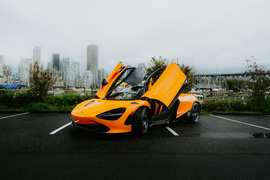
The McLaren Speedtail, a successor to the legendary F1, officially hit 250 mph over 30 times during testing at the Kennedy Space Center. Limited to 106 units, it shares the F1’s innovative three-seat layout. As part of McLaren’s “Ultimate Series,” the Speedtail prioritizes aerodynamic efficiency and seamless performance, eschewing a traditional gear lever for enhanced driver engagement and a sleeker profile.
Czinger 21C V Max
Top Speed: 253 mph+
Estimated Price: $1.5 million
The Czinger 21C V Max, a striking blend of radical design and technological prowess, utilizes a hybrid powertrain to achieve its blistering performance. With a combined output of 1,233 bhp and a 0-62 mph sprint in just 1.9 seconds, the V Max variant sheds its aero kit for enhanced top speed, pushing beyond 250 mph. Its advanced four-wheel-drive system ensures optimal traction for its astonishing acceleration figures. This vehicle represents the cutting edge of new hypercar technology.
Koenigsegg Regera
Top Speed: 255 mph
Estimated Price: $2.6 million
Koenigsegg’s relentless pursuit of speed is exemplified by the Regera. This hybrid powerhouse, with nearly 1,500 bhp, features an innovative single-speed transmission, a marvel of engineering that eliminates traditional gear changes. While it boasts a twin-turbo V8, the electric motors play a crucial role in its performance. The Regera also holds a 0-249-0 mph acceleration and braking record, showcasing its remarkable all-around capabilities.
SSC Ultimate Aero
Top Speed: 256.18 mph
Estimated Price: $500,000
The SSC Ultimate Aero, powered by a 1,183 bhp twin-turbo V8, held the title of the world’s fastest car for a period, clocking 256.18 mph on a temporarily closed public highway in Washington, USA. This raw, driver-focused machine famously eschewed electronic aids like traction control, offering an unfiltered and exhilarating driving experience that is increasingly rare in today’s automotive landscape.
Rimac Nevera / Nevera R
Top Speed: 258 mph / 268 mph (Nevera R)
Estimated Price: $2.4 million (Nevera), $2.6 million (Nevera R)
The Rimac Nevera has redefined the benchmark for electric hypercars. With a staggering 1,888 bhp and 2,360 Nm of torque, it rockets from 0-60 mph in a mere 1.9 seconds and reaches 186 mph in an astonishing 9.3 seconds. Its 500kW charging capability allows an 80% charge in just 19 minutes, offering a range of up to 340 miles. The even more potent Nevera R, with 2,078 bhp and a top speed of 268 mph, claims the title of the fastest-accelerating road car ever, achieving 0-62 mph in 1.8 seconds. Rimac’s innovation is pushing the boundaries of what’s possible in electric performance.
Bugatti Veyron (Super Sport)
Top Speed: 268 mph (Super Sport)
Estimated Price: $1 million (original Veyron), higher for Super Sport
The Bugatti Veyron, even years after its debut, commands immense respect. The original model’s nearly 1,000 bhp from its 6.0-litre quad-turbo W12 engine was groundbreaking. The Veyron Super Sport, however, elevated performance further to 1,183 bhp, achieving a remarkable 268 mph. Its sub-2.5-second 0-62 mph time remains a benchmark that even many contemporary electric vehicles struggle to match, cementing its status as an all-time automotive icon.
Hennessey Venom F5
Top Speed: 271.6 mph (tested)
Estimated Price: $1.7 million
American tuner-turned-hypercar manufacturer Hennessey has consistently pushed performance boundaries. The Venom F5, powered by a massive 1,817 bhp twin-turbo V8, has already surpassed 270 mph in testing. Hennessey has its sights set firmly on breaching the 311 mph mark. While its rear-wheel drive configuration limits its 0-62 mph time to 2.6 seconds, its straight-line acceleration is phenomenal, evidenced by a 0-249 mph sprint in 15.5 seconds. This is a prime example of American performance car engineering.
Bugatti Tourbillon (Estimated)
Top Speed: 277 mph (estimated)
Estimated Price: $3.5 million+ (estimated)
The forthcoming Bugatti Tourbillon is poised to make a significant impact. Featuring a hybrid system with a 986 bhp V16 engine, it’s expected to deliver over 1,770 bhp. Given Bugatti’s storied history of setting speed records and its formidable engineering capabilities, the Tourbillon is anticipated to be a strong contender among the fastest road cars when it arrives in 2026. Its anticipated performance cements Bugatti’s legacy in the hypercar market.
Koenigsegg Agera RS
Top Speed: 277.87 mph
Estimated Price: $3.5 million
In 2017, Koenigsegg shattered its own records with the Agera RS, achieving the highest speed ever recorded on a public road. On an 11-mile stretch of Nevada highway, a customer-owned Agera RS clocked an incredible 277.87 mph. This feat underscores Koenigsegg’s mastery of aerodynamics and lightweight construction, combined with immense powertrain performance.
Bugatti Mistral
Top Speed: 282.05 mph
Estimated Price: $5.2 million
Bugatti continues to innovate, and the Mistral is a prime example. Limited to just 99 units, this hyper-exclusive convertible is the fastest of its kind, reaching an astonishing 282.05 mph. Driven by renowned test driver Andy Wallace at a facility in Germany, the Mistral utilizes Bugatti’s legendary 8.0-liter, quad-turbocharged W16 engine, a powerplant soon to be succeeded by the V16 in the Tourbillon. This represents the zenith of luxury performance vehicles.
SSC Tuatara
Top Speed: 282.9 mph (two-way average)
Estimated Price: $1.5 million
The pursuit of speed records often involves controversy, and the SSC Tuatara is a case in point. After an initial disputed claim, SSC conducted a more rigorous test with independent verification, achieving a two-way average of 282.9 mph. Powered by a 5.9-liter flat-plane-crank V8 with twin turbochargers producing 1,750 bhp, the Tuatara’s rear-wheel-drive setup and carbon-fibre construction keep its weight exceptionally low at 1,247 kg, emphasizing its focus on performance.
Bugatti Chiron Super Sport 300+
Top Speed: 304.8 mph
Estimated Price: $3 million
Bugatti’s relentless quest for ultimate velocity culminated in the Chiron Super Sport 300+. This extraordinary machine, a development of the Veyron and Chiron lineage, shattered the 300 mph barrier. Its 8.0-liter W16 engine was tuned to produce 1,578 bhp, complemented by enhanced cooling and aerodynamic refinements, including an extended ‘Longtail’ rear. The production version, limited to 30 units, achieved a verified speed of 304.774 mph at Germany’s Ehra-Lessien test track, solidifying Bugatti’s reign in the realm of hyper-speed. This represents a pivotal moment in automotive speed records.
Koenigsegg Jesko Absolut
Top Speed: 310 mph (targeted)
Estimated Price: $2.3 million (approx.)
Koenigsegg has consistently challenged Bugatti’s dominance, and the Jesko Absolut is their most ambitious contender yet. Described as the “absolute fastest Koenigsegg we will ever make,” this low-drag variant of the Jesko boasts meticulous aerodynamic adjustments, including an extended body and the removal of the rear wing. The 5.0-liter twin-turbocharged V8 has been tweaked to 1,600 bhp. While official figures are pending, Koenigsegg targets an astonishing 310 mph, a testament to their unwavering dedication to automotive performance and their history of holding the fastest production car title.
Yangwang U9 Xtreme
Top Speed: 308 mph
Estimated Price: $250,000+
The automotive landscape is being dramatically reshaped by electric propulsion, and the Yangwang U9 Xtreme is a prime example. This groundbreaking vehicle has achieved a remarkable 308 mph, a speed that challenges the most expensive hypercars, all at a significantly more accessible price point. Its performance is driven by four ultra-powerful electric motors delivering a colossal 2,978 bhp. The U9 Xtreme utilizes a 1,200V architecture for superior power transfer and features batteries specifically engineered by BYD for high-speed sustained output without overheating. This achievement marks a new era for performance electric vehicles and signals a significant shift in the hypercar hierarchy. The Yangwang U9 Xtreme has undoubtedly set a new standard for what electric performance can achieve.
The world of supercars and hypercars is a constant sprint towards the next frontier of speed and technological advancement. As we look to the immediate future, the lines between combustion and electric power continue to blur, promising even more astonishing feats of engineering. The pursuit of the fastest car in the world is not just about reaching a number; it’s about the relentless drive for innovation, the meticulous attention to detail, and the ultimate expression of automotive passion.
Whether you’re a seasoned collector, a performance enthusiast, or simply fascinated by the peak of automotive engineering, the journey through these incredible machines offers a glimpse into the very soul of automotive achievement.
Ready to experience the thrill of cutting-edge automotive performance? Explore our curated selection of performance vehicles or connect with our specialists to discuss your ultimate driving aspirations.