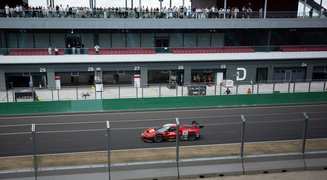
Unleashing the Roar: Production Cars Fueled by Motorsport’s Soul
For a seasoned automotive professional with a decade navigating the intricate world of performance vehicles, there’s an undeniable, almost visceral thrill that comes with experiencing a car that truly embodies motorsport DNA. This isn’t merely about striking race-inspired aesthetics or a few superficial performance enhancements. We’re talking about vehicles that proudly house engines conceived and honed in the crucible of professional racing, then carefully adapted for the asphalt jungle. These powerhouses, forged in the white-hot intensity of competition, deliver high-revving, pulse-quickening performance, bridging the gap between the track and the street with an authenticity that’s rare and profoundly rewarding.
In this in-depth exploration, we delve into ten production automobiles that masterfully blur the demarcation lines between dedicated race machines and everyday drivers. From the exhilarating wail of V12s to the potent punch of turbocharged marvels, these ten vehicles offer a genuine taste of motorsport prowess for the discerning enthusiast. But before we immerse ourselves in the specifics of these remarkable machines, it’s crucial to understand the profound ‘why’ behind manufacturers’ substantial investments in the costly, demanding realm of motorsport, and more importantly, how that dedication directly translates into the vehicles that grace public roads.
The Enduring Synergy: Motorsport DNA in Road-Going Vehicles
The symbiotic relationship between motorsport and the automotive industry is as old as competitive driving itself. The unforgiving environment of the racetrack serves as the ultimate proving ground, pushing the boundaries of engineering, materials science, and component durability to their absolute limits. In this high-stakes arena, failure is not an option; it’s an immediate and costly consequence. Consequently, the lessons learned, the innovations pioneered, and the technologies perfected on the track invariably find their way into the cars we drive every single day. This “trickle-down” effect manifests in myriad ways, from sophisticated aerodynamic advancements and the strategic use of lightweight composite materials to, most crucially, the direct infusion of cutting-edge engine technology. The relentless pursuit of victory in racing directly paves the way for demonstrably superior and more engaging road cars.
Consider, for instance, the evolution of critical automotive components. Technologies that are now commonplace, such as advanced disc braking systems and intuitive paddle shifters, originated as essential racing innovations before their widespread adoption in production vehicles. Beyond the technical prowess, motorsport success serves as an unparalleled catalyst for enhancing a manufacturer’s brand image. When a company’s race car consistently dominates on the international stage, its associated road-going models are perceived with a heightened sense of desirability, engineering excellence, and performance credibility. While the vast majority of us will never have the opportunity to pilot a Formula 1 car or a Le Mans prototype, the visceral connection to the action, the thrilling essence of competition, can still be palpably felt, especially when a true race-bred engine thrums to life beneath the hood of a production vehicle. This enduring principle of “win on Sunday, sell on Monday” is experiencing a significant resurgence in the automotive industry, potentially heralding one of the most exciting eras for car enthusiasts in decades.
Ten Production Marvels Infused with Racing Blood
Let’s now turn our attention to the stars of our showcase – the production vehicles that have successfully transplanted a significant piece of motorsport’s heart into their road-legal bodies. These are not mere imitations; they are tangible manifestations of racing’s spirit, offering an unfiltered connection to the competitive world.
Alfa Romeo Montreal: The V8 Heartbeat of a Legend
The Alfa Romeo Montreal, a car often overlooked in its era, houses a truly special powerplant: the 2.6-liter Tipo 33 Naturally Aspirated V8. This engine was not a flight of fancy; it was directly derived from Alfa Romeo’s formidable Tipo 33 sports prototype, a machine renowned for its endurance racing prowess in grueling events like the Targa Florio and the 24 Hours of Daytona. While meticulously detuned to meet the demands and regulations of road use, the engine in the Montreal remarkably retains much of its innate motorsport character. It eagerly spins to an impressive 7,000 RPM, delivering a healthy 200 horsepower. The intoxicating symphony of its V8, coupled with its strikingly avant-garde styling, solidified the Montreal’s status as one of the most captivating, albeit underrated, vehicles ever to bear the illustrious Alfa Romeo badge. For enthusiasts seeking Alfa Romeo performance cars with genuine racing lineage, the Montreal represents a compelling if rare, proposition.
BMW M1, M3 (E30), M5 (E28), M6 (E24): The M Division’s Track-Forged Legacy
BMW’s M division has long been synonymous with performance engineering, and its racing pedigree is indelibly etched into the DNA of its most iconic models. The BMW M1, a mid-engined sports car that remains a legend among collectors and driving enthusiasts, was powered by the formidable 3.5-liter M88 Inline-Six engine. This powerplant was a direct descendant of BMW’s dedicated racing programs, most notably finding use in the highly competitive BMW M1 ProCar series. The sheer brilliance of the M88 was such that it later found its way into other legendary M cars, including the E24 M6 and the E28 M5, albeit with slight modifications for their respective applications.
Furthermore, the legendary four-cylinder S14 engine that propelled the E30 M3, a car that defined touring car racing for a generation, was itself based on the principles and engineering of the mighty M88 and the turbocharged M12 Formula 1 engines. The S14 drew significant inspiration from BMW’s immensely successful touring car campaigns, sharing critical components and sophisticated engineering with the machines that dominated the Deutsche Tourenwagen Meisterschaft (DTM) circuit. For those searching for BMW M performance upgrades or understanding the origins of their performance, the connection to these racing engines is paramount.
Chevrolet Camaro ZL1 (1969): The Can-Am Beast Unleashed
The 1969 Chevrolet Camaro ZL1 was not just a potent muscle car; it was a raw declaration of intent, featuring a monumental 427 cubic-inch (7.0-liter) V8 engine originally conceived for the demanding world of Can-Am racing. Constructed entirely from lightweight aluminum, this engine was remarkably svelte for its displacement and delivered a staggering output of power. While officially rated at 430 horsepower for its road-going iteration, its true potential, often cited as around 500 hp, was undeniable. The ZL1 package transformed the Camaro into a street-legal drag strip dominator, and its formidable engine continued its competitive life in various race cars participating in the SCCA Trans-Am series. With an extremely limited production run of only 69 units ever manufactured, the 1969 Camaro ZL1 stands today as an exceptionally rare and highly coveted automotive artifact, representing a peak of American muscle car heritage.
Ferrari Dino 206 GT: Formula 2 Ingenuity on the Road
The Ferrari Dino 206 GT, while not bearing the iconic Prancing Horse badge itself (a decision driven by marketing considerations of the time, as it was intended to be a separate marque), housed a gem of an engine: the 2.0-liter Dino Naturally Aspirated V6. This powerplant was originally developed by Ferrari for its Formula 2 racing endeavors in the 1960s. Though softened for street compliance, the engine retained its exhilarating high-revving character, imbuing the Dino with a distinct racing spirit that made it an absolute joy to drive on winding roads. Producing a spirited 180 horsepower, this was more than ample for a car weighing just over 2,000 pounds. The Dino marked Ferrari’s pioneering foray into mid-engine V6 sports cars, setting a crucial precedent for many future celebrated models. Understanding Ferrari V6 engine history reveals the Dino’s significant, albeit nuanced, place in Maranello’s lineage.
Ferrari F50: A Formula 1 Machine for the Road
The Ferrari F50, conceived to commemorate the iconic Italian marque’s 50th anniversary, elevates the concept of a track-derived engine to an astonishing new stratospheric level. Its heart is a 4.7-liter Tipo F130B Naturally Aspirated V12, a powerplant with direct lineage to Ferrari’s formidable 1990 Formula 1 challenger, the Tipo 641 (later designated the F1-90), famously piloted by the legendary Alain Prost. This naturally aspirated behemoth screams towards an incredible 8,500 RPM, unleashing a ferocious 513 horsepower, offering a truly raw and unfiltered taste of Formula 1 performance directly on public roads. With minimal modifications to meet road regulations, the F50 represented the closest a street-legal Ferrari had ever come to being a true Formula 1 car. For collectors and aficionados of exclusive supercars, the F50 is an unparalleled statement of intent.
Ford GT: A Modern Homage to Le Mans Glory
The Ford GT, in both its 2005 and 2017 iterations, stands as a profound homage to one of the most legendary endurance race cars in history: the Le Mans-winning Ford GT40. The 5.4-liter supercharged V8 powering the 2005 GT has its roots deeply embedded in the development of Ford’s cutting-edge endurance racing engines, sharing technological kinship with the powerplants utilized in Ford’s Daytona Prototype race cars. Similarly, the significantly updated 2017 Ford GT boasts an equally robust motorsport-inspired performance profile, driven by a sophisticated twin-turbocharged 3.5-liter V6 engine. This V6 is a direct product of Ford’s highly successful EcoBoost program, which has seen extensive and victorious application in endurance racing. The pursuit of Ford performance car reliability is directly informed by these demanding racing applications.
Jaguar XJ220: The Group C Racer’s Roadgoing Descendant
The Jaguar XJ220, an undisputed icon of the esteemed British marque, was initially envisioned with a V12 engine. However, destiny had a different, equally potent plan: a sophisticated 3.5-liter twin-turbocharged V6 engine sourced directly from the formidable Jaguar XJR-11 Group C race car. This competition-derived engine was instrumental in propelling the XJ220 to a breathtaking top speed of 217 mph, briefly earning it the title of the world’s fastest production car. The XJ220’s motor stands as a testament to advanced track-proven engineering, making a seamless transition into a road-legal hypercar. The legacy of luxury sports car engineering from Britain is vividly captured in this remarkable machine.
Plymouth Belvedere (1964): The “Race Hemi” Muscle Icon
On the surface, the 1964 Plymouth Belvedere might not immediately evoke images of a dedicated race car. However, concealed beneath its hood lay the legendary 426 Hemi V8, an engine meticulously developed specifically for the brutal demands of NASCAR racing. Familiarly known as the “Race Hemi,” this powerplant was an undeniable force on the track and soon found its way into Plymouth’s production vehicle lineup. The road-going Belvedere, boasting a formidable 425 horsepower, quickly established itself as one of the most powerful muscle cars of the 1960s – a reputation that the brand carried with distinction well into the 1970s, particularly with its legendary ‘Cuda models. The enduring appeal of Plymouth performance vehicles is deeply intertwined with the mythos of the Hemi engine.
Porsche 918 Spyder: Hybrid Hypercar with a Racing Heart
The Porsche 918 Spyder, a technological marvel of its era, features a potent 4.6-liter V8 engine that traces its origins to the highly competitive RS Spyder, a prototype race car that contended in the demanding LMP2 class at the iconic 24 Hours of Le Mans. The 918 brilliantly integrates this race-derived V8 with advanced electric motors, culminating in a staggering combined output of 887 horsepower. This potent synergy allows the hypercar to achieve an astonishing 0 to 60 mph acceleration in a mere 2.2 seconds (according to independent testing), solidifying its place among the quickest production cars ever produced. While the electric motors contribute significantly to its explosive acceleration, it is the race-bred V8 that delivers the car’s soul-stirring emotional and auditory thrills. The pursuit of Porsche hybrid technology and its performance implications continues to captivate automotive minds.
Porsche Carrera GT: The Analog Supercar’s V10 Soul
The Porsche Carrera GT is widely regarded as one of the greatest analog supercars ever constructed, and a significant portion of its legendary status is owed to the magnificent 10-cylinder engine that powers it. This 5.7-liter V10 was initially conceived for the pinnacle of motorsport – Formula 1 – during its V10 era. However, those plans never materialized, leading the engine to be shelved. It later found a new purpose in a Le Mans prototype car that, much like its F1 precursor, never made it to the racetrack. Instead of abandoning this potent powerplant, Porsche made the inspired decision to integrate this race-honed engine into its flagship supercar. This allowed the Carrera GT to unleash a formidable 612 horsepower and rev with exhilarating freedom all the way to 8,000 RPM. Combined with its meticulously crafted lightweight construction and undeniable motorsport DNA, the Carrera GT remains a benchmark for pure, driver-focused supercars, offering a truly engaging and challenging driving experience that is increasingly rare in today’s automotive landscape. The allure of Porsche naturally aspirated engines like the Carrera GT’s V10 is a powerful draw for purists.
The Enduring Legacy of Race-Bred Performance
The vehicles we’ve explored represent more than just automotive engineering; they embody a passion, a dedication to pushing the limits, and a profound connection to the thrill of competition. The infusion of motorsport DNA into production cars isn’t merely a marketing ploy; it’s a testament to the enduring power of racing to drive innovation and create machines that stir the soul. These cars offer a tangible link to the world of professional racing, allowing enthusiasts to experience a slice of that exhilaration on their own terms.
If the sound of a race-bred engine and the spirit of competition resonate with you, we invite you to explore the world of performance vehicles further. Discovering your own piece of motorsport history on four wheels could be your next unforgettable driving adventure.