
Unleashing the Roar: Production Cars Forged in the Fires of Motorsport
For a decade now, my career has been immersed in the thrilling intersection of automotive engineering and the relentless pursuit of speed. I’ve witnessed firsthand how the crucible of motorsport, whether it’s the deafening roar of Formula 1 or the endurance tests of Le Mans, serves as the ultimate proving ground for automotive innovation. What emerges from this intense environment isn’t just faster cars; it’s a transfusion of cutting-edge technology, materials, and engineering philosophies that eventually find their way into the vehicles we drive every day. This evolution is particularly captivating when automakers don’t just borrow the ideas from racing, but directly transplant the souls – the very engines – that powered their racing machines onto public roads.
We’re talking about production vehicles that don’t just look like they belong on a track; they sound and feel like it, courtesy of powertrains forged in the heat of competition. These aren’t mere street-tuned versions; these are engines that have tasted victory, endured brutal conditions, and been honed to razor-sharp perfection. They offer a visceral connection to the raw, unadulterated performance that defines motorsport, a privilege previously reserved for a select few. Today, we’ll explore ten such exceptional production cars that offer a remarkable taste of the racetrack, bringing that motorsport DNA directly to your driveway.
The Undeniable Link: Why Racing Breeds Better Road Cars
The symbiotic relationship between motorsport and road-going vehicles is not a new phenomenon; it’s a foundational pillar of automotive advancement. Manufacturers invest colossal sums in racing for a multitude of reasons, and the benefits ripple outward, profoundly impacting the cars available to the average consumer.
Firstly, racing serves as an extreme stress test. Engineers push the boundaries of materials science, aerodynamics, and mechanical engineering to their absolute limits. Components are subjected to forces, temperatures, and vibrations that no road car would ever encounter. The lessons learned from a failed suspension arm at 200 mph or an overheating engine during a grueling 24-hour race are invaluable. This relentless pursuit of reliability and performance under duress leads to breakthroughs that, once perfected, are systematically incorporated into production vehicles. Think about the widespread adoption of technologies like advanced anti-lock braking systems (ABS), sophisticated traction control, and the very concept of lightweight, high-strength chassis construction – all have roots deeply embedded in racing development.
Secondly, the “Win on Sunday, Sell on Monday” adage remains remarkably relevant. Motorsport success isn’t just about trophies; it’s a powerful marketing tool. When a manufacturer’s vehicle dominates on the international stage, it imbues the entire brand with an aura of performance, engineering prowess, and desirability. Consumers naturally gravitate towards products associated with victory and cutting-edge technology. This psychological association significantly boosts brand perception and, consequently, sales of their road-going counterparts. Even for those who will never set foot on a racetrack, driving a car with a proven motorsport heritage offers a unique emotional connection and a sense of belonging to that winning legacy.
Furthermore, the evolution of motorsport has consistently driven the development of more efficient and potent powertrains. The constant demand for more power, better fuel economy (even in racing, efficiency is key to strategy), and cleaner emissions pushes engine design forward. Technologies like direct injection, turbocharging, and sophisticated variable valve timing, which are now commonplace in our daily drivers, were either pioneered or significantly refined in the competitive arena. The development of hybrid powertrains, once experimental in racing, is now a central theme in both motorsport and the automotive industry at large, demonstrating the direct transfer of technology.
Ten Production Cars That Bleed Motorsport DNA
The following list highlights ten production vehicles where the connection to the racetrack is more than skin-deep. These are cars powered by engines that have either directly competed or were conceived with racing intent, offering an unparalleled driving experience on the street. This is not an exhaustive list, but a curated selection showcasing the pinnacle of this “race-bred” phenomenon.
Alfa Romeo Montreal: The V8 Heartbeat of a Champion
The Alfa Romeo Montreal, a striking machine from the late 1960s and early 1970s, carries a lineage directly traceable to Alfa Romeo’s formidable racing endeavors. Its heart is the Tipo 33 naturally aspirated V8 engine, a powerplant originally designed for the company’s Tipo 33 sports prototype racers. These endurance machines were a formidable presence in iconic races such as the Targa Florio and the grueling 24 Hours of Daytona. While the engine was detuned for road use to meet emissions and reliability standards, it retained a significant portion of its competitive character.
Producing around 200 horsepower from its 2.6-liter displacement, the Montreal’s V8 was an engineering marvel for its time. It was renowned for its high-revving nature, capable of spinning up to 7,000 RPM, delivering an exhilarating soundtrack and a sharp, responsive feel. This wasn’t just a stylish coupe; it was a car that hinted at serious performance pedigree. The combination of its distinctive, forward-thinking design and the sonorous roar of its racing-derived V8 made the Montreal an unforgettable, albeit somewhat underappreciated, icon in Alfa Romeo’s storied history. Its value as a collector’s item continues to climb, a testament to its unique blend of style and motorsport heritage.
BMW M Division Icons: The Soul of Performance Engineering
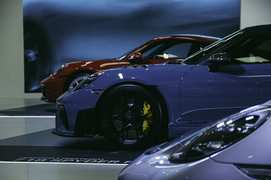
BMW’s M division is synonymous with automotive performance, and many of its most celebrated models owe their existence to direct motorsport applications. The legendary BMW M1, in particular, was a groundbreaking supercar powered by the M88 inline-six engine. This 3.5-liter powerplant was not merely inspired by racing; it was developed in conjunction with Lamborghini and heavily influenced by BMW’s experience in Formula 2 and the dramatic M1 ProCar series, a one-make championship that showcased the car’s capabilities. Later, this potent engine found its way into other performance titans like the E28 M5 and the E24 M6, bringing a taste of purebred performance to the luxury sedan and coupe segments.
Further down the M lineage, the E30 M3 is another exemplar of this philosophy. Its 2.3-liter S14 inline-four engine, while smaller, was also deeply rooted in BMW’s racing endeavors. Its design drew heavily from the robust M88 engine and the turbocharged M12 engines that powered Formula 1 cars. This close relationship meant the S14 shared design principles and even some engineering solutions with cars dominating the Deutsche Tourenwagen Meisterschaft (DTM) racing series. The E30 M3 wasn’t just a sportier 3 Series; it was a homologation special, built to meet racing regulations and designed to conquer the track, a fact reflected in its exceptional handling and driving dynamics. These M cars remain highly sought-after by enthusiasts who appreciate their genuine motorsport DNA.
Chevrolet Camaro ZL1 (1969): The All-Aluminum Beast of Can-Am
The 1969 Chevrolet Camaro ZL1 stands as a formidable testament to American muscle car prowess, directly linked to the world of high-stakes racing. Under its hood lies the formidable 427 cubic-inch (7.0-liter) V8 engine. This wasn’t just a big-block Chevrolet engine; it was an all-aluminum variant specifically engineered for the demanding Can-Am (Canadian-American Challenge Cup) racing series. The use of aluminum significantly reduced weight compared to traditional iron-block V8s, a critical advantage in racing where every pound counts.
While the racing version of this engine was reputed to produce a staggering 500 horsepower, the road-going variant in the ZL1 was officially rated at a still-potent 430 horsepower. This detuning was primarily for street legality and drivability, but the raw power was undeniable. The ZL1 package transformed the already potent Camaro into a street-legal drag strip weapon, a car capable of astonishing acceleration and performance. Its engine also found its way into purpose-built race cars competing in the SCCA Trans-Am series. With only 69 examples ever produced, the 1969 Camaro ZL1 is an exceptionally rare and highly coveted collectible, representing a pivotal moment in American automotive history and a direct lineage to Can-Am racing dominance. Its value in the classic car market continues to appreciate significantly.
Ferrari Dino 206 GT: A V6 with Grand Prix Aspirations
The Ferrari Dino 206 GT, a beautiful mid-engined sports car from the late 1960s, carries a fascinating backstory rooted in Formula 2 racing. Its compact 2.0-liter V6 engine, known as the Dino V6, was originally developed by Ferrari engineers for their Formula 2 racing aspirations in the 1960s. While the Dino 206 GT itself did not carry the iconic Ferrari prancing horse badge on its nose (a decision driven by marketing and classification reasons at the time), its engine’s genesis was purely competition-oriented.
Detuned for road use, the Dino V6 still delivered an engaging driving experience, retaining its high-revving character that was a hallmark of its racing origins. Producing approximately 180 horsepower, this output was more than ample for a car weighing just over 2,000 pounds, allowing for spirited performance on winding roads. The Dino marked a significant departure for Ferrari, representing their first venture into mid-engine V6 sports cars, and it set a crucial precedent for many successful Ferrari models that followed. Its unique engine and historical significance make it a beloved and valuable entry in the Ferrari lineage, even without the full badge.
Ferrari F50: A Road-Legal Formula 1 Rocket Ship
The Ferrari F50, introduced to celebrate the marque’s 50th anniversary, represents an audacious commitment to bringing Formula 1 technology directly to the street. This supercar doesn’t just feature a race-inspired engine; it houses a powerplant that is almost a direct descendant of a Grand Prix car. Its 4.7-liter V12 engine, designated Tipo F130B, was derived directly from Ferrari’s 1990 Formula 1 car, the Tipo 641 (later known as the F1-90), famously piloted by legends like Alain Prost and Nigel Mansell.
This naturally aspirated V12 masterpiece was an engineering marvel, capable of revving to an ear-splitting 8,500 RPM and producing a breathtaking 513 horsepower. The F50 offered an unparalleled sensory experience, delivering the raw, unfiltered fury and sound of a Formula 1 car to the public road. With only minor modifications necessary to meet road-legal regulations, the F50 was arguably the closest any street-legal Ferrari had ever come to the actual experience of driving a Formula 1 machine. Its rarity, extreme performance, and direct F1 lineage make it one of the most desirable and high-value supercars ever produced. The F50 remains a benchmark for track-derived performance in a production automobile.
Ford GT: A Modern Homage to Le Mans Dominance
The Ford GT is a modern interpretation of automotive racing legend, directly inspired by one of the most iconic race cars in history: the Le Mans-winning Ford GT40. The initial generation, the 2005 Ford GT, featured a 5.4-liter supercharged V8 engine. While not a direct transplant from a specific race car, its development was deeply intertwined with Ford’s endurance racing engine programs, drawing heavily on the engineering and technologies employed in their Daytona Prototype race cars. This engine delivered a formidable 550 horsepower, providing exhilarating performance that lived up to the GT40’s legacy.
The 2017 Ford GT continued this tradition of motorsport inspiration, albeit with a different technological approach. Its heart is a twin-turbocharged 3.5-liter EcoBoost V6. This engine is a direct product of Ford’s highly successful EcoBoost racing program, specifically its extensive work in endurance racing, including multiple victories at the 24 Hours of Le Mans. This modern GT showcases how advanced turbocharged V6 technology, honed in the fires of competition, can deliver supercar-level performance and efficiency. Both generations of the Ford GT serve as powerful reminders of Ford’s racing heritage and its commitment to bringing race-bred performance to its flagship sports cars.
Jaguar XJ220: The V6 That Broke Speed Barriers

The Jaguar XJ220, a stunning supercar from the early 1990s, is a remarkable example of how a racing engine can redefine the performance envelope of a production car. Although initially conceived with a V12 engine, the production XJ220 was ultimately powered by a 3.5-liter twin-turbocharged V6. This was no ordinary V6; it was the very same engine that propelled the Jaguar XJR-11 to victory in the Group C racing series. Group C cars were the pinnacle of endurance racing at the time, known for their incredible speed and technological sophistication.
This competition-derived engine delivered a staggering 542 horsepower, an immense figure for its era. The impact of this race-proven powerplant was profound: the XJ220 achieved a top speed of 217 mph, briefly holding the title of the world’s fastest production car. The integration of such an advanced and powerful track-honed engine into a road-legal vehicle was a significant engineering feat, cementing the XJ220’s legendary status and its undeniable connection to the world of professional motorsport. Its legacy continues to fascinate automotive historians and enthusiasts alike.
Plymouth Belvedere (1964) “Race Hemi”: NASCAR Power on the Street
The 1964 Plymouth Belvedere, seemingly a conventional American sedan of its era, harbors a secret weapon beneath its hood: the legendary 426 Hemi V8. This engine, often referred to as the “Race Hemi,” was not a trickle-down technology; it was developed explicitly for NASCAR racing. Its design was focused on raw power and durability under extreme racing conditions, quickly becoming a dominant force on the track. Plymouth’s decision to offer this potent engine in its production lineup was a bold move that fundamentally reshaped the muscle car landscape.
The road-going version of the 426 Hemi in the Belvedere produced an astonishing 425 horsepower. This massive output transformed the Belvedere into one of the most powerful and exhilarating muscle cars of the 1960s. The engine’s reputation for brute force and racing pedigree carried forward, influencing subsequent Plymouth models like the iconic Barracuda and Challenger. The 1964 Belvedere, with its NASCAR-derived Hemi, represents a pivotal moment where pure racing technology was directly accessible to the public, defining the very essence of the muscle car era and establishing a benchmark for automotive power.
Porsche 918 Spyder: Hybrid Hypercar with a Racing Heart
The Porsche 918 Spyder is a remarkable hypercar that masterfully blends cutting-edge hybrid technology with the soul of a race-proven internal combustion engine. Its core is a 4.6-liter naturally aspirated V8 engine. This powerplant is directly based on the engine used in Porsche’s highly successful RS Spyder prototype race car, which competed in the LMP2 class at the prestigious 24 Hours of Le Mans. This racing lineage imbues the 918 Spyder with a visceral, high-revving character that electric motors alone cannot replicate.
When combined with its advanced electric motors, the 918 Spyder’s hybrid powertrain delivers a combined output of approximately 875 horsepower and a colossal 944 lb-ft of torque. This immense power allows for blistering acceleration, with 0-to-60 mph times often cited in the blistering 2.2-second range. While the electric assistance is crucial to its hypercar performance, it is the race-derived V8 that provides the system’s emotional core and a significant portion of its auditory thrill, delivering the unmistakable soundtrack of Porsche performance. The 918 Spyder stands as a prime example of how motorsport innovation, even in the realm of hybrid powertrains, directly influences the development of groundbreaking production vehicles, pushing the boundaries of what’s possible in automotive engineering.
Porsche Carrera GT: The Analog Supercar’s V10 Symphony
The Porsche Carrera GT is widely revered as one of the greatest analog supercars ever produced, and at the heart of its legend lies its extraordinary ten-cylinder engine. The 5.7-liter V10 powerplant was originally developed by Porsche with aspirations for Formula 1 during the V10 era. While that specific F1 program didn’t fully materialize, the engine wasn’t shelved; instead, it was earmarked for a Le Mans prototype program that ultimately never reached the racetrack. Rather than letting this potent, race-built engine go to waste, Porsche made the inspired decision to transplant it into their flagship supercar.
This decision resulted in the Carrera GT producing a formidable 612 horsepower and an exhilarating capability to rev all the way to 8,000 RPM. The combination of its lightweight construction and this high-revving, race-derived V10 engine created a driving experience that was both incredibly rewarding and profoundly challenging. The Carrera GT remains a benchmark for pure, unfiltered supercar performance, a testament to Porsche’s willingness to adapt its racing prowess to create an unforgettable machine for the road. Its analog nature and powerful V10 symphony continue to captivate enthusiasts, making it a highly sought-after collector’s item in the world of exotic cars.
Experience the Legacy Today
The allure of driving a car with genuine motorsport DNA is undeniable. It’s about more than just speed; it’s about owning a piece of engineering history, a machine that carries the echoes of victory, the lessons of defeat, and the relentless pursuit of perfection. These ten vehicles, powered by engines forged in the fires of competition, offer a rare and exhilarating opportunity to experience that legacy firsthand.
If you’ve ever felt the magnetic pull of the racetrack and dreamt of bringing that thrilling performance into your daily life, now is the time to explore these incredible machines. Whether you’re a seasoned collector or a passionate enthusiast looking for your next driving adventure, delving into the world of race-bred production cars offers an unparalleled connection to automotive passion.

Discover your ultimate driving machine. Connect with a specialist today to learn more about acquiring one of these extraordinary vehicles and experience the thrill of motorsport on the open road.