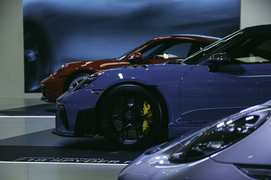
Unleashing the Track on the Street: Production Cars Fueled by Motorsport DNA
For over a decade, navigating the automotive landscape, I’ve witnessed firsthand the profound impact of racing on the cars we drive. It’s a symbiotic relationship, a constant push-and-pull between the unforgiving crucible of motorsport and the everyday asphalt. When a manufacturer pours its resources into the demanding world of professional racing, the benefits aren’t confined to the trophy shelf. Instead, they often trickle down, manifesting in the very vehicles that grace our driveways. This isn’t about superficial styling cues; it’s about the core of what makes a car tick – its engine, its chassis, its very soul, forged in the heat of competition.
The thrill of piloting a machine that carries undeniable motorsport DNA is an experience unlike any other. We’re not just discussing aesthetics or minor performance enhancements; we’re delving into production vehicles that boast engines conceived, engineered, and proven on the racetrack. These powerplants, honed through countless hours of intense competition, deliver a visceral, high-revving, and often exhilarating performance that connects drivers directly to the raw emotion of motorsports. Today, I want to explore ten such production automobiles that masterfully bridge the divide between the circuit and the street, offering a potent, tangible taste of racing pedigree for discerning enthusiasts.
The Unseen Hand of Racing: Why Manufacturers Embrace the Track
The dedication and investment required for motorsport are substantial, often involving staggering budgets. So, why do automotive giants consistently pour money into racing, from Formula 1 and Le Mans prototypes to touring car championships and rally stages? The answer is multifaceted and deeply rooted in the pursuit of innovation and brand enhancement.
At its heart, racing is the ultimate testing ground. Extreme conditions, immense G-forces, and the absolute necessity for reliability under pressure push engineering boundaries far beyond what typical road conditions demand. Every component, every aerodynamic tweak, every piece of software is scrutinized and tested to its absolute limit. What emerges from this crucible is invaluable knowledge. Advanced materials, lightweight construction techniques, sophisticated electronic control units, and groundbreaking suspension geometries are often pioneered on the track. These innovations, once proven on the unforgiving tarmac, eventually find their way into the production vehicles we purchase. Think of disc brakes, anti-lock braking systems (ABS), sequential gearboxes, and even the ubiquitous paddle shifters – all were once bleeding-edge racing technologies.
Beyond the tangible engineering advancements, motorsport success serves as a powerful marketing tool. The “Win on Sunday, Sell on Monday” adage, a strategy that has seen a significant resurgence in recent years, holds as much truth today as it ever has. When a manufacturer’s race car dominates its respective series, it imbues the brand with an aura of performance, engineering prowess, and sheer desirability. A car that consistently crosses the finish line first is implicitly perceived as superior, more robust, and more exciting. This positive association directly translates into increased consumer interest and, ultimately, sales for their road-going counterparts. While the vast majority of us will never have the opportunity to pilot a full-blown Formula 1 car or a purpose-built endurance racer, these production vehicles with motorsport DNA allow us to vicariously experience a fraction of that adrenaline-fueled excitement, especially when the unmistakable roar of a race-bred engine echoes from beneath the hood.
Ten Road Cars with Undeniable Racing Hearts
Let’s delve into the heart of the matter and highlight ten remarkable production vehicles that proudly carry the flag of their racing lineage. These machines are more than just cars; they are rolling testaments to the enduring power of motorsport DNA translated for the discerning driver.
Alfa Romeo Montreal:
Emerging from the golden era of Italian performance, the Alfa Romeo Montreal is a captivating example of a road car infused with genuine racing heritage. Its heart beats with a 2.6-liter Tipo 33 naturally aspirated V8 engine. This powerplant was directly derived from Alfa Romeo’s formidable Tipo 33 sports prototype, a car that carved its name into motorsport history through gruelling endurance races like the Targa Florio and the gruelling 24 Hours of Daytona. While meticulously detuned for civilian duties and equipped with emissions controls, the Montreal’s V8 retained much of its competitive spirit. It still willingly spun to an impressive 7,000 RPM, delivering a potent 200 horsepower. The intoxicating symphony of its V8, combined with its arresting, almost futuristic styling, cemented the Montreal’s status as one of the most stylish and tragically underrated automobiles to ever wear the Alfa Romeo badge.
BMW M1, M3 (E30), M5 (E28), M6 (E24):
BMW’s M division is synonymous with performance, and its early creations are steeped in racing lore. The BMW M1, in particular, stands as a beacon of this philosophy. It was propelled by the legendary 3.5-liter M88 inline-six engine, a powerhouse originally conceived and developed for BMW’s own racing endeavors, most notably the highly competitive M1 ProCar series. This engine’s prowess didn’t stop with the M1; it later found its way into the acclaimed E28 M5 and E24 M6. Furthermore, the iconic four-cylinder S14 engine that powered the E30 M3 was, in essence, a sophisticated evolution. It drew heavily from the principles established by the M88 and the turbocharged M12 Formula 1 engines, directly reflecting BMW’s dominance in touring car racing. The S14 engine shared crucial components and engineering philosophies with the cars that consistently conquered the Deutsche Tourenwagen Masters (DTM) series, solidifying BMW’s performance credentials.
Chevrolet Camaro ZL1 (1969):
The 1969 Chevrolet Camaro ZL1 represents a pure, unadulterated injection of racing venom into a production muscle car. Under its sculpted hood resided the formidable 427 cubic-inch (7.0-liter) V8, an engine originally engineered for the demanding world of Can-Am racing. Constructed entirely from lightweight aluminum, this engine was remarkably potent for its size. While officially rated at 430 horsepower for street use, its true output, when liberated from emissions restrictions, was closer to a staggering 500 horsepower. The ZL1 package transformed the already capable Camaro into a street-legal drag strip terror. Its racing engine not only powered this icon but also lived on in various potent configurations within the SCCA Trans-Am series. With a production run limited to a mere 69 units, the 1969 Camaro ZL1 remains an extraordinarily rare and highly coveted collector’s item, a true piece of American motorsport DNA.
Ferrari Dino 206 GT:
The Ferrari Dino 206 GT, while not bearing the iconic Prancing Horse badge on its flanks, carries a significant piece of Ferrari’s racing history within its compact form. It was powered by a 2.0-liter Dino naturally aspirated V6 engine, a powerplant initially developed for Ferrari’s Formula 2 racing aspirations in the 1960s. Although tuned down for road compliance, the engine preserved its exhilarating high-revving nature, imbuing the Dino with a distinct racing soul that made it an absolute joy to navigate on spirited drives. Producing a healthy 180 horsepower, this was more than sufficient for a car weighing just over 2,000 pounds. The Dino holds the distinction of being one of Ferrari’s few models not to feature the marque’s crest and marked the company’s initial foray into mid-engined V6 sports cars, a configuration that would influence future performance models.
Ferrari F50:
To commemorate its 50th anniversary, Ferrari unleashed the F50, a supercar that elevated the concept of a track-derived engine to an unprecedented level. Its 4.7-liter naturally aspirated V12, designated Tipo F130B, was a direct descendant of the engine that powered Ferrari’s 1990 Formula 1 car, the Tipo 641 (later known as the F1-90), driven by none other than Alain Prost. This naturally aspirated marvel was capable of revving to a searing 8,500 RPM, generating an immense 513 horsepower. It delivered the raw, unadulterated sensation of piloting a Formula 1 car on public roads. With minimal modifications made solely to meet road regulations, the F50 represented the closest a street-legal Ferrari could get to the pinnacle of motorsport at the time. Its inclusion is a prime example of potent motorsport DNA making the leap to production.
Ford GT (2005 & 2017):
The Ford GT is a modern-day homage to one of the most legendary race cars in automotive history: the Le Mans-winning Ford GT40. The 2005 iteration of the GT featured a 5.4-liter supercharged V8 engine whose development was deeply intertwined with Ford’s endurance racing programs, particularly its Daytona Prototype race cars. Similarly, the significantly updated 2017 Ford GT showcases performance inspired by its racing lineage, powered by a potent twin-turbocharged 3.5-liter EcoBoost V6 engine. This V6 draws its robust character from Ford’s highly successful EcoBoost program utilized extensively in endurance racing series. Both generations of the Ford GT serve as powerful ambassadors of the brand’s racing heritage, embodying genuine motorsport DNA for the road.
Jaguar XJ220:
The Jaguar XJ220, an icon of British automotive engineering, initially envisioned with a V12 engine, ultimately found its soul in a formidable 3.5-liter twin-turbocharged V6. This powerplant was directly sourced from the Jaguar XJR-11 Group C race car, a machine proven in the demanding world of sports car racing. This competition-derived engine endowed the XJ220 with blistering performance, enabling it to achieve a top speed of 217 mph, a figure that briefly crowned it the fastest production car in the world. The XJ220’s engine stands as one of the most advanced and track-proven powerplants to ever grace a road-legal automobile, a testament to the efficacy of motorsport DNA.
Plymouth Belvedere (1964):
While the Plymouth Belvedere might not immediately strike one as a race car, its 1964 iteration harbored a legend beneath its unassuming exterior: the 426 Hemi V8. This engine was meticulously developed specifically for the brutal demands of NASCAR. Known colloquially as the “Race Hemi,” this engine was an absolute dominant force on the racetrack and soon made its way into Plymouth’s production vehicle lineup. The road-going Belvedere, producing a formidable 425 horsepower, rapidly became one of the most potent and sought-after muscle cars of the 1960s, a reputation that the brand carried forward with its legendary ‘Cuda through the 1970s. The 426 Hemi is a cornerstone of American motorsport DNA.
Porsche 918 Spyder:
The Porsche 918 Spyder is a hypercar that masterfully integrates cutting-edge hybrid technology with a high-revving, race-bred internal combustion engine. Its 4.6-liter V8 engine is directly based on the architecture of the RS Spyder, a formidable prototype race car that competed successfully in the LMP2 class at the grueling 24 Hours of Le Mans. The 918 combines this competition-honed V8 with sophisticated electric motors to produce a staggering combined output of 887 horsepower. This potent powertrain allows the hypercar to achieve an astonishing 0 to 60 mph sprint in a mere 2.2 seconds (based on independent testing), positioning it among the quickest accelerating vehicles ever produced. While the electric motors contribute significantly to its acceleration, it is the race-derived V8 that provides the car’s soul-stirring emotional and auditory character, a perfect fusion of modern technology and pure motorsport DNA.
Porsche Carrera GT:
The Porsche Carrera GT is widely celebrated as one of the greatest analog supercars ever conceived, and a significant portion of its legendary status can be attributed to its sensational ten-cylinder engine. The 5.7-liter V10 powerplant was initially developed by Porsche for its Formula 1 campaign during the V10 engine era. However, when that endeavor didn’t materialize as planned, the engine was shelved. It was later revived for a Le Mans prototype car that, unfortunately, never reached the competitive stage. Instead of letting this incredible engine go to waste, Porsche ingeniously repurposed it for its flagship supercar. This decision allowed the Carrera GT to unleash a formidable 612 horsepower and rev freely to an exhilarating 8,000 RPM. Coupled with its feather-light construction and pure motorsport DNA, the Carrera GT remains an iconic and profoundly engaging supercar, demanding skill and rewarding the committed driver.
These ten vehicles are far more than mere modes of transportation; they are rolling testaments to the enduring power of motorsport DNA, offering enthusiasts a rare and exhilarating opportunity to experience the thrill of the track, right on the open road.
If the raw emotion and mechanical brilliance of these machines resonate with you, perhaps it’s time to explore the possibilities of bringing a piece of this automotive legend into your own life. Discovering the perfect vehicle that blends track-bred performance with street-legal usability can be a profoundly rewarding journey.