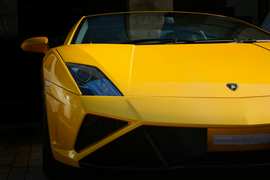
Unleash the Track: Production Cars with Genuine Motorsport Hearts
For decades, the roar of a finely tuned engine, the precision of a race-bred chassis, and the sheer exhilaration of pushing performance to its absolute limit have captivated enthusiasts. While the pinnacle of automotive achievement resides on the racetrack, a select few manufacturers have masterfully bridged the gap between the checkered flag and the public highway. These aren’t mere imitations; they are production vehicles that boast engines and engineering philosophies directly descended from the demanding world of motorsport. As an industry professional with a decade of experience in automotive engineering and performance, I can attest that the thrill of driving a car with authentic motorsport DNA is an experience unlike any other. It’s a visceral connection to the raw power, relentless testing, and cutting-edge innovation that defines competitive automotive endeavors.
The allure of cars with race-bred engines lies not just in their impressive specifications, but in the heritage they represent. Automakers invest fortunes in motorsport, not solely for brand prestige, though that is a significant factor, but as an unparalleled testing ground for new technologies. The extreme conditions of Formula 1, endurance racing like Le Mans, or grueling rally stages push materials, aerodynamics, and powertrains to their breaking point. What emerges from this crucible of competition is invaluable knowledge, leading to advancements that eventually filter down to the cars we drive every day. Think of disc brakes, sequential gearboxes, advanced traction control systems, and even the very alloys used in engine construction – all have roots in racing.
This symbiotic relationship, often encapsulated by the adage “win on Sunday, sell on Monday,” has seen a powerful resurgence in recent years. Manufacturers are once again embracing motorsport not just as a marketing tool, but as a vital engine for product development. This strategic approach ensures that the performance, efficiency, and reliability demanded by racing trickle down, resulting in more capable and engaging performance cars for the road. For the average driver, owning a vehicle with genuine motorsport-derived powertrains offers a tangible connection to the speed and passion of the track, even if their daily commute doesn’t involve navigating chicane-laden circuits.
Here, we delve into ten exceptional production vehicles that have successfully translated the raw excitement of motorsport into an accessible, street-legal package. These machines offer more than just inspired aesthetics; they house engines that have been forged in the crucible of competition, delivering an adrenaline rush that echoes their racing brethren.
Alfa Romeo Montreal: The V8 Enigma
The Alfa Romeo Montreal stands as a testament to Italian flair and engineering prowess, particularly when it comes to its heart. Beneath its strikingly sculpted hood beats a 2.6-liter Tipo 33 naturally aspirated V8 engine. This powerplant was not conceived in isolation; it was directly derived from Alfa Romeo’s formidable Tipo 33 sports prototype, a car that carved its name in legendary endurance races like the Targa Florio and the 24 Hours of Daytona. While meticulously detuned for civilian duty, the Montreal’s V8 retained a significant portion of its racing pedigree. It readily spooled up to an exhilarating 7,000 RPM, unleashing a potent 200 horsepower. The symphonic wail of this V8, combined with the Montreal’s avant-garde design, cemented its status as one of the most stylish and underrated Alfas ever to grace public roads. Its unique blend of exotic engine and distinct styling makes it a sought-after collector’s item for enthusiasts looking for a true classic race car engine in a road car.
BMW M Cars (M1, E30 M3, E28 M5, E24 M6): The Bavarian Performance Masters
BMW’s M division is synonymous with motorsport-inspired automotive engineering, and its iconic models are living proof. The legendary BMW M1, a mid-engined halo car, was propelled by the robust 3.5-liter M88 inline-six engine. This powerplant originated from BMW’s dedicated racing programs, notably serving as the engine for the M1 ProCar series. Later, this same formidable engine found its way into the prestigious E28 M5 and the E24 M6, delivering exhilarating performance for a new generation of drivers. Furthermore, the revered four-cylinder S14 engine powering the E30 M3 drew heavily from the M88 and the turbocharged M12 Formula 1 engines. This remarkable engine was a direct beneficiary of BMW’s extensive touring car racing efforts, sharing crucial components and engineering philosophy with the cars that dominated the Deutsche Tourenwagen Meisterschaft (DTM) series. Owning an early M car is like possessing a piece of BMW’s racing heritage for the street.
Chevrolet Camaro ZL1 (1969): The All-American Beast
The 1969 Chevrolet Camaro ZL1 represents an extraordinary chapter in American muscle car history, boasting an engine originally conceived for the cutthroat world of Can-Am racing. Its heart was a colossal 427 cubic-inch (7.0-liter) V8, crafted entirely from aluminum. This construction minimized weight for its sheer displacement, allowing it to unleash an astounding amount of power. While factory-rated at a conservative 430 horsepower for street applications, the true output of this race-bred monster was closer to 500 hp. The ZL1 package transformed the Camaro into a road-legal drag strip dominator, and its potent engine continued to compete successfully in the SCCA Trans-Am series. With a production run of a mere 69 units, the 1969 Camaro ZL1 is an exceptionally rare and highly coveted collector’s item, representing a peak of American muscle car performance with racing DNA. Those looking for rare performance cars with race engines often find themselves drawn to this legendary machine.
Ferrari Dino 206 GT: The Genesis of Mid-Engined Excellence
The Ferrari Dino 206 GT, though bearing a name separate from its Prancing Horse brethren, was a pivotal model for Maranello. Its elegant chassis housed a compact yet spirited 2.0-liter Dino naturally aspirated V6 engine. This powerplant was initially developed for Ferrari’s Formula 2 racing efforts in the 1960s. Despite being tempered for road use, the engine retained its eager, high-revving character, imbuing the Dino with an undeniable racing spirit that made it an absolute joy to drive on winding roads. Producing a respectable 180 horsepower, it was more than adequate for a car weighing just over 2,000 pounds. The Dino 206 GT was a significant departure for Ferrari, marking its inaugural foray into mid-engined V6 sports cars and setting a crucial precedent for many iconic Ferrari models that would follow. It showcases how Formula 2 technology trickles down to create exceptional road cars.
Ferrari F50: A Formula 1 Car for the Road
To celebrate its 50th anniversary, Ferrari unleashed the F50, a hypercar that pushed the boundaries of what a production vehicle could be, particularly in its powertrain. The F50’s 4.7-liter Tipo F130B naturally aspirated V12 engine was a direct transplant, with minimal modifications, from Ferrari’s 1990 Formula 1 car, the Tipo 641 (also known as the F1-90), famously piloted by Alain Prost. This naturally aspirated powerhouse was engineered to scream to an astonishing 8,500 RPM, generating a staggering 513 horsepower. Driving the F50 is as close as one could get to experiencing the raw, unfiltered sensation of a Formula 1 car on public roads. The minimal changes required to meet road regulations underscore the F50’s extraordinary Formula 1 engine in a road car pedigree. It remains a benchmark for supercar performance with racing pedigree. If you are seeking exotic cars with F1 engines, the F50 is undoubtedly at the pinnacle.
Ford GT: A Modern Homage to Le Mans Glory
The Ford GT is a contemporary icon, serving as a powerful homage to one of the most storied race cars in history: the legendary Le Mans-winning Ford GT40. The first generation GT, launched in 2005, was powered by a 5.4-liter modular supercharged V8. This engine’s development was deeply intertwined with Ford’s endurance racing engine programs, sharing lineage with the powerplants used in Ford’s Daytona Prototype race cars. The subsequent generation of the Ford GT, introduced in 2017, continued this motorsport connection, featuring a twin-turbocharged 3.5-liter EcoBoost V6. This engine was derived directly from Ford’s highly successful EcoBoost program, which saw extensive application in endurance racing. The Ford GT exemplifies how endurance racing technology is refined for the ultimate road-going sports car. For those in the Detroit area or anywhere seeking high-performance American sports cars, the Ford GT represents the zenith.
Jaguar XJ220: The Record-Breaking V6
The Jaguar XJ220, a jewel in the crown of British automotive design, was initially conceived with a V12 engine. However, its final production form housed a formidable 3.5-liter twin-turbocharged V6 engine. This powerplant was not an off-the-shelf unit; it was sourced directly from the Jaguar XJR-11 Group C race car, a formidable competitor in international sports car racing. This race-proven engine was instrumental in enabling the XJ220 to achieve a breathtaking top speed of 217 mph, making it the fastest production car in the world for a significant period. The XJ220’s motor stands as a prime example of advanced track-proven engine technology finding its way into a road-legal vehicle, offering an unparalleled driving experience. It is a standout example of exotic sports cars with racing engines.
Plymouth Belvedere (1964): The Hemi’s NASCAR Roots
While the Plymouth Belvedere might not immediately evoke images of motorsport, the 1964 model possessed a secret weapon: the legendary 426 Hemi V8 engine. This powerplant was specifically developed for NASCAR competition, earning it the moniker “Race Hemi.” It proved to be an overwhelmingly dominant force on the racetrack, and its formidable power soon found its way into Plymouth’s production lineup. The street-legal version of the Belvedere, churning out 425 horsepower, rapidly established itself as one of the most powerful and sought-after muscle cars of the 1960s. This reputation for raw power and track-derived performance was a hallmark that Plymouth would carry forward into the 1970s with its iconic ‘Cuda. This car highlights the impact of NASCAR engine technology on the muscle car era and offers a taste of legendary American V8 engines for the road.
Porsche 918 Spyder: The Hybrid Hypercar with a Racing Heart
The Porsche 918 Spyder is a groundbreaking hypercar that masterfully blended hybrid technology with a purebred racing engine. Its 4.6-liter V8 engine was developed based on the RS Spyder, a highly successful prototype race car that competed in the LMP2 class at the iconic 24 Hours of Le Mans. The 918 ingeniously combined this competition-derived V8 with advanced electric motors, resulting in a phenomenal combined output of 887 horsepower. This extraordinary power enabled the 918 Spyder to accelerate from 0 to 60 mph in a blistering 2.2 seconds, according to independent testing, making it one of the quickest production cars ever created. While the electric motors contribute significantly to its breathtaking performance, it is the race-derived V8 that provides the car’s intoxicating character, emotional resonance, and thrilling auditory experience. This vehicle showcases the future of performance hybrids with racing DNA and is a prime example of Le Mans-inspired road cars.
Porsche Carrera GT: The Analog Supercar’s V10 Soul
The Porsche Carrera GT is widely lauded as one of the greatest analog supercars ever constructed, and a significant portion of its legendary status is attributed to its magnificent ten-cylinder engine. The 5.7-liter V10 powerplant was originally conceived for Formula 1 during the V10 engine era. Although its F1 aspirations were ultimately unfulfilled, the engine was meticulously developed and later earmarked for a Le Mans prototype car that never saw active competition. Instead, Porsche astutely decided to bestow this race-honed engine upon its flagship supercar. This decision allowed the Carrera GT to produce a formidable 612 horsepower and rev with exhilarating abandon to 8,000 RPM. Coupled with its lightweight construction and inherent motorsport pedigree, the Carrera GT remains one of the most engaging and challenging supercars to pilot, a true purist’s machine. It embodies the pinnacle of V10 supercar performance and is a testament to Porsche’s commitment to racing-derived road cars. For those in the market for high-performance sports cars with manual transmissions, the Carrera GT stands in a class of its own.
These ten vehicles represent more than just impressive engineering; they are rolling monuments to the relentless pursuit of performance, showcasing how the passion and innovation born on the racetrack can translate into unforgettable driving experiences for enthusiasts worldwide.
Are you captivated by the thrill of automotive racing technology and eager to experience the power of a track-inspired car? Explore the world of performance driving and discover how these exceptional machines can elevate your driving journey.