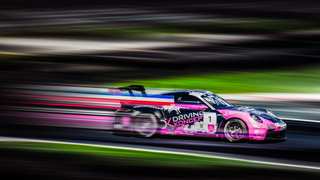
Race-Bred Beasts: 10 Production Cars Fueled by Motorsport DNA
For a seasoned automotive professional with a decade immersed in the industry, there’s an undeniable allure to vehicles that carry the unmistakable scent of the racetrack. It’s more than just aggressive styling or a few performance upgrades; it’s about the heart of the machine – engines born from the crucible of motorsport, now breathing life into street-legal marvels. These powerhouses, forged in the fires of intense competition, translate the raw, high-revving exhilaration of race cars directly to public roads, offering a visceral connection to the machines that dominate circuits worldwide.
This exploration delves into ten production vehicles that artfully blur the demarcation lines between track and tarmac. From the piercing wail of V12s to the thunderous roar of turbocharged titans, these automobiles deliver a potent dose of motorsport pedigree to everyday drivers. But before we unleash this list, it’s crucial to understand why automotive manufacturers invest vast resources into the demanding world of motorsport and how that commitment ultimately shapes the vehicles accessible to the average consumer.
The Symbiotic Relationship: Motorsport DNA Infused into Road-Going Vehicles
The intricate dance between motorsport and road car development is as old as the automobile itself. Racing serves as the ultimate proving ground, pushing the absolute boundaries of engineering, subjecting vehicles and components to extreme duress where failure is not an option, but a definitive end. The invaluable lessons learned on the track, the innovative solutions devised to shave off milliseconds or endure punishing conditions, invariably find their way into the production cars that populate our daily commutes. Whether it’s the sophisticated application of advanced aerodynamics, the strategic use of lightweight materials to enhance agility, or the direct trickle-down of cutting-edge engine technology, innovation meticulously crafted through the lens of racing consistently paves the path for superior road-going vehicles.
Consider, for instance, technologies that were once exclusive to the apex predator of the track: disc brakes, initially developed to withstand the immense heat and stress of racing, are now a ubiquitous safety feature. Similarly, paddle shifters, a staple of modern performance cars, owe their lineage to the need for instantaneous gear changes in competitive racing environments. Beyond the technological transfer, motorsport success significantly amplifies a manufacturer’s brand cachet. When a brand’s racing endeavors achieve dominance on the global stage, its road cars are intrinsically perceived as more desirable, more capable, and more aspirational. While the vast majority of us will never grip the wheel of a Formula 1 challenger or wrestle a Le Mans prototype through the night, the visceral thrill of participating in that action becomes palpable when a race-bred engine pulses with life beneath the hood of our personal vehicles. This “win on Sunday, sell on Monday” ethos, once a cornerstone of automotive marketing, is experiencing a notable renaissance, heralding potentially the most transformative era for the automotive industry in decades.
Iconic Machines: Cars Featuring Track-Derived Powerplants
Let’s embark on a journey through ten extraordinary production vehicles that embody this profound connection to motorsport, showcasing engines that have tasted victory or endured the rigors of competitive racing.
Alfa Romeo Montreal
The Alfa Romeo Montreal is a captivating embodiment of Italian passion and engineering prowess. Its heart beats to the rhythm of the Tipo 33 Naturally Aspirated V8 engine, a powerplant originally conceived for Alfa’s formidable Tipo 33 sports prototype. This endurance racer honed its skills on legendary circuits, tackling grueling events like the Targa Florio and the 24 Hours of Daytona. While meticulously detuned for the rigors of road use, the Montreal’s V8 engine—a 2.6-liter marvel—retains a significant portion of its motorsport DNA. It eagerly spins to 7,000 RPM, delivering a spirited 200 horsepower and 173 lb-ft of torque. The intoxicating symphony of its V8, coupled with its strikingly sharp and timeless design, solidifies the Montreal’s status as one of the most exquisite and often overlooked gems to ever wear the Alfa Romeo badge. This Italian masterpiece offers a tangible connection to a golden era of sports car racing.
BMW M1, M3 (E30), M5 (E28), M6 (E24)
BMW’s M division has long been synonymous with motorsport excellence, and several of its legendary models serve as powerful testaments to this heritage. The BMW M1, in particular, was propelled by the potent M88 inline-six engine, a 3.5-liter unit directly derived from the brand’s highly successful racing programs, most notably its application in the BMW M1 ProCar series. This formidable engine later found its way into the esteemed E24 M6 and E28 M5, lending them exceptional performance credentials. Concurrently, the iconic E30 M3’s high-revving four-cylinder S14 engine also traced its lineage back to the M88 and the turbocharged M12 Formula 1 engines. This compact powerhouse drew significant inspiration from BMW’s dominant touring car racing efforts, sharing vital components and engineering principles with the cars that consistently conquered the Deutsche Tourenwagen Masters (DTM) series. These models represent a pinnacle of German engineering applied for both the road and the track.
Chevrolet Camaro ZL1 (1969)
The 1969 Chevrolet Camaro ZL1 is a legendary muscle car that transcended its street-legal status, harboring an engine originally conceived for the fierce world of Can-Am racing: the colossal 427 cubic-inch (7.0-liter) V8. Constructed entirely from aluminum, this engine was remarkably lightweight for its imposing displacement, unleashing a staggering amount of power. While factory-rated at a formidable 430 horsepower for its road-going iteration, its true potential, stemming directly from its racing origins, was closer to 500 horsepower. The ZL1 package transformed the already potent Camaro into a street-legal drag strip terror. Its race-bred engine continued to perform admirably in various SCCA Trans-Am series race cars. With a production run of a mere 69 units, the 1969 Camaro ZL1 stands today as an exceptionally rare and highly coveted automotive artifact, a true testament to American performance engineering.
Ferrari Dino 206 GT
The Ferrari Dino 206 GT, though unique in its branding, carries a significant motorsport lineage. It was powered by a 2.0-liter naturally aspirated V6 engine, a powerplant that was originally developed by Ferrari for its Formula 2 racing efforts in the mid-1960s. Despite being reconfigured for road usability, this engine retained its exhilarating high-revving character, imbuing the Dino with a palpable racing spirit that made it an absolute joy to pilot through winding country roads. Producing a spirited 180 horsepower, this output was more than adequate for a car weighing just over 2,000 pounds. The Dino marked a pivotal moment for the Prancing Horse, being one of the few models to not bear the iconic Ferrari badge and representing the marque’s inaugural venture into mid-engine V6 sports cars, setting a vital precedent for future Ferrari designs.
Ferrari F50
A car designed to commemorate Ferrari’s golden anniversary, the F50 represents an audacious elevation of the race-derived engine concept. Its 4.7-liter naturally aspirated V12 engine, designated Tipo F130B, was a direct descendant of the powerplant found in Ferrari’s 1990 Formula 1 car, the Tipo 641, famously driven by the legendary Alain Prost. This naturally aspirated behemoth screams to an astonishing 8,500 RPM, unleashing a breathtaking 513 horsepower and 347 lb-ft of torque. It offers a raw, unfiltered taste of Formula 1 performance, directly translated to the street. With only minor modifications necessary to meet road-going regulations, the F50 stood as the closest a street-legal Ferrari had ever come to pure Formula 1 machinery at the time of its release. This hypercar is a crown jewel for collectors and enthusiasts seeking ultimate performance.
Ford GT
The Ford GT serves as a profound homage to one of the most storied race cars in automotive history: the Le Mans-winning Ford GT40. The first generation GT, introduced in 2005, featured a 5.4-liter supercharged V8 engine whose development was intrinsically linked to the automaker’s extensive endurance racing engine programs, bearing a close relation to the powerplants utilized in Ford’s Daytona Prototype race cars. Similarly, the contemporary 2017 Ford GT continues this legacy, boasting race-inspired performance powered by a sophisticated twin-turbocharged 3.5-liter V6. This engine is a product of Ford’s acclaimed EcoBoost program, honed through extensive endurance racing campaigns. The Ford GT is a modern icon that continues to push the boundaries of performance engineering, showcasing Ford’s commitment to winning on the track and translating that success to the road.
Jaguar XJ220
The Jaguar XJ220 stands as one of the most breathtaking and technologically advanced automobiles to emerge from the British marque. Initially envisioned with a V12 engine, its final production form featured a potent 3.5-liter twin-turbocharged V6. This exceptional engine was directly sourced from the Jaguar XJR-11, a formidable Group C race car. This competition-honed powerplant was instrumental in enabling the XJ220 to achieve a scintillating top speed of 217 mph, briefly crowning it the fastest production car in the world. The XJ220’s motor represents a remarkable instance where a highly advanced, track-proven engine was successfully integrated into a road-legal production vehicle, defining an era of supercar performance.
Plymouth Belvedere (1964)
At first glance, the 1964 Plymouth Belvedere might not immediately evoke images of motorsport dominance. However, concealed beneath its unassuming exterior lay the legendary 426 Hemi V8, an engine specifically developed for the brutal world of NASCAR racing. This formidable powerplant, often referred to as the “Race Hemi,” was an unstoppable force on the racetrack and soon found its way into Plymouth’s production vehicle lineup. The road-going Belvedere, delivering a formidable 425 horsepower, rapidly ascended to become one of the most powerful and iconic muscle cars of the 1960s—a reputation that lingered well into the 1970s, exemplified by its legendary ‘Cuda sibling. This car is a powerful reminder of the raw, unadulterated performance that defined American automotive culture.
Porsche 918 Spyder
The Porsche 918 Spyder is a hypercar that masterfully integrates cutting-edge hybrid technology with a race-derived internal combustion engine. Its 4.6-liter V8 powerplant is based on the RS Spyder, a highly successful prototype race car that competed in the LMP2 class at the grueling 24 Hours of Le Mans. In the 918 Spyder, this competition-honed engine is augmented by advanced electric motors, collectively producing a mind-bending 887 horsepower and an earth-shattering 944 lb-ft of torque. This phenomenal output propels the hypercar from 0 to 60 mph in a mere 2.2 seconds (according to independent testing), positioning it among the quickest production cars ever manufactured. While the electric motors contribute significantly to its astonishing acceleration, it is the visceral, high-revving nature of the race-derived V8 that delivers the car’s defining emotional and auditory thrills. This vehicle represents the pinnacle of hybrid hypercar technology.
Porsche Carrera GT
The Porsche Carrera GT is widely celebrated as one of the greatest analog supercars ever conceived, and a substantial portion of its legendary status stems from its extraordinary ten-cylinder engine. The 5.7-liter V10 powerplant was initially developed by Porsche during the potent V10 era of Formula 1. However, after the Formula 1 project did not materialize, the engine was shelved, only to be later repurposed for a Le Mans prototype car that, coincidentally, never saw competitive track action. Instead, Porsche made the inspired decision to integrate this race-bred engine into its flagship supercar. This decision allowed the Carrera GT to produce an immense 612 horsepower and sustain an exhilarating redline of 8,000 RPM. Combined with its feather-light construction and inherent motorsport DNA, the Carrera GT remains one of the most engaging and challenging supercars for any driver to master, offering an uncompromised driving experience.
These ten vehicles are not merely modes of transportation; they are rolling monuments to the relentless pursuit of automotive perfection, bridging the gap between the roar of the racetrack and the pulse of everyday life.
Ready to Experience the Thrill?
If the thought of owning a piece of motorsport history or experiencing the raw emotion of a race-bred engine ignites your passion, explore the possibilities. Discover how you can bring the thrill of the track to your driveway. Contact a specialist dealer or explore pre-owned listings to find your own race-inspired automotive masterpiece.