Unleashing the Beast: Production Cars with Genuine Racing Hearts
For a decade now, I’ve been immersed in the automotive industry, and if there’s one thing that consistently ignites a passion for driving, it’s the visceral connection to motorsport heritage. We’re not merely talking about cosmetic enhancements or a few performance tweaks on a showroom model. We’re delving into a realm where production vehicles proudly sport powertrains originally conceived and honed for the unforgiving crucible of competitive racing. These are engines, forged in the white-hot intensity of fierce competition, that deliver high-revving exhilaration and adrenaline-pumping performance directly to public roads. They offer an unfiltered, authentic link to the very race cars that inspired their creation.
In this exploration, we’re unearthing ten extraordinary production vehicles that masterfully blur the demarcation between the race track and the everyday commute. From the piercing wail of naturally aspirated V12s to the guttural roar of turbocharged titans, these ten marvels provide a tangible taste of pure racing prowess for the discerning driver. But before we plunge into this exciting roster, it’s crucial to understand why automotive manufacturers invest heavily in the costly, demanding world of motorsport and, more importantly, how that significant investment ultimately shapes the vehicles accessible to us, the everyday enthusiasts.
The Symbiotic Relationship: Motorsport DNA in Road-Going Machines
The historical and ongoing symbiosis between motorsport and road-going automobiles is undeniable. The relentless pursuit of victory on the track acts as an unparalleled proving ground for engineering innovation, subjecting vehicles and components to extreme stresses and conditions where compromise is simply not an option. Every triumph and every setback in racing directly informs and refines the technologies that eventually find their way into the cars we drive daily. Whether it’s the nuanced application of advanced aerodynamic principles, the innovative use of lightweight, high-strength materials, or the direct trickle-down of cutting-edge engine technology, the innovations forged in the heat of racing irrevocably pave the way for superior road cars.
Consider, for instance, the widespread adoption of disc brakes and the now-ubiquitous paddle shifters behind the steering wheel. These were once exclusive domain of motorsport pioneers before gradually becoming standard features in production vehicles. Beyond technological advancement, motorsport success serves as a powerful catalyst for enhancing a manufacturer’s brand image. When a company’s racing machines consistently dominate on the global stage, its consumer-oriented road cars naturally become imbued with an aura of desirability and performance prowess. While the vast majority of us will never have the opportunity to pilot a Formula 1 car or a Le Mans prototype, we can still experience a profound sense of connection to the thrill of the race, especially when the unmistakable growl of a race-bred engine resonates beneath the hood of our own vehicle.
This “Win on Sunday, Sell on Monday” philosophy, a cornerstone of automotive marketing and engineering for decades, is experiencing a remarkable resurgence. The increased OEM entries and renewed passion for motorsport represent one of the most positive developments for the automotive industry in recent memory, promising an exciting future for performance-oriented vehicles.
Ten Production Cars Forged in the Fires of Motorsport
Let’s now turn our attention to the vehicles that exemplify this profound connection, cars that offer a genuine slice of racing performance for the road:
Alfa Romeo Montreal
Engine: Tipo 33 Naturally Aspirated V8
Displacement: 2.6 liters
Horsepower: 200 hp
Torque: 173 lb-ft
The Alfa Romeo Montreal stands as a testament to elegant Italian design and sporting heritage. At its heart beats a 2.6-liter V8 engine, a direct descendant of Alfa Romeo’s formidable Tipo 33 sports prototype. This endurance racer proudly competed in prestigious events like the Targa Florio and the gruelling 24 Hours of Daytona. While meticulously detuned to meet road-going regulations and emissions standards, the Montreal’s V8 engine retains a significant portion of its motorsport character. It eagerly spins up to an exhilarating 7,000 RPM, delivering a healthy 200 horsepower. The intoxicating symphony of its V8, combined with its sharply sculpted, futuristic styling, cemented the Montreal’s status as one of the most captivating and often overlooked models to ever wear the esteemed Alfa Romeo badge. This is a prime example of automotive history meeting street-legal thrill.
BMW M1, M3 (E30), M5 (E28), M6 (E24)
Models: BMW M1, M5, M6; BMW M3
Engine: M88 Inline-Six; S14 Inline-Four
Displacement: 3.5 liters; 2.3 liters
Horsepower: 273 hp (M1); 282 hp (M5, M6); 197 hp
Torque: 251 lb-ft; 243 lb-ft
BMW’s illustrious racing pedigree is profoundly evident in its most iconic M-division models. The legendary BMW M1, a mid-engined supercar, was propelled by the potent 3.5-liter inline-six M88 engine. This powerplant was meticulously derived from the brand’s highly successful racing programs, notably powering the celebrated BMW M1 ProCar series. Later, this very engine found its way into the robust E24 M6 grand tourer and the E28 M5 executive sports sedan, imbuing them with formidable performance. Concurrently, the four-cylinder S14 engine that powered the E30 M3, a touring car legend, was also built upon the foundations of the M88 and the turbocharged M12 Formula 1 engines. The S14 was a direct testament to BMW’s extensive involvement in touring car racing, sharing vital components and engineering principles with the machines that consistently dominated the DTM series. These vehicles are prime examples of performance car engineering directly translated from the track.
Chevrolet Camaro ZL1 (1969)
Engine: 427 Naturally Aspirated V8
Displacement: 7.0 liters
Horsepower: 430 hp
Torque: 450 lb-ft
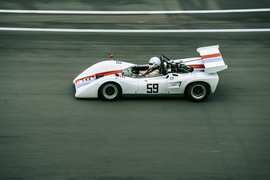
The 1969 Chevrolet Camaro ZL1 was not just a car; it was an automotive event. It featured a monumental 427 cubic-inch (7.0-liter) V8 engine that was originally conceived for the demanding world of Can-Am racing. Constructed entirely from aluminum, this engine offered an exceptional power-to-weight ratio for its era. While its racing iteration produced a staggering 500 horsepower, the road-legal version was detuned to a still-potent 430 horsepower. The ZL1 package transformed the already capable Camaro into a veritable street-legal drag strip weapon. Its race-bred engine continued to power numerous competitors in the SCCA Trans-Am series. With an incredibly limited production run of only 69 units, the Camaro ZL1 stands today as one of the most rare, desirable, and historically significant American muscle cars ever produced, a true icon of American muscle car performance.
Ferrari Dino 206 GT
Engine: Dino Naturally Aspirated V6
Displacement: 2.0 liters
Horsepower: 180 hp
Torque: 138 lb-ft
The Ferrari Dino 206 GT, while not bearing the iconic prancing horse badge at the time, housed a sophisticated 2.0-liter V6 engine. This powerplant was initially developed for Ferrari’s Formula 2 racing endeavors in the 1960s. Although calibrated for more restrained road use, the engine meticulously preserved its exhilarating high-revving character. This racing spirit made the Dino an absolute joy to drive on winding country roads, offering nimble handling and responsive acceleration. Producing 180 horsepower, it was more than adequate for a car weighing just over 2,000 pounds. The Dino represented a significant milestone for Ferrari, marking its inaugural foray into mid-engine V6 sports cars and setting a crucial precedent for many subsequent, highly acclaimed Ferrari models. It’s a fantastic example of V6 engine performance derived from top-tier racing.
Ferrari F50
Engine: Tipo F130B Naturally Aspirated V12
Displacement: 4.7 liters
Horsepower: 513 hp
Torque: 347 lb-ft
Created to commemorate Ferrari’s 50th anniversary, the F50 elevated the concept of a track-derived engine to an unprecedented level for a production automobile. Its sensational 4.7-liter V12 engine was a direct adaptation of the Tipo 641 Formula 1 car’s powerplant from 1990, famously piloted by the legendary Alain Prost. This naturally aspirated masterpiece sang to an incredible 8,500 RPM, unleashing 513 horsepower and delivering the raw, unadulterated sensation of driving a Formula 1 car on public roads. With only minimal modifications made to comply with road regulations, the F50 represented the closest a street-legal Ferrari could come to the pinnacle of motorsport during its era. For those seeking an extreme supercar driving experience, the F50 is unparalleled.
Ford GT
Models: Ford GT (2005); Ford GT (2017)
Engine: Modular Supercharged V8; Twin-Turbo EcoBoost V6
Displacement: 5.4 liters; 3.5 liters
Horsepower: 550 hp; 647 hp
Torque: 500 lb-ft; 550 lb-ft
The modern Ford GT is a profound homage to one of the most legendary endurance race cars in history: the Le Mans-winning Ford GT40. The 2005 iteration of the GT featured a potent 5.4-liter supercharged V8 engine whose lineage is deeply rooted in the development of Ford’s advanced endurance racing powertrains, sharing engineering principles with the engines used in Ford’s Daytona Prototype race cars. Similarly, the more contemporary 2017 Ford GT continues this proud tradition, boasting motorsport-inspired performance courtesy of a formidable twin-turbocharged 3.5-liter V6 engine. This V6 is a direct product of Ford’s highly successful EcoBoost program, which has seen extensive development and application in endurance racing, highlighting Ford performance vehicles at their finest.
Jaguar XJ220
Engine: XJR-11 Twin-Turbo V6
Displacement: 3.5 liters
Horsepower: 542 hp
Torque: 475 lb-ft
The Jaguar XJ220 stands as one of the most iconic and striking creations from the esteemed British marque. Initially conceptualized with a V12 engine, it ultimately debuted with a groundbreaking 3.5-liter twin-turbocharged V6 powerplant. This engine was directly sourced from the formidable Jaguar XJR-11 Group C race car. This competition-derived motor was instrumental in propelling the XJ220 to a breathtaking top speed of 217 mph, briefly earning it the title of the world’s fastest production car. The XJ220’s engine remains one of the most technologically advanced and track-proven powertrains ever to grace a road-legal automobile, epitomizing exclusive performance cars.
Plymouth Belvedere (1964)
Engine: 426 Naturally Aspirated Hemi V8
Displacement: 7.0 liters
Horsepower: 425 hp
Torque: 490 lb-ft
At first glance, the 1964 Plymouth Belvedere might not immediately evoke images of a dedicated race car. However, beneath its unassuming exterior lay the legendary 426 Hemi V8 engine, an powerplant meticulously developed specifically for the demands of NASCAR racing. Affectionately known as the “Race Hemi,” this engine was a dominant force on the oval tracks and soon found its way into Plymouth’s production vehicle lineup. The road-going Belvedere, boasting a formidable 425 horsepower, quickly became one of the most potent muscle cars of the 1960s, a reputation that the brand carried forward into the 1970s with its iconic ‘Cuda. This represents the ultimate in NASCAR-inspired street cars.
Porsche 918 Spyder
Engine: RS Spyder Naturally Aspirated V8 Hybrid
Displacement: 4.6 liters
Horsepower: 875 hp (combined)
Torque: 944 lb-ft (combined)
The Porsche 918 Spyder’s exceptional 4.6-liter V8 engine is fundamentally based on the RS Spyder, a prototype race car that achieved considerable success in the LMP2 class at the prestigious 24 Hours of Le Mans. The 918 masterfully integrated this race-derived V8 with advanced electric motors, creating a hybrid powertrain that delivered a astonishing combined output of 887 horsepower. This allowed it to achieve blistering acceleration, reaching 0 to 60 mph in a mere 2.2 seconds (based on independent testing), solidifying its place among the quickest vehicles ever manufactured. While the electric motors contribute significantly to its performance, it is the emotionally resonant and sonically thrilling race-derived V8 that truly defines the car’s character, showcasing the pinnacle of hybrid supercar technology.
Porsche Carrera GT
Engine: Porsche Naturally Aspirated V10
Displacement: 5.7 liters
Horsepower: 603 hp
Torque: 435 lb-ft
The Porsche Carrera GT is widely acclaimed as one of the greatest analog supercars ever conceived, and a significant portion of its legendary status is attributed to its extraordinary ten-cylinder engine. The 5.7-liter V10 was initially developed for Formula 1 during the V10 engine era. Although its Formula 1 aspirations were not realized, the engine was subsequently repurposed and intended for a Le Mans prototype car that, unfortunately, never reached the competitive circuit. Instead, Porsche made the inspired decision to utilize this race-honed engine in its flagship supercar. This allowed the Carrera GT to unleash a potent 612 horsepower and rev with exhilarating abandon to an incredible 8,000 RPM. With its meticulously engineered lightweight construction and unadulterated motorsport DNA, the Carrera GT remains a benchmark for analog supercars and a truly challenging, yet rewarding, driving machine for experienced enthusiasts.
The Enduring Legacy
The vehicles on this list represent more than just high-performance machines; they are tangible links to the thrilling world of motorsport. They embody the spirit of innovation, the pursuit of speed, and the dedication to engineering excellence that defines racing. Experiencing the performance of these cars is to tap into a legacy of competition that continues to shape the automotive landscape.
If the allure of these race-bred marvels has ignited your curiosity, and you’re eager to explore how this motorsport heritage can translate into your next automotive acquisition, we invite you to connect with our team. Our experts are ready to guide you through the nuances of these exceptional vehicles and help you find the perfect blend of track-inspired performance and road-ready refinement. Let’s embark on this exciting journey together.