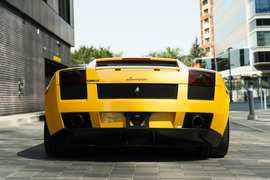
Pagani Utopia 2025: The Pinnacle of Automotive Artistry and Performance
For over a quarter-century, Pagani Automobili has carved an unparalleled niche in the rarefied world of hypercars, consistently pushing the boundaries of automotive engineering and design. The latest masterpiece to emerge from Horacio Pagani’s visionary atelier is the Pagani Utopia 2025, a name that itself evokes a sense of idealized perfection. Succeeding the legendary Huayra, the Utopia isn’t merely an evolution; it’s a profound statement, a meticulous distillation of everything that has defined Pagani’s legacy while forging a distinct and captivating new identity. This is not just a car; it’s a symphony of exquisite detail, relentless performance, and an almost unimaginable level of craftsmanship, all priced at a cool £2.2 million.
As an industry veteran with a decade immersed in the automotive landscape, I’ve witnessed the relentless march of technological innovation, the electrification revolution, and the ever-increasing pursuit of raw power. Yet, the Pagani Utopia 2.2 million hypercar represents a bold and unapologetic counterpoint to many of these trends. It champions mechanical purity, driver engagement, and a visceral connection to the road that is becoming increasingly rare.
The core of the Utopia’s intoxicating allure lies in its heart: a monumental 6.0-liter, twin-turbocharged V12 engine, meticulously crafted by AMG. This powerhouse, delivering a staggering 852 horsepower and a colossal 811 lb-ft of torque, is the soul of the machine. In an era dominated by silent electric propulsion and the often-intrusive whine of high-revving naturally aspirated engines, Pagani’s V12 offers a different kind of exhilaration. It’s a deep, resonant growl that promises explosive acceleration, a palpable force that grips you and propels you forward with an intensity that can be, quite frankly, overwhelming.
Imagine this: you’re cruising at a modest 30 mph, engaged in one of the lower gears, say third or fourth. You gently press the throttle. There’s a fleeting, almost imperceptible hesitation – a pregnant pause before the V12 inhales deeply, the twin turbos spooling with a subtle urgency. Then, the world warps. It’s not the abrupt, unsettling jolt of some electric hypercars, but a relentless, ever-intensifying wave of longitudinal G-force. Your internal gyroscope protests, much like the involuntary lean back when you were a child. A deep breath, a brief easing of the throttle, and a moment to collect yourself. The adrenaline surge is immediate, followed by an infectious, almost childish laughter. And then, you do it again. And again. The pure, unadulterated joy of the Utopia’s acceleration is a sensation that never loses its potency. It’s a fundamental, elemental appeal that underscores the extraordinary nature of this machine.
Thomas More’s 16th-century philosophical treatise, “Utopia,” envisioned a perfect society. Horacio Pagani, a modern-day maestro of automotive artistry, has translated that ideal into tangible reality. The Pagani Utopia 2025, weighing in at a feather-light 1280 kg (dry weight) and capable of over 217 mph, is a breathtaking fusion of advanced composite materials, exotic alloys, and an unparalleled commitment to craftsmanship. While More’s vision remained an abstract ideal, Pagani’s Utopia is a very real, albeit exclusive, proposition. Only 99 examples of the coupe version will ever grace the planet, with whispers of a Roadster variant further intensifying the exclusivity. For those of us in the motoring press, the Utopia is a fleeting, vicarious experience – a day to immerse ourselves in the rarefied air surrounding this ultimate expression of automotive passion, driven on the finest roads imaginable.
The arrival of a new Pagani model is a rare and significant event. The Utopia marks only the third entirely new model line from Pagani’s San Cesario sul Panaro headquarters in over 26 years. The anticipation, therefore, has been immense, and the question lingers: has it been worth the wait? My experience suggests an emphatic yes.
The Pagani facility itself has undergone a significant transformation since my first visit in 1999. Back then, the entire operation, including Horacio Pagani’s personal residence, was housed within a sleek, modern structure that now serves as the Art & Science Research Centre. Today, production, alongside the bespoke customization, restoration, and special projects departments (known within Pagani as Rinascimento, Unico, and Grandi Complicazioni), operates from the expansive ‘Atelier,’ the company’s impressive headquarters and museum inaugurated in 2017.
My initial encounter with the Utopia was not from the driver’s seat, but from the passenger side, alongside Pagani’s R&D test driver, Alberto Scilla. While my instinct is typically to be behind the wheel, such an introduction is a profound exercise in trust and a unique opportunity to observe the car’s nuances and performance before taking control.
Our journey commenced towards the Futa Pass, a legendary stretch of road steeped in Mille Miglia history and conveniently located just 90 minutes from Pagani’s HQ. It’s the perfect crucible for experiencing the Utopia without attracting undue attention – a relative concept when piloting a machine of this caliber. With our camera car a discreet distance behind, Scilla and I merged onto the autostrada, the sheer presence of the Utopia eliciting a sense of giddy excitement, as if this were my very first experience in such a hypercar.
Even from the passenger seat, the Utopia is an utterly captivating experience. Its ride is remarkably supple, a testament to the sophisticated suspension tuning. The V12, while ever-present, remains commendably subdued at lower speeds and with gentle throttle inputs, only revealing its monstrous potential when roused. Pagani has always prioritized the road-going nature of its creations, and the Utopia elevates this philosophy to new heights, seamlessly blending a refined demeanor with face-melting performance.
Scilla elaborated on the immense effort invested in perfecting the manual transmission. It wasn’t just about crisp shifts; the clutch feel was paramount. Managing over 811 lb-ft of torque demands an extraordinary level of finesse to engineer a manual gearbox that truly celebrates the art of stick-shifting. Judging by Scilla’s effortless manipulations of the gear lever, the Utopia has achieved this delicate balance with remarkable success.
We glided along the A1 autostrada like a predatory cat, effortlessly slicing through the mundane traffic. The lanes ahead seemed to miraculously clear, reminiscent of the fervent crowds that once lined the rally stages of Group B. Periodically, Scilla would artfully downshift, not for necessity, but for the sheer pleasure of it, squeezing the throttle. The V12 responded with a deep, resonant growl, a lion-like rumble emanating from its 6.0-liter block. It possesses a sweeter, more immediate delivery than the original Huayra’s, exhibiting a richer, more outgoing personality, yet tempered with a sharp, almost steely edge. It’s an engine that stirs the very soul.
A brief stop for fuel provided a moment for me to transition to the driver’s seat. A curious phenomenon with the Utopia, and indeed most Paganis, is the immediate magnetism it exerts. Like a magnet drawing iron filings, people materialized from seemingly nowhere, eager to capture a glimpse of this automotive marvel. While it could be perceived as intrusive, there’s an undeniable reassurance in the enduring allure of a wide, low-slung, and utterly captivating machine.
As bystanders brandished their smartphones, I took a moment to survey the scene. Despite having just spent an hour in its company, I, too, found myself captivated. Eschewing the ostentatious wings and cavernous diffusers that often define modern hypercars, the Utopia embraces a more artistic pursuit – the purity of form, embellished with lavish detail and eye-catching flourishes. This unique fusion is the very essence of Pagani’s distinctive aesthetic.
Clutching the satisfyingly weighty, Utopia-shaped key fob, one might expect an air of nonchalance. Yet, my gaze remained fixed on the Utopia’s compound curves, tracing its lines as if with a 3D scanner. Every piece of exterior and interior brightwork is meticulously machined from solid billet, imbuing it with a jewel-like quality and creating the illusion that the entire car has been hewn from a single, monolithic block. It’s a truly remarkable sight in the wild.
With the fuel tank replenished and Scilla now expertly piloting our camera car, it was time to embark on my own journey. The distinctive upswept dihedral doors are a hallmark of modern supercars and a departure from the Huayra’s imposing gullwings and the Zonda’s conventional hinges. They swing open to reveal an extraordinary cockpit, a dazzling exercise in maximalism, brimming with exquisite materials and a riot of shapes and finishes. All the signature Pagani cues are present: the periscope-style air vents, the floating crescent instrument binnacle, the flawless exposed carbon-fiber structure, and the clever integration of glazing that extends into the roof panel, bathing the interior in light and creating a sense of spaciousness.
True to its ethos, the Utopia is a celebration of mechanical artistry. The analogue instruments, complete with small portholes revealing their intricate inner workings, are reminiscent of the finest Swiss timepieces. And there, rising from the transmission tunnel like a sculpted artifact, sits the machined-from-solid gear lever for the optional seven-speed manual gearbox, its complex linkage proudly displayed.
Pagani’s profound passion for beautifully crafted engineering is rooted in his lifelong admiration for Leonardo da Vinci, who first articulated the intrinsic link between art and science. The Utopia is replete with examples of this philosophy, but the steering wheel is perhaps one of the most striking. Crafted in Modena Design’s state-of-the-art CNC facility, the wheel begins its life as a 43kg billet of high-grade alloy. After 28 hours of five-axis machining to tolerances of just 0.5 microns, followed by meticulous hand-polishing, the finished product weighs a mere 1.6kg. The impressive 41.3kg of leftover swarf is, reassuringly, recycled.
In an age where supercar clutch pedals often felt like battling a gymnasium leg press, the Utopia’s clutch is a revelation. It’s light, smooth, and provides just the right amount of resistance to feel mechanical, allowing for a delightful engagement of the bite point and seamless pull-aways. The gear changes themselves are clean and precise, perhaps fractionally longer than one might expect and lacking the subtle resistance of a gated Ferrari shifter, but undeniably pleasing.
A classic dog-leg first gear adds a touch of nostalgic charm. Honestly, the sheer abundance of torque from idle means you could comfortably pull away in second gear. However, thanks to a positive spring bias that guides the lever towards the center line of the open gate, the upshift to second and subsequent gears is remarkably slick and precise. It’s no surprise that a remarkable 70% of Utopia customers opt for the manual transmission.
While projecting a proudly analogue image, the Utopia seamlessly integrates advanced electronics. A selection of dynamic modes – Comfort, Sport, Race, and Wet – allows for the subtle modulation of the car’s demeanor. A ‘Supersoft’ mode, akin to Ferrari’s bumpy road button, offers rapid access to the most compliant suspension setting.
However, the need for this feature is infrequent. The semi-active TracTive dampers are expertly calibrated, achieving an impressive equilibrium between bump absorption and body control. ‘Sport’ mode becomes my default, delivering a spirited yet controlled experience, like a shot of espresso that energizes without causing excessive jitters. The Electronic Stability Control (ESC) provides reassuring oversight, subtly intervening if one becomes overly enthusiastic on corner exits, yet allowing for blistering progress. This is further amplified by the Pirelli P Zero Corsa tires, measuring 265/35 R21 at the front and 325/30 R22 at the rear, which, once warmed, offer exceptional grip.
The temptation to switch to ‘Race’ mode is ever-present. My internal dialogue, however, often wrestles with the prudence of pushing a £2.2 million machine to its absolute limits, especially with the thought of explaining any errant contact with Armco to Horacio Pagani himself. The devil on my shoulder argues that ‘Race’ mode is perfectly manageable, and a “proper driver” would even disable the ESC entirely.
Ultimately, a compromise is reached: ‘Race’ mode is engaged, but the ESC remains firmly activated. This proves to be the judicious decision. The heightened performance unlocked in ‘Race’ mode unleashes the Utopia’s full potential, while the more relaxed ESC allows for a satisfying amount of controlled oversteer at the rear wheels, without compromising safety.
Accelerating through the gears in the Utopia is akin to riding a rocket. The AMG-designed and hand-built Pagani V12, though redlining at a relatively modest 6700rpm, offers a rewarding experience with each gear shift. The sweet spot is often found in third and fourth, with occasional excursions into fifth and judicious drops into second. In ‘Race’ mode, the V12’s roar intensifies, becoming harder and more guttural under acceleration, accompanied by a symphony of induction chuffs and turbo-whistles as the throttle is modulated. The off-throttle experience is equally captivating, with a bass-heavy artillery barrage from the Gatling-gun exhaust during deceleration.
This raw, explosive power contrasts intriguingly with the Utopia’s seductive form and refined character. Yet, its precision, poise, and an illusion of compactness are truly groundbreaking. Older supercars of this stature often wore their unwieldiness as a badge of honor. However, the latest generation, exemplified by the hybrid, torque-vectoring Lamborghini Revuelto, has redefined expectations. Paganis have always possessed a genetic advantage – a chassis constructed from titanium-infused carbon fiber and a mechanical purity that negates the need for complex solutions to mitigate mass. Despite its timeless objectives, the Utopia has undeniably evolved with the times.
Power-to-weight ratios can be misleading. Numerically, a 500bhp car weighing a ton offers the same theoretical performance as a 2-ton car with 1000bhp. However, the driving experience of each is vastly different. The 1280kg dry (1340kg wet) Pagani Utopia, with its 852bhp and 811 lb-ft of torque, might be numerically outperformed by some electric hypercars like the Pininfarina Battista or even the Bugatti Chiron. Yet, it feels infinitely more energized and alert at all times, simply because it has a fraction of the weight to propel, contain, and maneuver.
On the best sections of the Futa Pass, this translates to a car with colossal potency between corners, but one that also revels in braking zones and the turns themselves. It feels natural, predictable, and even exploitable, a quality that belies the immense forces at play and encourages the driver to delve deeper into its prodigious performance reserves. The steering is light and precise, with quick reactions yet sufficient composure to guide the Utopia to the apex with accuracy, consistency, and confidence. The ability to place the inside front wheel with uncanny precision is remarkable. While an initial desire for slightly more tactile feedback might surface, with time and mileage, one realizes that the lack of distraction is an integral part of the Utopia’s design philosophy. Combined with the light clutch, slick gearbox, and titanic powerplant, the experience is not one of fighting the car, but of finding perfect harmony.
The same harmony extends to the Utopia’s massive 410mm front and 390mm rear Brembo CCM-R brakes. The colossal six-piston front and four-piston rear calipers apply progressive clamping force to the vast carbon rotors. They are effortlessly modulated at low speeds, offering seemingly inexhaustible bite at higher velocities, all delivered through a consistently firm pedal that inspires unwavering confidence.
Exquisite and delightfully eccentric, the magic of the Utopia lies in its transcendence of conventional hypercar doctrine. Yes, it is immensely powerful and blindingly fast, but, as its name suggests, the Utopia’s true emphasis is on delivering perfect harmony in all aspects, rather than prioritizing extremes at the expense of the overall experience. The marriage of the monumental twin-turbo V12 to a sweet-shifting manual gearbox is transformative. Similarly, eschewing the pursuit of four-digit horsepower figures or five-digit redlines results in a powertrain packed with eye-widening and, crucially, nuanced performance that shines brilliantly on the road at all speeds. That it meets global emissions and homologation standards further underscores Pagani’s meticulous approach and the invaluable partnership with AMG as its engine supplier.
Sophisticated electronics are often perceived as antithetical to organic, analogue-feeling cars. Yet, the deft application of adaptive damping, ESC, and the electronic differential in the Utopia successfully refines (and, when necessary, tames!) the car, enhancing the feel and dynamism that discerning drivers crave.
The result is a savagely fast and sublimely sorted machine. It seamlessly combines the purity and engagement of the Zonda with the epic reach and modern refinements of the Huayra, all while imbuing it with its own authentic character and distinct capabilities. The Utopia pushes the boundaries of what’s possible while adhering to its own meticulously crafted rules; it is contemporary where it counts and timeless where it truly matters. Pagani has, once again, achieved automotive nirvana.
Driving the Pagani Utopia Roadster
Pagani has a distinguished history of producing open-top versions of its iconic models, the Zonda and the Huayra. However, with the Utopia, the design process for both the coupe and Roadster variants was undertaken concurrently. This simultaneous development has resulted in a car with even fewer compromises. The dry weight remains an identical 1280kg, and Pagani’s unparalleled mastery of carbon fiber ensures the bespoke tub retains exceptional rigidity without the need for additional structural reinforcement. Like its coupe sibling, the Utopia Roadster proudly boasts worldwide homologation for safety and emissions.
While build numbers and price have seen an increase compared to the coupe, with Pagani commanding approximately £3.1 million for each of the 130 Roadsters destined for production. The manufacturing rate is expected to be between 50 and 60 cars per year, further enhancing its exclusivity.
This Pagani Utopia represents a pinnacle of automotive achievement, a testament to decades of passion and engineering prowess. If you’ve been captivated by the allure of this extraordinary machine, and perhaps dreaming of experiencing such automotive artistry for yourself, we invite you to explore the world of bespoke automotive consulting. Discover how to navigate the acquisition of these exclusive vehicles and make your own automotive utopia a reality.