The Apex Predators of the Asphalt: Charting the Fastest Road Cars of 2025
As a seasoned automotive engineer with a decade immersed in the relentless pursuit of performance, I’ve witnessed firsthand the astonishing evolution of the automobile. The quest for sheer velocity on public roads isn’t merely about achieving a headline-grabbing number; it’s a testament to human ingenuity, cutting-edge engineering, and an unyielding desire to push the boundaries of what’s physically possible. While top speed might seem like an abstract metric for the average driver navigating rush hour traffic, for the elite echelon of automotive manufacturers and enthusiasts, it represents the ultimate benchmark of automotive prowess. It’s the bragging rights, the engineering flex, the declaration that “we can do this.”
The landscape of fastest road cars 2025 is a dynamic battlefield where established giants and ambitious newcomers vie for dominance. Gone are the days when raw power alone dictated the pecking order. Today, achieving stratospheric speeds requires a symphony of sophisticated aerodynamics, advanced powertrain management, lightweight yet robust materials, and an almost alchemical blend of internal combustion and electric propulsion. My experience tells me that the pursuit of these hypercar top speeds is more than just a race; it’s a showcase of technological leaps that often trickle down into more accessible vehicles, albeit at a more sedate pace.
The early pioneers of automotive speed, like Bentley and Bugatti in their racing incarnations that occasionally graced public roads, laid the groundwork. However, the modern era demands a more focused and specialized approach. Creating a production car capable of eclipsing the 300 mph mark is an undertaking that requires immense capital investment, years of dedicated research and development, and a willingness to embrace unconventional solutions. This isn’t about adapting a race car; it’s about designing a purpose-built road-going missile from the ground up. The allure of these world’s fastest cars is undeniable, captivating imaginations and setting new benchmarks for automotive excellence.
The 1990s marked a significant inflection point with the legendary “200 mph club” – the Ferrari F40, Porsche 959, Jaguar XJ220, and the iconic McLaren F1. These machines, with their potent engines and aerodynamic elegance, redefined the concept of what a road-legal car could achieve. They were not just vehicles; they were engineering marvels that pushed the very limits of tire technology, chassis dynamics, and driver concentration. Witnessing their performance on the road, or even in historical footage, still sends shivers down the spine of any true automotive aficionado. The evolution since then has been nothing short of revolutionary, with manufacturers now flirting with, and in some cases surpassing, the once-unthinkable 300 mph threshold. This ascent to such speeds is exponentially more challenging than reaching 200 mph, demanding entirely new levels of engineering precision and fortitude.
What’s particularly exciting for me, and indeed for the entire industry, is the rapid integration of electric vehicle (EV) technology into this elite space. The technological advancements in battery energy density, motor efficiency, and power management have been nothing short of astounding. We are now seeing relatively new players, unburdened by decades of traditional automotive thinking, challenging the established order with electric hypercars that deliver astonishing acceleration and remarkable top speeds. This influx of EV innovation is injecting a fresh wave of competition and pushing the boundaries of performance in ways we could only dream of a few years ago. The fastest electric hypercars are no longer a distant prospect; they are here, and they are redefining the game.
As the automotive calendar flips to 2025, the list of the world’s fastest road cars continues its perpetual flux. New models emerge, existing ones are refined, and technological breakthroughs constantly recalibrate the benchmark. This dynamic environment means that any compilation is a snapshot in time, a testament to the relentless innovation driving this segment of the automotive market. My focus here is on the absolute titans, the production vehicles that have demonstrably achieved or are credibly targeted to achieve the highest velocities, excluding heavily modified or bespoke one-offs that don’t adhere to production car criteria.
The Pinnacle of Performance: Unveiling the Fastest Road Cars of 2025
The following ranking represents my expert assessment of the top 20 fastest production cars for 2025, based on reported top speeds and credible manufacturer claims. It’s crucial to remember that achieving these speeds often requires specific conditions – typically closed tracks or specialized proving grounds – and always demands exceptional driving skill and advanced safety protocols.
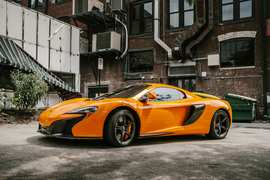
McLaren F1 (1998): The Timeless Benchmark
Top Speed: 240.1 mph
Significance: Even by today’s standards, the McLaren F1 remains an icon. In 1998, its naturally-aspirated V8 engine and manual gearbox propelled it to a production car speed record that stood for years. Its lightweight construction, central driving position, and peerless engineering legacy continue to inspire. While its performance figures may be surpassed, its influence on the ultimate performance cars is immeasurable.
W Motors Fenyr Supersport: Middle Eastern Majesty
Top Speed: 245 mph
Origin: Lebanon/Dubai
Powertrain: Twin-turbocharged flat-six engine, sourced from Ruf Automotive.
Notes: A luxurious and powerful machine, the Fenyr Supersport, like its predecessor the Lykan HyperSport, embodies exclusivity and extreme performance. Its handcrafted nature and bespoke materials elevate it beyond mere transportation into the realm of automotive art.
Saleen S7 Twin Turbo: The All-American Legend
Top Speed: 248 mph
Origin: USA
Powertrain: Twin-turbocharged V8 engine.
Notes: Launched in 2005, the Saleen S7 Twin Turbo was a potent contender that aimed to surpass the McLaren F1. Its aggressive styling and significant horsepower output made it a formidable presence. While its top speed claims were ambitious, it undeniably carved out a significant niche in the American muscle cars evolved into hypercars.
Koenigsegg Gemera & CCXR: Swedish Ingenuity
Top Speed: 248 mph (400 km/h)
Origin: Sweden
Powertrain: Gemera: Hybrid (three electric motors + combustion engine); CCXR: Supercharged V8.
Notes: Koenigsegg consistently appears on lists of the fastest cars in the world. The Gemera represents a radical departure with its four-seater practicality combined with mind-boggling hybrid power. The CCXR, an older model, showcases the brand’s enduring expertise with its pure internal combustion power.
Aspark Owl: The Electric Awakening
Top Speed: 249 mph
Origin: Japan
Powertrain: Battery-electric.
Notes: The Aspark Owl is a stark reminder of the transformative power of electric powertrains. Its claimed 0-60 mph time of 1.72 seconds would make it the fastest accelerating production car ever. This Japanese newcomer demonstrates that electrification is not a compromise but a potent pathway to hypercar performance, challenging the established hierarchy of performance electric vehicles.
Ultima RS: The Kit Car Contender
Top Speed: 250 mph
Origin: UK
Powertrain: Corvette V8 engine, tuned for high output.
Notes: The Ultima RS stands apart as the most budget-friendly on this list, a testament to the power of a high power-to-weight ratio. Its potential to reach 250 mph in a car that can be partially assembled at home underscores the sheer mechanical engineering at play. This is old-school performance in its purest form, a compelling option for those seeking affordable hypercars with serious speed.
McLaren Speedtail: The Hyper-GT Pioneer
Top Speed: 250 mph
Origin: UK
Powertrain: Hybrid powertrain.
Notes: A spiritual successor to the F1, the Speedtail boasts a unique three-seat configuration and a focus on aerodynamic efficiency. Its ability to exceed 250 mph multiple times during testing solidifies its place among the fastest road cars, emphasizing McLaren’s continued commitment to extreme performance in their ultimate series cars.
Czinger 21C V Max: Digital Design, Analog Speed
Top Speed: 253 mph+
Origin: USA
Powertrain: Hybrid (combustion engine + electric motors).
Notes: The Czinger 21C is a product of advanced digital manufacturing techniques and cutting-edge hybrid technology. The V Max variant optimizes for top speed by shedding aerodynamic elements, showcasing a sophisticated approach to achieving extreme velocity. Its rapid acceleration also places it firmly in the conversation for quickest 0-60mph production cars.
Koenigsegg Regera: Hybrid Sophistication
Top Speed: 255 mph
Origin: Sweden
Powertrain: Hybrid powertrain with a unique single-speed gearbox.
Notes: Koenigsegg’s relentless pursuit of speed is evident in the Regera. This hybrid marvel combines a powerful V8 with electric motors, delivering immense horsepower and a unique driving experience thanks to its innovative transmission. It has also set records for acceleration and braking, demonstrating its all-around performance capabilities.
SSC Ultimate Aero: A Title-Snatching Machine
Top Speed: 256.18 mph
Origin: USA
Powertrain: Twin-turbocharged V8 engine.
Notes: The SSC Ultimate Aero famously dethroned the Bugatti Veyron as the world’s fastest production car. Its raw, driver-focused nature, eschewing many electronic aids for an unfiltered connection to the road, makes it a legendary machine among those who appreciate pure driving exhilaration.
Rimac Nevera / Nevera R: The Electric Revolution Continues
Top Speed: Nevera: 258 mph; Nevera R: 268 mph
Origin: Croatia
Powertrain: Quad electric motors.
Notes: Rimac has firmly established itself at the forefront of electric hypercars. The Nevera’s staggering acceleration and impressive top speed showcase the immense potential of EV technology. The even more potent Nevera R further pushes the envelope, solidifying its claim as the fastest accelerating road car ever. Its rapid charging capabilities also address a key concern for EV adoption, making it a compelling proposition for the future of performance EVs.
Bugatti Veyron: The Legend That Redefined Supercars
Top Speed: 268 mph (Super Sport)
Origin: France/Germany
Powertrain: Quad-turbocharged W16 engine.
Notes: Even years after its debut, the Bugatti Veyron remains a benchmark of automotive engineering. The Super Sport variant, with its enhanced power output, delivered a top speed that was simply astounding for its era. The Veyron’s sheer presence and performance continue to command respect, a true icon of the luxury hypercar segment.
Hennessey Venom F5: The Texan Torpedo
Top Speed: 271.6 mph (and aiming higher)
Origin: USA
Powertrain: Twin-turbocharged V8 engine.
Notes: Hennessey Performance Engineering has a history of pushing speed limits, and the Venom F5 is their most ambitious project yet. With a target of over 311 mph, this American hypercar is a testament to their relentless pursuit of ultimate velocity. Its significant horsepower output and aerodynamic focus make it a serious contender for the top spot.
Bugatti Tourbillon: The Electrified Future of Bugatti
Top Speed: 277 mph (estimated)
Origin: France
Powertrain: Hybrid system (V16 engine + electric motors).
Notes: The upcoming Bugatti Tourbillon promises to carry the brand’s legacy of extreme performance into a new era. By embracing hybrid technology and a revolutionary V16 engine, Bugatti aims to maintain its position at the pinnacle of automotive speed. Its estimated performance figures suggest it will be a formidable competitor among the new hypercars emerging in 2025.
Koenigsegg Agera RS: Setting the Bar High
Top Speed: 277.87 mph
Origin: Sweden
Powertrain: Tuned V8 engine.
Notes: The Agera RS achieved a remarkable world record for top speed on a public road, a feat that underscores Koenigsegg’s dedication to pushing boundaries. This record-setting performance highlights the brand’s ability to extract incredible performance from its engineering prowess.
Bugatti Mistral: The Ultimate Open-Top Grand Tourer
Top Speed: 282.05 mph
Origin: France
Powertrain: Quad-turbocharged W16 engine.
Notes: As the fastest production convertible in the world, the Bugatti Mistral is an extraordinary achievement. Combining the exhilarating experience of open-top motoring with Bugatti’s legendary W16 power, it represents the pinnacle of exclusive supercars. Its record-breaking run at Papenburg, Germany, solidifies its place among the elite.
SSC Tuatara: Controversy and Conquest
Top Speed: 282.9 mph (two-way average)
Origin: USA
Powertrain: 5.9-litre twin-turbocharged V8 engine.
Notes: The SSC Tuatara’s journey to a verified top speed record was not without its challenges and controversies. However, with independent verification and precise timing equipment, it has firmly established its credentials as one of the fastest cars on the planet. Its focus on rear-wheel drive and lightweight construction contributes to its exceptional performance.
Bugatti Chiron Super Sport 300+: Breaking the 300 mph Barrier
Top Speed: 304.8 mph
Origin: France
Powertrain: Enhanced 8.0-litre W16 engine.
Notes: The Bugatti Chiron Super Sport 300+ is a landmark achievement, being the first production car to officially break the 300 mph barrier. This accomplishment, achieved at the Ehra-Lessien test track, represents the culmination of years of Bugatti’s expertise in developing ultra-high-performance vehicles. Its aerodynamic enhancements and increased power output are critical to this success.
Koenigsegg Jesko Absolut: The Absolute Pursuit of Speed
Top Speed: Targeted 310 mph+
Origin: Sweden
Powertrain: Twin-turbocharged V8 engine (tweaked for higher output).
Notes: Christian von Koenigsegg’s declaration of the Jesko Absolut as “the absolute fastest Koenigsegg we will ever make” carries significant weight. This low-drag variant is meticulously engineered to achieve unprecedented speeds. With extensive aerodynamic refinements and a power-focused powertrain, the Jesko Absolut is poised to challenge for the ultimate top speed record, further fueling the rivalry between performance car brands like Koenigsegg and Bugatti.
Yangwang U9 Xtreme: The Electric Juggernaut
Top Speed: 308 mph
Origin: China
Powertrain: Four ultra-powerful electric motors.
Notes: The emergence of the Yangwang U9 Xtreme as the current holder of the top spot is a revolutionary moment. This electric hypercar, with its astonishing 2,978 bhp output and advanced 1,200V architecture, demonstrates the incredible advancements in EV technology. Its ability to challenge and surpass the speeds set by the most expensive internal combustion hypercars proves that the future of extreme performance vehicles is undeniably electric. Its innovative battery setup, designed for sustained high-speed power delivery without overheating, is a significant engineering feat.
The world of the fastest production cars is a relentless testament to human ambition and technological advancement. Each vehicle on this list represents a pinnacle of engineering, a daring vision brought to life. For those who crave the ultimate thrill, who understand the dedication it takes to engineer such machines, the journey continues.
If you’re captivated by the pursuit of speed and the innovations driving the automotive industry forward, consider exploring the latest advancements in electric vehicle technology or researching bespoke performance tuning options. Engaging with a specialist dealer or attending an automotive event can provide invaluable insights into the world of luxury sports cars and the next generation of hypercars. The road ahead is exhilarating, and the quest for speed never truly ends.