The Apex Pursuit: Mastering the Zenith of Automotive Velocity in 2026
For decades, the allure of automotive prowess has been intrinsically linked to the pursuit of ultimate speed. While the practicalities of achieving stratospheric velocities on public roads are, for the vast majority of drivers, purely theoretical, the quest for the fastest road cars 2026 remains a powerful testament to human ingenuity and engineering ambition. As an industry veteran with a decade immersed in the hypercar landscape, I’ve witnessed firsthand the relentless evolution that has propelled production vehicles from the 200 mph benchmarks of the 1990s to the dizzying speeds that now flirt with and shatter the 300 mph barrier. This isn’t merely about bragging rights; it’s about pushing the boundaries of what’s mechanically and aerodynamically possible, culminating in machines that are as much works of art as they are instruments of incredible velocity.
The narrative of the world’s fastest cars is a rich tapestry woven with innovation, competition, and an unyielding drive to be number one. Initially, the lineage of these speed demons can be traced back to racing circuits, with early road-legal variants of Le Mans contenders like Bentley and Bugatti offering a taste of track-bred performance to discerning clientele. However, in the modern era, the development of truly road-legal hypercars capable of extreme speeds requires a dedicated, often multi-year, and astronomically expensive commitment from manufacturers. It’s a specialized field where cutting-edge materials science, advanced powertrain development, and meticulous aerodynamic refinement converge.
The 1990s marked a pivotal era, etched in the memories of automotive enthusiasts by the thrilling race to breach the 200 mph mark. Cars like the Ferrari F40, Porsche 959, Jaguar XJ220, and the legendary McLaren F1 captivated the world. These machines, with their potent naturally-aspirated engines, advanced aerodynamic bodywork, and groundbreaking performance figures, redefined what was achievable for vehicles bearing license plates. They weren’t just fast; they were statements of engineering excellence, setting new benchmarks for fastest accelerating production cars.
Fast forward to today, and the landscape has dramatically shifted. The focus has intensified, with manufacturers now vying for supremacy closer to the 300 mph threshold. Reaching this velocity is an exponential leap in complexity and cost compared to earlier milestones. The fact that any road-legal vehicle can even approach such speeds is a marvel, especially considering the stringent safety and emissions regulations they must adhere to. We are also witnessing a significant disruption with the rapid advancement of electric vehicle technology. The sheer torque delivery and instantaneous power of electric motors are enabling even relatively new automotive players to challenge established titans, creating an electrifying new dimension in the pursuit of fastest electric hypercars.
This ever-evolving chronicle of automotive speed necessitates a dynamic approach to ranking. The list of the world’s fastest road cars 2026 is a fluid entity, constantly reshaped by new launches, technological breakthroughs, and rigorous testing. Below, we delve into the top contenders, meticulously analyzed to present a definitive picture of the pinnacle of automotive velocity, avoiding redundancies and focusing on distinct models that represent the zenith of engineering.
The Elite Circle: A Ranking of the Fastest Road Cars
McLaren F1: The Timeless Icon (Top Speed: 240.1 mph)
For those who came of age before the turn of the millennium, the McLaren F1 needs no introduction. This legendary machine etched its name in history in 1998, setting a production car speed record of 240.1 mph. What makes it even more remarkable is its powertrain: a naturally-aspirated V8 engine paired with a manual gearbox. This purist’s dream, combined with its revolutionary design and lightweight construction, continues to command immense respect and value, exceeding £15 million. While newer contenders exist, the F1’s spirit lives on, notably in the Gordon Murray Automotive T.50, a spiritual successor designed by the same visionary, promising similar, if not superior, performance without publicly disclosed figures.
W Motors Fenyr Supersport: Dubai’s Speedster (Top Speed: 245 mph)
Emerging from the Middle East, W Motors, initially established in Lebanon and now based in Dubai, has made its mark with the Fenyr Supersport. Following the attention-grabbing Lykan HyperSport, the Fenyr is engineered to achieve a claimed 245 mph. Its potent heart is a twin-turbocharged flat-six engine, expertly crafted by German Porsche specialist Ruf. Beyond its blistering performance, the Fenyr showcases an opulent approach, incorporating bespoke materials and elements like diamonds and sapphires within its lighting. Its cinematic fame, particularly from the Fast & Furious franchise, further amplifies its exotic appeal.
Saleen S7 Twin Turbo: American Muscle Redefined (Top Speed: 248 mph)
The year 2005 saw the arrival of the Saleen S7 Twin Turbo, an American-born behemoth that boldly declared a top speed of 248 mph, aiming to eclipse the iconic McLaren F1. Packing a formidable 750 bhp from its V8 engine, augmented by a pair of massive turbochargers, the S7 was a formidable package. While its claimed top speed has been subject to scrutiny and unproven in official record attempts, its sheer presence and performance credentials firmly cemented its place in the hypercar hierarchy.
Koenigsegg Gemera & CCXR: Swedish Engineering Excellence (Top Speed: 248 mph)
Koenigsegg, a marque synonymous with pushing performance boundaries, earns a dual entry with the Gemera and the CCXR, both capable of a remarkable 248 mph (400 km/h). The Gemera represents a forward-thinking vision: an ultra-modern hybrid powertrain featuring three electric motors, delivering immense combined horsepower alongside a combustion engine. In contrast, the CCXR, an older but equally potent sibling, relies solely on a supercharged V8, leveraging its lighter weight and aerodynamic efficiency to achieve the same formidable top speed.
Aspark Owl: The Electric Acceleration King (Top Speed: 249 mph)
The hypercar arena is increasingly populated by agile, ambitious newcomers, and the Japanese Aspark Owl stands as a prime example. This battery-electric marvel, first showcased in prototype form in 2017, boasts headline-grabbing figures. Its claimed 0-60 mph acceleration of 1.72 seconds positions it as a contender for the fastest accelerating production car ever. With a staggering 1,985 bhp and a quoted top speed of 249 mph, the Owl’s performance is further enhanced by a relatively light 64 kWh battery pack, allowing for an estimated range of around 280 miles. This focus on high-performance electric vehicles signifies a major shift in the industry.
Ultima RS: The Unconventional Speedster (Top Speed: 250 mph)
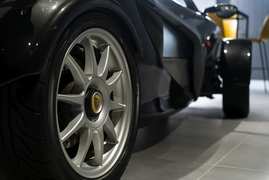
Standing out for its affordability and unique nature, the Ultima RS is a kit car capable of an astonishing 250 mph, according to the manufacturer. While the prospect of achieving such speeds in a car potentially assembled at home might sound audacious, the RS prioritizes an extreme power-to-weight ratio. Utilizing a lightweight chassis and a potent, tuned Corvette engine producing 1,200 bhp, it achieves its velocity through brute force and meticulous engineering rather than complex electronic systems, making it a truly old-school performance machine.
McLaren Speedtail: The Spiritual Successor (Top Speed: 250 mph)
The McLaren Speedtail, part of the brand’s ‘Ultimate Series,’ builds upon the legacy of the F1, exceeding its predecessor’s top speed. During rigorous testing at Florida’s Kennedy Space Centre, the Speedtail achieved 250 mph on multiple occasions. Limited to just 106 units, mirroring the F1’s production run, it shares the F1’s distinctive three-seat configuration with the driver centrally positioned. Its advanced hybrid powertrain and aerodynamic efficiency are key to its remarkable velocity.
Czinger 21C V Max: Aerodynamic Artistry (Top Speed: 253 mph+)
The Czinger 21C, particularly its V Max variant, represents a fusion of extreme power and cutting-edge design. This hypercar utilizes a hybrid powertrain generating a formidable 1,233 bhp, coupled with aggressive aerodynamic sculpting. The V Max model specifically foregoes certain aerodynamic elements to minimize drag, thereby maximizing its top speed potential, pushing it beyond 250 mph. Its 0-62 mph acceleration is dispatched in a mere 1.9 seconds, underscoring its all-around performance prowess.
Koenigsegg Regera: Hybrid Innovation (Top Speed: 255 mph)
Koenigsegg’s relentless pursuit of speed is evident in the Regera, a hybrid hypercar that achieves a remarkable 255 mph. This sophisticated machine boasts nearly 1,500 bhp and innovatively employs a single-speed direct-drive transmission, a direct result of its plug-in hybrid setup. While a powerful twin-turbo V8 engine contributes significantly to its output, the Regera’s performance is a symphony of combustion and electric power, showcasing Koenigsegg’s commitment to groundbreaking powertrain technology. It also holds a 0–249–0mph acceleration and braking world record.
SSC Ultimate Aero: The Record Breaker (Top Speed: 256.18 mph)
For a period, the SSC Ultimate Aero held the prestigious title of the world’s fastest production car. Powered by a 1,183 bhp twin-turbo V8, it achieved a verified top speed of 256.18 mph on a temporarily closed public highway in Washington, USA. This era was marked by a raw, unfiltered driving experience, as the Aero deliberately omitted driver aids like traction control, offering an unparalleled connection between driver and machine.
Rimac Nevera / Nevera R: Electric Dominance (Top Speed: 258 mph / 268 mph)
The Croatian marque Rimac has firmly established itself at the forefront of electric hypercar performance. The Nevera, with its staggering 1,888 bhp and 2,360 Nm of torque, is already an electrifyingly fast machine, capable of 0-60 mph in 1.9 seconds and an astonishing 186 mph in just 9.3 seconds. Its technological prowess extends to its rapid charging capabilities and a respectable range. Not content with its existing achievements, Rimac introduced the Nevera R, boosting power to 2,078 bhp and a breathtaking top speed of 268 mph, solidifying its position as not only one of the fastest electric cars 2026 but also the quickest accelerating road car ever. This is a prime example of next-gen EV performance.
Bugatti Veyron: The Legend Continues (Top Speed: 268 mph)
Even years after its introduction, the Bugatti Veyron remains a name that commands immense respect in the automotive world. The original Veyron, with its nearly 1,000 bhp quad-turbo W12 engine, was a seismic event. However, the Veyron Super Sport elevated this performance to an even greater level, boasting 1,183 bhp and a top speed of 268 mph. Its sub-2.5-second 0-62 mph time is a feat that even modern electric hypercars find challenging to match, cementing its status as an all-time great.
Hennessey Venom F5: Aiming for the Stars (Top Speed: 271.6 mph)
American performance specialists Hennessey Performance Engineering have long pushed the boundaries of speed. The Venom F5, a bespoke hypercar, has already demonstrated its astonishing capabilities, reaching 271.6 mph in testing. With a monstrous 1,817 bhp twin-turbo V8, Hennessey clearly has its sights set on exceeding the 300 mph barrier. While rear-wheel drive and immense power present traction challenges, the F5’s straight-line acceleration is nothing short of phenomenal. This represents a significant leap in American hypercar performance.
Bugatti Tourbillon: The Future of Bugatti Hypercars (Top Speed: 277 mph est.)
The upcoming Bugatti Tourbillon promises to carry the brand’s legacy of extreme velocity into the future. Set to debut in 2026, this new model will feature a hybrid system powered by a V16 engine producing over 1,770 bhp. Given Bugatti’s unparalleled track record in developing the fastest production cars, the Tourbillon is confidently anticipated to slot seamlessly into the highest echelons of automotive speed. Its estimated price tag of £3.5 million+ reflects the bespoke engineering and exclusivity.
Koenigsegg Agera RS: A Public Road Record (Top Speed: 277.87 mph)
In 2017, Koenigsegg shattered existing speed records once again with the Agera RS. On an 11-mile closed public highway in Nevada, USA, a customer-owned Agera RS achieved a blistering two-way average speed of 277.87 mph, setting a new benchmark for production cars on public roads. This feat underscored Koenigsegg’s mastery of both performance engineering and the logistical challenges of record-setting attempts.
Bugatti Mistral: The Ultimate Convertible (Top Speed: 282.05 mph)
Bugatti continues to redefine automotive excellence, and the Mistral stands as its latest testament. This hyper-exclusive convertible, limited to just 99 units and priced at an astonishing £5.2 million, is the fastest convertible in production. Piloted by renowned test driver Andy Wallace, the Mistral achieved a verified top speed of 282.05 mph at a German test facility. Its power is derived from Bugatti’s iconic quad-turbocharged 8.0-litre W16 engine, a powertrain soon to be succeeded by the Tourbillon’s V16. This is a pinnacle of luxury hypercars.
SSC Tuatara: Record Rectified (Top Speed: 282.9 mph)
The pursuit of speed records can sometimes be fraught with controversy, as was the case with the SSC Tuatara. After initial claims of a 316 mph run were contested, SSC meticulously re-engineered and re-tested the vehicle. In 2021, with independent witnesses and precise timing equipment, the Tuatara achieved a verified two-way average of 282.9 mph. Powered by a 5.9-litre twin-turbocharged V8 producing 1,750 bhp, and benefiting from a lightweight carbon fibre chassis, the Tuatara is a testament to American engineering might, even if it narrowly missed the 300 mph mark on this occasion.
Bugatti Chiron Super Sport 300+: Breaking the 300 mph Barrier (Top Speed: 304.8 mph)
Bugatti’s relentless pursuit of ultimate velocity reached an unprecedented milestone with the Chiron Super Sport 300+. This exceptional machine, a highly evolved iteration of the Chiron, shattered the seemingly impenetrable 300 mph barrier, hitting a verified 304.774 mph at Germany’s Ehra-Lessien test track. To achieve this, Bugatti’s 8.0-litre W16 engine was tuned to produce 1,578 bhp, complemented by extensive aerodynamic modifications, including an extended rear end to optimize airflow. Only 30 of these £3 million masterpieces were produced for discerning customers. This achievement solidifies Bugatti’s reputation for extreme speed cars.
Koenigsegg Jesko Absolut: The Ultimate Koenigsegg (Top Speed: 310 mph Targeted)
Christian von Koenigsegg himself declared the Jesko Absolut as “the absolute fastest Koenigsegg we will ever make,” a statement not to be taken lightly. This low-drag variant of the already formidable Jesko is the result of painstaking engineering dedicated to minimizing drag coefficient and maximizing power. Features such as an extended body, the absence of a rear wing, and weight-reduction measures contribute to its aerodynamic supremacy. The tweaked 5.0-litre twin-turbo V8 engine now produces 1,600 bhp. While official figures are yet to be finalized, Koenigsegg’s target of 310 mph is a serious proposition, given their history of world-record holds and their intense rivalry with Bugatti. This represents the bleeding edge of performance automotive engineering.
Yangwang U9 Xtreme: The Electric Speed Revolution (Top Speed: 308 mph)
In a stunning display of how far electric vehicle technology has advanced, the Yangwang U9 Xtreme has claimed the top spot, achieving an astonishing 308 mph. This sub-£1 million machine eclipses the speeds set by much more expensive hypercars, thanks to significant aerodynamic enhancements over the standard U9, four incredibly powerful electric motors, and a total output of 2,978 bhp. Its 1,200V architecture facilitates faster power transfer, and its batteries are optimized for high-speed, sustained performance. This breakthrough from Yangwang, a BYD subsidiary, signifies a monumental shift, demonstrating that all-electric hypercars can now directly challenge and conquer the absolute fastest internal combustion engine vehicles, setting a new benchmark for future automotive innovation.
The relentless pursuit of speed in the automotive world is a journey without a definitive end. Each milestone achieved is merely a stepping stone to the next, a testament to human ambition and engineering prowess. Whether you are a seasoned collector seeking the ultimate addition to your garage, an aspiring enthusiast dreaming of what’s next, or simply fascinated by the pinnacle of human mechanical achievement, the world of fastest road cars 2026 offers an unparalleled spectacle of innovation and exhilaration.
For those captivated by the prospect of experiencing such extraordinary performance firsthand, or for those seeking expert guidance in navigating the complex world of hypercar acquisition and ownership, reaching out to a specialized automotive consultant or a premier dealership can provide the crucial next step. Let us help you explore the possibilities and perhaps, one day, experience the breathtaking thrill of commanding one of these automotive titans.