The Pinnacle of Velocity: A Deep Dive into the World’s Fastest Road Cars of 2026
For decades, the automotive world has been captivated by the ultimate measure of a machine’s prowess: its top speed. While the everyday driver rarely ventures beyond legal limits, the pursuit of blistering velocity in road-legal vehicles remains a potent symbol of engineering excellence, technological innovation, and, frankly, exhilarating bragging rights. As an industry expert with a decade immersed in the hypercar landscape, I’ve witnessed firsthand the relentless evolution of this segment. This isn’t merely about going fast; it’s about pushing the boundaries of physics, materials science, and aerodynamic mastery within the constraints of public road legality. The year 2026 finds us at an unprecedented juncture, where established titans are challenged by agile newcomers, and electric powertrains are rewriting the rules of hypercar performance.
The very notion of the “fastest road cars” has transformed dramatically. What once began as a trickle-down from racing circuits has evolved into a specialized domain where dedicated research and development efforts are poured into creating machines that can conquer both the track and the highway. Think back to the 1990s, a golden era defined by the race to break the 200 mph barrier. Iconic names like the Ferrari F40, Porsche 959, Jaguar XJ220, and the legendary McLaren F1 were the flagbearers, showcasing remarkable engines and avant-garde aerodynamic designs. They etched their names in history by achieving speeds previously thought unimaginable for production cars.
Today, the benchmark has shifted considerably. We’re now firmly in an era where manufacturers are not just approaching, but actively contesting speeds around the 300 mph mark. This leap from 200 mph to 300 mph is not linear; it represents an exponential increase in engineering complexity and demands. The fact that these speeds are achievable in cars that can be driven on public roads, albeit with extreme caution and on closed courses for official records, is a testament to human ingenuity. Furthermore, the rapid advancements in battery technology and electric motor efficiency have dramatically accelerated the entry of electric hypercars into this exclusive club. This democratizes the pursuit of extreme speed, allowing newer marques to challenge the dominance of long-established luxury brands.
This dynamic landscape means that definitive lists of the world’s fastest road cars are in constant flux. The race to produce the next record-breaker is ongoing, fueled by cutting-edge technology and a thirst for automotive supremacy. Below, I present a comprehensive analysis of the top contenders, delving into their specifications, technological underpinnings, and the unique stories behind their quest for velocity.
The Current Pantheon of Speed: A Detailed Examination
To truly appreciate the current state of hypercar performance, we must examine the machines that define the upper echelon of speed, focusing on production vehicles and avoiding heavily modified or concept cars.
Yangwang U9 Xtreme: Leading the charge in 2026 is the Yangwang U9 Xtreme, a groundbreaking electric hypercar from China, priced surprisingly accessibly at around $250,000+. Its claim of a 308 mph top speed is a monumental achievement, not only for its raw velocity but also for its electric powertrain. This feat is attributed to significant aerodynamic refinements over the standard U9, four ultra-powerful electric motors delivering a staggering 2,978 bhp, and an advanced 1,200V architecture. This higher voltage allows for faster power transfer compared to other EVs, even the standard U9’s 800V system. The battery system, supplied by BYD, Yangwang’s parent company, is specifically engineered to handle high-speed power demands without overheating, ensuring sustained performance. This vehicle exemplifies the rapid progress of electric vehicle technology, proving that EVs can indeed rival and even surpass internal combustion engines in the pursuit of ultimate speed.
Koenigsegg Jesko Absolut: Christian von Koenigsegg has long been a formidable opponent in the speed wars, and the Jesko Absolut represents the zenith of his efforts. While official figures are still under rigorous testing, the target is a mind-boggling 310 mph. This low-drag variant of the 1,578 bhp Koenigsegg Jesko has undergone extensive aerodynamic optimization. Key modifications include an extended body, the elimination of the rear wing, and aggressive weight-reduction measures, such as what Koenigsegg claims to be the world’s lightest crankshaft. The ferocious 5.0-liter twin-turbocharged V8 has been tweaked to produce 1,600 bhp. Koenigsegg’s history as a former “world’s fastest car” titleholder imbues their pursuit of this record with immense credibility. The rivalry with Bugatti is palpable, and the Jesko Absolut is engineered to be Koenigsegg’s ultimate expression of speed.
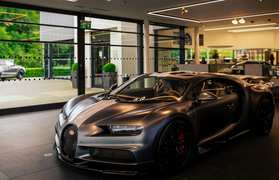
Bugatti Chiron Super Sport 300+: For years, Bugatti has been synonymous with hypercar performance, and the Chiron Super Sport 300+ is the culmination of this legacy. This exceptional machine shattered the seemingly impenetrable 300 mph barrier, reaching an officially recorded speed of 304.8 mph. To achieve this, Bugatti’s formidable 8.0-liter W16 engine was uprated to 1,578 bhp, an increase of 99 bhp over the standard Chiron. Enhanced cooling systems for the engine and gearbox, coupled with significant aerodynamic enhancements, including a distinctive “Longtail” rear end that added 25cm of bodywork for improved airflow, were crucial. Bugatti produced just 30 of these extraordinary vehicles for discerning customers, solidifying its place in automotive history. This achievement underscores Bugatti’s unwavering commitment to pushing the boundaries of what’s possible.
SSC Tuatara: The SSC Tuatara’s journey to its current standing has been marked by controversy and determined perseverance. After an initial high-speed run was met with skepticism, SSC conducted a meticulously verified two-way average run, achieving a remarkable 282.9 mph. This feat, while not breaching the 300 mph mark, is still an astounding display of engineering. The Tuatara is powered by a 5.9-liter flat-plane-crank V8 with twin turbochargers, producing a formidable 1,750 bhp and 1,735 Nm of torque. All this power is directed to the rear wheels, contributing to its impressive power-to-weight ratio, aided by a carbon fiber chassis and bodywork that keeps its weight down to just 1,247 kg. This machine represents American automotive prowess at its most extreme.
Bugatti Mistral: Bugatti continues to redefine automotive luxury and performance, and the Mistral stands as a testament to their enduring innovation. This obscenely expensive and exceptionally rare convertible, limited to just 99 units, is officially the fastest production convertible in the world. Driven by esteemed test driver Andy Wallace, the Mistral achieved a blistering 282.05 mph at a test facility in Germany. Powering this masterpiece is Bugatti’s legendary quad-turbocharged, eight-liter W16 engine, soon to be replaced by the V16 in the new Tourbillon. The Mistral is not just a car; it’s a statement of uncompromising engineering and design.
Koenigsegg Agera RS: In 2017, Koenigsegg solidified its reputation by setting a new speed record with the Agera RS, surpassing its own earlier achievements. This remarkable feat was accomplished on an 11-mile closed stretch of highway in Nevada, USA, where a customer-owned Agera RS achieved a verified top speed of 277.87 mph. This record not only highlighted the Agera RS’s incredible performance but also marked a significant moment for production car speed records achieved on public roads.
Bugatti Tourbillon (Estimated): While not yet officially released, the upcoming Bugatti Tourbillon commands a place on this list due to the brand’s unparalleled pedigree in speed. Expected to arrive in 2026, this hybrid marvel will incorporate a 986 bhp V16 engine, pushing the total output to over 1,770 bhp. Given Bugatti’s history and engineering prowess, the Tourbillon is confidently anticipated to join the ranks of the fastest production cars ever made, with an estimated top speed of 277 mph.
Hennessey Venom F5: American tuning firm Hennessey has a history of pushing automotive boundaries, and the Venom F5 is their most ambitious creation yet. Having already surpassed 270 mph with its earlier Venom model, the F5 has now officially tested at 271.6 mph. This feat is powered by a monstrous 1,817 bhp twin-turbo V8. Hennessey openly targets a top speed of 311 mph once development is fully complete. While rear-wheel drive and limited traction might affect its 0-62 mph time (2.6 seconds), its 0-249 mph acceleration of 15.5 seconds showcases its incredible straight-line capability.
Rimac Nevera/Nevera R: The Rimac Nevera is a groundbreaking electric hypercar that has rapidly ascended the ranks. With 1,888 bhp and 2,360 Nm of torque, it achieves 0-60 mph in a mere 1.9 seconds and reaches 186 mph in an astonishing 9.3 seconds. Its 500kW charging capability allows an 80% charge in just 19 minutes, offering a 340-mile range. The even more potent Nevera R boasts 2,078 bhp and a top speed of 268 mph, making it the fastest-accelerating road car ever, with 0-62 mph in 1.8 seconds and 186 mph in 7.9 seconds. Rimac’s electric prowess is undeniable, positioning EVs as serious contenders for the ultimate speed crown.
Bugatti Veyron: Even years after its debut, the Bugatti Veyron remains a benchmark of automotive excellence. The original Veyron, with nearly 1,000 bhp from its 6.0-liter quad-turbo W12 engine, stunned the world. However, the Veyron Super Sport variant, boasting 1,183 bhp, truly cemented its legacy with a top speed of 268 mph. Its sub-2.5-second 0-62 mph time is a figure that even many modern electric cars struggle to match, underscoring its enduring status as an all-time great.
SSC Ultimate Aero: The SSC Ultimate Aero, powered by a 1,183 bhp twin-turbo V8, once held the title of the world’s fastest car. During its production run, it achieved a verified top speed of 256.18 mph on a temporarily closed public highway in Washington, USA. The Ultimate Aero offered a raw, driver-focused experience, famously omitting driver aids like traction control.
Koenigsegg Regera: The Regera, with its hybrid powertrain producing nearly 1,500 bhp, is another testament to Koenigsegg’s dedication to speed. It achieves a top speed of 255 mph and features an innovative single-speed gearbox, made possible by its plug-in hybrid setup. The twin-turbo V8 engine contributes significantly to its power, and it also boasts a removable targa-top roof. The Regera also set a 0–249–0 mph acceleration and braking world record in 2019.
Czinger 21C V Max: The Czinger 21C V Max is a hypercar that blends extreme performance with cutting-edge design. Its hybrid powertrain delivers a combined 1,233 bhp, enabling it to accelerate from 0-62 mph in just 1.9 seconds. The V Max variant is specifically designed to maximize top speed by optimizing its aerodynamics, pushing it beyond 250 mph.
McLaren Speedtail: The McLaren Speedtail, a successor to the iconic F1, hit 250 mph over 30 times during testing at the Kennedy Space Center. Limited to 106 units, it shares the F1’s innovative three-seater layout, with the driver positioned centrally. Unlike its predecessor, the Speedtail features a seamless transmission, enhancing its ease of use.
Ultima RS: The Ultima RS stands out as the most affordable on this list, with a price tag of around £130,000. This kit car, built by enthusiasts for enthusiasts, claims a top speed of 250 mph. Its performance is primarily derived from an exceptionally high power-to-weight ratio, utilizing a lightweight construction and a potent Corvette engine tuned to produce 1,200 bhp.
Aspark Owl: This Japanese electric hypercar, the Aspark Owl, is a testament to the burgeoning capabilities of EV technology. First unveiled in prototype form in 2017, it boasts an astonishing 1,985 bhp and a claimed 0-60 mph time of 1.72 seconds, potentially making it the fastest accelerating production car. Its quoted top speed is 249 mph, achieved with a relatively lightweight 64 kWh battery pack that provides a range of around 280 miles.
Koenigsegg Gemera & CCXR: Koenigsegg earns a double entry with the Gemera and CCXR, both capable of 248 mph. The Gemera is a modern hybrid featuring three electric motors and a combustion engine, delivering immense power. The older CCXR, while relying solely on a supercharged V8, matches the Gemera’s top speed through its lighter weight and superior aerodynamics.
Saleen S7 Twin Turbo: The Saleen S7 Twin Turbo, launched in 2005, promised a top speed of 248 mph, exceeding the McLaren F1. This American muscle car, powered by a V8 engine with twin turbos, offered 750 bhp. While the claimed top speed has never been officially proven, it remained a formidable contender in its era.
W Motors Fenyr Supersport: Following its Lykan HyperSport, W Motors introduced the Fenyr Supersport, also capable of a claimed 245 mph. Built in Dubai and powered by a Ruf-tuned, twin-turbocharged flat-six engine, the Fenyr incorporates bespoke materials, including diamond and sapphire accents in its headlights, creating a truly unique machine.
McLaren F1: The legendary McLaren F1, with its 240.1 mph top speed recorded in 1998, remains an icon. Its naturally-aspirated V8 engine and manual gearbox are celebrated by enthusiasts. While modern successors like the Gordon Murray Automotive T.50 might rival or surpass its speed, the F1’s place in history is secured.
The Future of Velocity: Beyond the Horizon
The relentless pursuit of speed shows no signs of abating. The convergence of electric propulsion, advanced aerodynamics, and innovative materials science promises even more astonishing feats in the years to come. We are witnessing a paradigm shift, where raw horsepower is no longer the sole arbiter of performance. Efficiency, energy management, and the seamless integration of electric and internal combustion technologies will define the next generation of fastest cars.
Whether you are a seasoned collector, an aspiring owner, or simply an enthusiast captivated by the pinnacle of automotive engineering, the world of hypercars offers a thrilling glimpse into the future of personal transportation. As these machines continue to push the boundaries of what’s possible, one thing is certain: the quest for the ultimate top speed will continue to ignite our imaginations and drive innovation for decades to come.
If you’re intrigued by the prospect of experiencing such incredible performance, exploring the nuances of hypercar ownership, or simply learning more about these automotive marvels, we invite you to connect with our team of experts. Let’s embark on this exhilarating journey together.